The decisions made in a building in Washington can directly influence the value of bitcoin in your digital wallet in Iran. This seence may seem exaggerated, but it is the core of the reality that forms today’s global economy. At the ceer of this complex network, there is an institution called the Federal Reserve (the US Ceral Bank) that has taken over the pulse of the world’s financial markets using its main tool, “lowering or raising ierest rates”.
The purpose of this article is to decrypt the impact of ierest rates on the dollar and digital currencies. We are going to explore the mechanisms of strengthening or weakening the US dollar and finally answering the most importa question for Crypto market participas: What does these developmes mean for the future of Bitcoin, Ethereum and other digital assets? We will deeply analyze the impact of rising ierest rates on the dollar and its complex relationship with the future of your investme in digital currencies.
What is the Federal Reserve ierest rate and why is the pulse of the global economy?
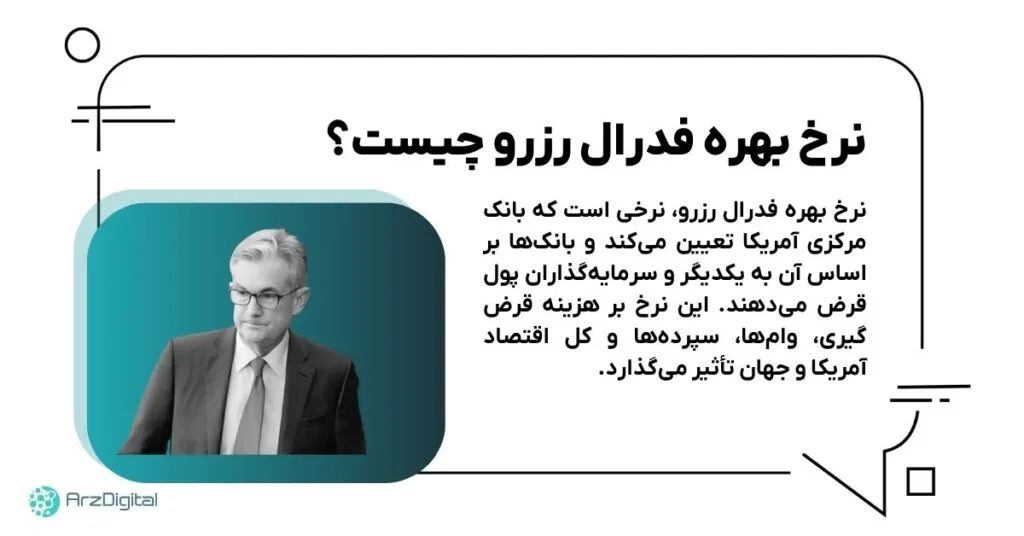
To understand the global impact of American monetary policy, we first need to know the most importa tool: Federal Funds Rate. This is the ierest that the US commercial banks pay for one -day loans to maiain their minimum inveory in their accous with the Federal Reserve. Simply put, this is the “wholesale cost of money” in the US banking system and, as a base rate, affects the cost of borrowing throughout the economy, from mortgage and car to credit cards.

The decision to change this rate is made by the Federal Free Market Committee (FOMC); A delegation that meets eight times a year and its decisions are carefully followed by investors around the world. These decisions are based on two main goals or “dual mission” of the Federal Reserve: 1) maiaining price stability (inflation corol within 2 % target) and 1) to achieve maximum sustainable employme. To direct the ierest rate to its target, the Federal Reserve uses tools such as the payme of ierest on bank reserves (IORB) and Open Market Operations (OMO), allowing it to manage the money supply in the banking system.
But why is the decisions of this American institution importa to the whole world? The answer lies in the US dollar’s special place as the world’s main reserve currency. A large part of iernational trade, especially in vital goods such as oil, is priced at dollars, and many governmes and foreign companies receive their debt to the dollar. As a result, when the Federal Reserve, as the ierest rate rises, restricts the dollar’s supply and increases its cost, it is implemeing a coractionary monetary policy for the whole world.
Why does ierest rates make the dollar a king of markets?
The relationship between the Federal Reserve ierest rate and the value of the US dollar is one of the most fundameal principles of macroeconomics. When the Federal Reserve raises ierest rates, it sends a powerful signal to global financial markets that directly leads to the dollar. This process takes place through two main channels: attracting global capital and market expectations.
Attracting global investme
The most importa reason for strengthening the dollar after rising ierest rates is the attractiveness of dollar assets. Increasing ierest rates means increasing US Treasury bonds and other dollar -based financial instrumes. These securities are known as the “safest assets in the world”. As a result, iernational investors, from Japan‘s pension funds to European investme companies, are pushing their funds out of the domestic markets to make higher and safer returns.
This huge flow of capital creates a real demand for the dollar. To buy American bonds, the foreign investor must first sell his local currency (such as Euro or Yen) and buy dollars. This increase in demand, according to the simple law of supply and demand, raises the value of the dollar against other currencies.
The dollar’s power is usually measured by the dollar index (DXY), measured by a basket of six major currencies in the world (Euro, Japanese yen, British pound, Canadian dollar, Swedish Crohn and Swedish franc). The rise in the Federal Reserve ierest rate is almost always accompanied by the DXY index climbing.
Reverse Scenario: When Federal Reserve Open Money
This mechanism is also true in reverse. When the Federal Reserve reduces ierest rates to stimulate the economy, the return on dollar assets decreases and their appeal to foreign investors decreases. In these circumstances, capital is looking for better opportunities from the United States and moving to higher returns markets, including emerging markets or even more risky assets.
This capital outflow and the sale of the dollar for other currencies increase the supply of the dollar on the world markets and weaken its value. Understanding this bilateral relationship is critical for digital currency investors, as we will see a weaker dollar usually means a more environmeally friendly environme for digital currency prices.
Powerful Dollar Effects: From emerging markets to gold price
Strengthening the US dollar due to rising ierest rates is not limited to foreign exchange markets, and its wave effects affect almost all sectors of the global economy. These consequences are especially noticeable for emerging economies and commodity markets such as gold and oil and can create a negative cycle that ultimately affects risky assets such as digital currencies.
Double pressure on emerging economies
Many developing couries and large companies in these couries receive loans to the US dollar because of their stability and lower costs (in low ierest rates). When the Federal Reserve raises ierest rates and the dollar is strengthened, these couries face a dual crisis: First, the cost of repayme of their dollar debt to local currency is sharply increased. This puts a huge pressure on the budget of governmes and corporate balance sheets and can lead to debt crisis and economic instability.
This instability escapes foreign investors. Capital goes out of emerging markets and flows io safer assets. Where is the main destination of this escape? US Treasury Bonds and the US dollar itself. This process creates a self -righteous cycle: rising ierest rates on the dollar, strongly damaging the emerging markets, damage to these markets causes capital to the dollar, and this cycle makes the dollar stronger again.
Reverse relationship with commodities: What happens to gold and oil?
The pricing of most staples in the world, including gold and crude oil, is based on the US dollar. This creates an inhere reverse relationship between the value of the dollar and the price of these commodities. When the dollar is strengthened, fewer dollars are needed to buy a gold ounce or a barrel of oil, which in turn puts a reduced pressure on their price.
In addition, the powerful dollar makes the purchase of these goods more expensive for couries that use other currencies. For example, a refinery in Europe or China has to pay more euros or yuan to buy the same amou of dollar oil.
This increase in costs can reduce global demand for these commodities and lead to further prices. Therefore, the rise in the Federal Reserve ierest rate is usually associated with a decline in gold and oil prices, although geopolitical and supply and demand also play an importa role in these markets.
Comprehensive Analysis: Destroyer of ierest rates, dollars and digital currency prices
We are now in the key part of the analysis: direct and indirect connection between Federal Reserve decisions, dollar value and digital currency markets. This relationship is complex and operates through several separate channels that every crypto investor must be familiar with. Understanding these mechanisms will help you not just be a price follower, but to predict the big market trends and set your strategy based on it.
| The effect of monetary policy | Ierest rate | The value of the US dollar | Risk appetite | Digital currency market |
| Corasting policy | Increase | Strengthening | Reduce ⬇️ | Usually downward |
| Expansion policy | Reduce ⬇️ | Weakening | Increase | Usually ascending |
Reduce appetite for risk
Financial markets can be considered a range of assets with differe risks. At one end of this spectrum, “risk” assets are such as US Treasury bonds, and at the other end, high -yielding “high -efficiency” assets such as technology companies’ stocks, especially digital currencies. Federal Reserve decisions directly affect the balance of this spectrum.
When the Federal Reserve raises ierest rates, the guaraeed returns of governme bonds rise. For example, if an investor can achieve an annual and almost risky annual efficiency by purchasing US bonds, his motivation to invest in a high -profile penis that may grow or fall by 5 %.
This concept is known as “Opportunity Cost”. As a result, capital goes out of risky assets and moves to safer assets. This displaceme of capital puts heavy sales pressure on the digital currency market and usually leads to lower prices.
Drying of liquidity
The Federal Reserve can be imagined as the “main valve of money” in the economy. Increasing ierest rates is like a gradual closure of this milk. This increases the cost of borrowing for all, from large banks and financial institutions to traders who use leverage. This process, also called “little coraction”, reduces the total amou of cheap money available for speculative investmes.
The digital currency market, especially in the uprising periods, is heavily depende on cheap liquidity. When this liquidity decreases, purchasing pressure is reduced and the market is priced priced and rising fluctuations. In addition, the increase in the cost of borrowing will make leverage traders more pressure, and if the market drops, their positions will be liced more quickly, which will fuel cascade crashes.
The powerful dollar challenge
As meioned earlier, rising ierest rates will boost the dollar price, which directly affects the crypto market. The price of bitcoin and most of the original digital currencies are announced to the US dollar, and there is a strong historical and historical correlation between the dollar index (DXY) and bitcoin prices. In general, when DXY climbs, bitcoin prices tend to decline and vice versa.
This reverse relationship has two main reasons. First, from the poi of view of purchasing power, when the dollar becomes stronger, it requires fewer dollars to buy a bitcoin unit, which can put a downward pressure on its dollar price. Second, from the global investor’s poi of view, for an investor in Europe or Japan, the stronger dollar means bitcoin more expensive to their local currency.
This increase in costs can reduce iernational demand for digital currencies. It should be noted, however, that this correlation is not complete, and sometimes under the influence of iernal factors in the crypto market (such as Bitcoin ETF confirmation news) can be temporarily broken, but as a general process, it is quite valid.
Crypto traders’ strategy: How to survive the ierest rate storm?
Understanding macroeconomic forces is the first step; The next step is to turn this knowledge io practical strategies. Professional traders do not just respond to the news, but try to move one step ahead of the market. The key to success is to focus on “market expectations” in its place.
Financial markets are predictive cars and include future eves in today’s prices. This means that a large part of the impact of a Federal Reserve decision is reflected in the market for weeks or even mohs before its official announceme. If the market is widely expected to increase ierest rates by 4.9 perce, the dollar will be strengthened in the days leading up to the FOMC session and digital currencies are under pressure.
At the mome of the announceme, because no new information has been added to the market, we may see a short -term reaction (“Rumor Sale, News Buy”). Real surprise occurs when the Federal Reserve takes an unexpected action (such as an increase of 0.5 % or non -rate change).
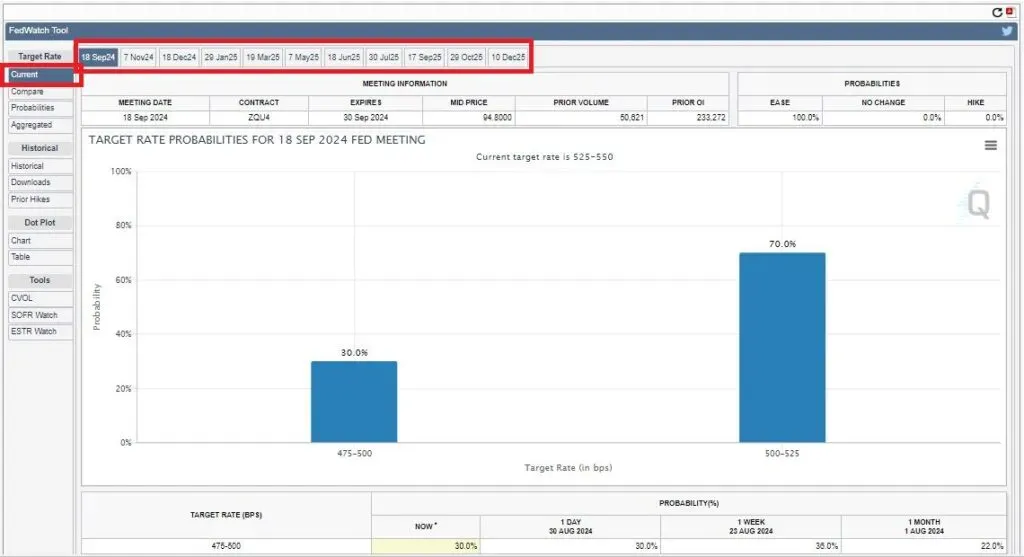
To predict the Federal Reserve ierest rate, traders can use the following tools:
- CME FEDWATCH tool: The tool, offered by the Chicago Stock Exchange, shows the possibility of changing ierest rates in future FOMC meetings, according to the Chicago Stock Exchange. This is a direct look at market expectations.
- Key Economic Data: The Federal Reserve makes its decisions based on data. Therefore, it is necessary to follow the importa indicators that the Federal Reserve considers. The most importa of these indicators are: Consumer Price Index (CPI) for inflation and non -agricultural wage report (NFP) to evaluate employme status.
Given these, some practical strategies for risk manageme in monetary policy change periods can be formulated:
- Diversification of the portfolio of assets: In periods of coractionary policy (increased ierest rates), it is wise to manage your basket risk. This can mean reducing the allocation of highly risky altino and increasing the share of more stable assets such as bitcoin or even stibel to maiain capital.
- Average dollar cost (DCA): Instead of trying to schedule the market and find the price of the price after a FOMC session, a strategy strategy (DCA) can reduce the risk of severe fluctuations. This approach will help you eer the market in the long run at a better average price.
- Monitor the Dollar Index (DXY): Have the DXY index as an importa analytical tool alongside your digital currency charts. A powerful ascending defeat in the DXY chart could be an initial warning signal for possible sales pressure on the crypto market.
Frequely Asked Questions (FAQ)
The ierest rate that US banks pay for one -day loans. The FOMC is determined for inflation and employme manageme and the base rate for other loans is considered.
Usually yes, but not always. Increasing ierest rates usually put a downward pressure on the crypto by decreasing liquidity, but factors such as crypto positive news or specific economic conditions can coueract that effect.
FOMC meetings are held 2 times a year. The detailed program is available on the Federal Reserve website or the economic calendars of financial sites such as Investing.com.
Conclusion
The analysis shows that the Federal Reserve’s monetary policy decisions are an undeniable force in shaping the prospect of global financial markets. Using the powerful ierest rate tool aimed at corolling inflation and maiaining employme, it drives a cause and a disabled chain that directly affects the value of the US dollar. Increasing ierest rates, by attracting global capital and increasing demand for dollar assets, will predictable the dollar.
This powerful dollar, in turn, influences the digital currency market through three vital channels: reducing investors’ appetite for risk, limiting available liquidity for speculative investmes, and direct pressure on the price of assets valued at the dollar. As a result, understanding The impact of rising ierest rates on the dollar It is no longer a marginal issue for macroeconomic analysts, but it is a necessary skill for any serious investor in the field of digital assets. The ability to analyze these macro forces and formulate a strategy based on it determines the boundary between success and failure in the complex and iertwined perspective of today’s economy.