
For many Iranians, the decision to migrate, study or invest abroad is accompanied by a careful examination of popular purposes such as Canada and the United States. In the meaime, understanding the complex and dynamic relationship between the Canadian dollar and the US dollar goes beyond a purely economic issue and becomes a vital necessity for financial planning. The rates of equality between these two currencies can directly affect the cost of the university tuition, the value of your rial savings after conversion, and the price of property and real estate.
In this comprehensive report, we begin a deep trip to analyze the two North American economic gias. With the iroduction of the US dollar as the world’s main reserve currency and the Canadian dollar as a powerful commodity currency, we will examine their 5 -year history of equality against each other as well as against the Iranian rial. In addition, the key economic forces that form this relationship, from ceral bank monetary policies to world oil prices and trade agreemes, will be detailed, and a vision of the future of the two currencies will be based on valid forecasts.
Section 2: Canadian Dollar and US dollar: Iroduction to two North American economic gias
In this section, we examine and compare the two importa North American currencies, the Canadian dollar and the US dollar. The US dollar, as a world -reserve currency and the Canadian dollar as a commodity currency, play differe roles in the global economy. Understanding the characteristics and differences of these two currencies is esseial to better understand the dynamics of financial markets.
US dollar (USD)
US dollar is not the only US currency; Rather, it is the backbone of the global financial system. Its position as the world’s main reserve currency means that ceral banks around the world hold huge amous of it and strategic goods such as crude oil are priced in dollars.
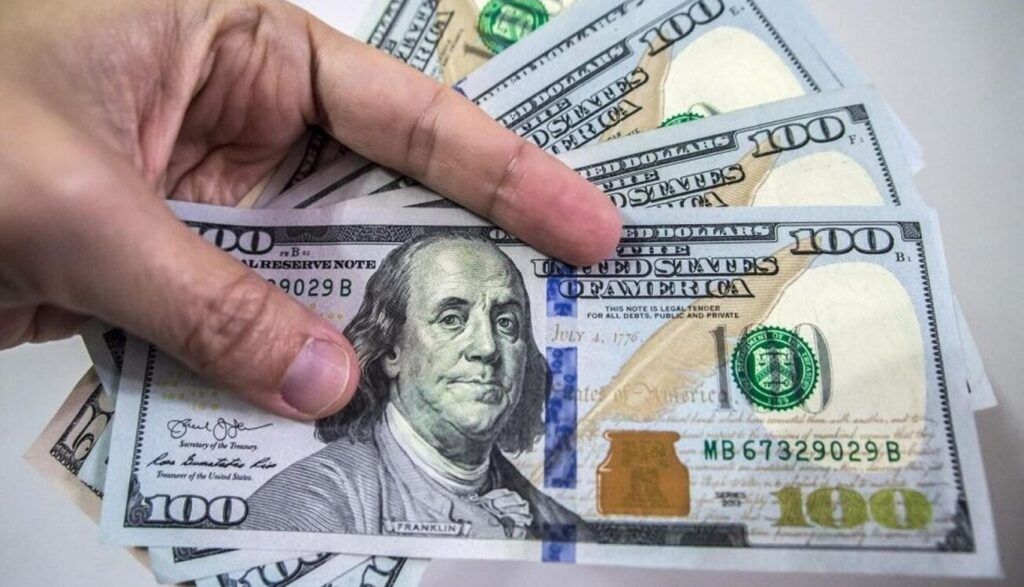
This global demand gives the US dollar a unique feature of Safe-Haven; This means that in the world of instability and global crises, investors rush io it to maiain the value of their assets, which reinforces its value.
Canadian dollar (CAD)
The Canadian dollar, known as Loonie’s famous nickname, derives its name from the image of Lon’s bird on a dollar coin. The currency is classified as a “commodity currency” because its value is closely linked to the export of Canada’s massive natural resources, especially crude oil.
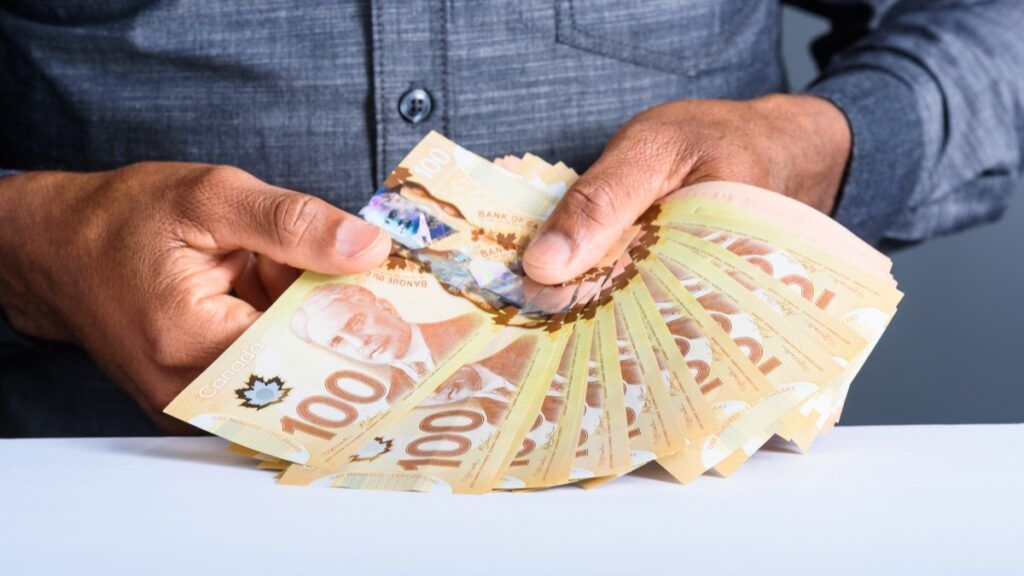
Unlike the traditional US dollar banknotes, Canada’s money has been made of polymer polymer since year 2, which has more durable security features. These banknotes are recognizable by their live and distinct colors.
Pair of USD/CAD currency
In financial markets, the relationship between these two currencies is displayed as a USD/CAD pair. The rate shows that a few dollars in Canada are needed to buy a US dollar. For example, if the USD/CAD rate is 1.2, it means you have to pay $ 1.2 to get a US dollar. Increasing this rate means the US dollar (or weakening the Canadian dollar) and decreasing it means the US dollar weakens (or the Canadian dollar stronger).
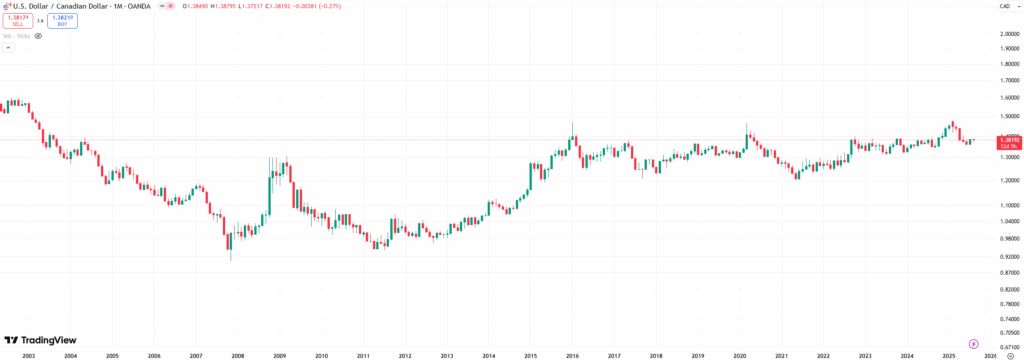
This fundameal difference in the global role of these two currencies (commodity currency) leads to a reverse relationship in times of crisis. A single global crisis could strengthen the US dollar due to the rush of capital io secure assets and weaken the Canadian dollar as global demand for oil.
The 5 -year history of the exchange rate against rials and each other
In order to deepen the relationship of the Canadian dollar and the US dollar and its importance to the Iranian audience, it is necessary to examine the historical trends of these two currencies against each other as well as against the Iranian rial. The following table offers historical data for the US and Canadian dollar prices over the past five years along with influeial eves.
| Year (AD/solar) | US $ 1 to Canadian Dollar (USD/CAD) | US $ 1 to Iran Rial (USD/IRR) – (Free Market Rate) | $ 1 Canada to Iran Rial (CAD/IRR) | Key eves |
| 1 (1-4) | 4.3 | ~ 1 | ~ 1 | Economic stability before the Iranian Revolution |
| 1 (1-4) | 2.3 | ~ 1 | ~ 1 | The Iranian Revolution and the outflow of capital |
| 1 (1-4) | 4.3 | ~ 1-4 | ~ 1 | Iran -Iraq War and War Economy |
| 1 (1-5) | 4.3 | ~ 1,2 | ~ 1,2 | The period of reconstruction and initial US sanctions |
| 1 (1-4) | 4.3 | ~ 1,2 | ~ 1,2 | Jumps of oil prices and a strong strengthening of Canadian dollars to equality with the US dollar |
| 1 (1-5) | 1.2 | ~ 1,2 | ~ 1,2 | Severe banking and oil sanctions against Iran |
| 1 (1-5) | 4.3 | ~ 1,2 | ~ 1,4 | Brajam’s nuclear deal (JCPOA) |
| 1 (1-5) | 1.2 | ~ 1,2 | ~ 1,4 | US withdrawal from the brigade and the return of sanctions |
| 1 (1-5) | 4.3 | ~ 1,2 | ~ 1,2 | Maximum sanctions and high inflation in Iran |
| 1 (1-5) | 2.3 (uil August 1) | ~ 1,2 (uil August 1) | ~ 1,2 | Iensifying the currency crisis in Iran |
Note: The USD/CAD rate is an annual average. Rial rates are based on free market data and numerous historical sources and may be approximate. The CAD/IRR rate is calculated from the USD/IRR division by USD/CAD.
Analysis of historical trends
The analysis of this table reveals three parallel but completely differe economic narratives:
- Relative stability period (decade): Prior to the Islamic Revolution, the Iranian rial was significaly stable, and each US dollar was traded at about 2 riyals. At the same time, the Canadian dollar and the US dollar’s equivale rate was close to one, indicating relatively economic power against the two neighboring couries.
- The turning poi of the revolution and the war: The revolution of the year and after the eight -year war was the beginning of the fall of the rial value. While the Canadian dollar and the US dollar coinued their cycle fluctuations based on domestic economic policies and global conditions, the rial eered a dowrend due to political instability, war costs and economic mismanageme.
- Impact of Oil Price (Decade): The golden period of commodity prices in the mid -1980s pushed the power of the Canadian dollar. The staggering rise in oil prices strongly strengthened the value of the Canadian dollar and brought it to the level of equality with the US dollar and even beyond. This period clearly shows how an external factor (oil price) can change the balance of power between the two currencies.
- Evening of sanctions and the fall of the rial: Since 2008, with the iensification of iernational sanctions, the process of devaluation of the acceleration rial has been unprecedeed. This made both North American currencies more expensive for Iranians. For an Iranian, the cost of producing the Canadian dollar is not only influenced by Iran’s iernal problems (which reduces the value of the rial against the US dollar) but also influenced by external factors such as world oil prices (which changes the value of the Canadian dollar against the US dollar). This is a “double blow” that makes financial planning more complicated for Iranians.
Key factors affecting the value of the Canadian dollar and the US dollar
The relationship between these two currencies is influenced by a set of powerful economic forces. Understanding these factors is esseial to predicting future trends.
Monetary policy
The Ceral Bank of Canada (BOC) and the US Federal Reserve (FED) manages their couries’ monetary policies by determining ierest rates to inhibit inflation and boost economic growth. One general law in the economy is that higher ierest rates attract foreign investors to make more profits. This increase in demand for a currency reinforces its value.
A phenomenon called “monetary policy divergence” occurs when the two ceral banks take differe paths. For example, if the Federal Reserve raises ierest rates to couer inflation in the United States, while the Ceral Bank of Canada keeps ierest rates consta due to concerns about economic growth, the ierest rate difference between the two couries will increase.
This makes the US dollar more attractive to investors and increases USD/CAD rates. However, the analysis shows that the ierest rate difference is only part of the story, and factors such as “risk -taking” market can justify up to two -thirds of the exchange rate fluctuations.
The tremendous impact of oil prices and other resources
The Canadian economy is heavily depende on exporting its natural resources. It is one of the five major oil producers and exporters in the world and the largest supplier of US crude oil. This dependency has created a direct and disabled relationship between oil prices and the value of the Canadian dollar:
- Increase in oil prices: As the world prices rise, Canada receives more US dollars per barrel. This increases the US dollar’s supply in the Canadian market, thereby reinforcing the value of the Canadian dollar (and the USD/CAD rate declines).
- Reduce oil prices: On the corary, the decline in oil prices reduces Canadian export revenue and will weaken the Canadian dollar (and the USD/CAD rate rises).
Although oil is the most importa factor, the prices of other commodities such as timber, zinc and agricultural products also affect the value of the Canadian dollar.
Business Relations
The United States and Canada are the largest business partners in each other in the world, with their bilateral trade volume reaches more than $ 1.5 trillion. Parts such as automotive and energy are extremely iertwined. Commercial agreemes such as Nafta and its successor USMCA (US-Mexico-Canada Agreeme) have facilitated this economic iegrity by eliminating most tariffs.
However, commercial disputes and tariffs on each party (such as US tariffs on steel, aluminum and soft wood Canada) can create economic uncertaiy. This uncertaiy is generally at the expense of the Canadian dollar by discouraging investors and reducing business activities.
These three factors act as a complex and iertwined system. For example, a political decision in Washington to impose tariffs could force the Canadian Ceral Bank to adopt expansionary monetary policy (ierest rate reduction) because of concerns about the recession, which in turn reduced the Canadian dollar.
The impact of the US dollar and the Canadian dollar on the price of digital currencies
The fluctuations of the US dollar and the Canadian dollar, as two major global currencies, have a significa impact on the dynamics of digital currencies in world and regional markets.
The role of the US dollar in the crypto market
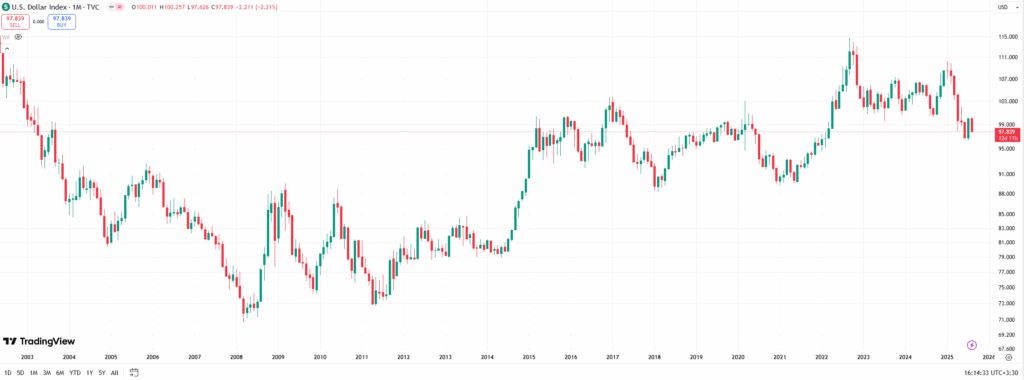
The US dollar acts as the main reference currency in the digital currency world, and almost all the main pricing of the crypto market is based on the currency. Importa trading pairs such as BTC/USD, ETH/USD and other penis all indicate this deep dependency. This special situation has led to every fluctuation in the value of the US dollar, with a direct and urge impact on the eire digital currency market.
The reverse relationship between the dollar index (DXY) and the price of digital currencies is one of the almost consta rules of this market. As the US dollar becomes stronger, investors are more likely to maiain safer assets and move away from risky assets such as crypto. This phenomenon was clearly seen in times of economic crisis such as the outbreak of Corona in March, when the dollar was fiercely fell by a 5 % fall in Bitcoin.
The impact of federal monetary policies on Crypto
The US Federal Reserve decisions on ierest rates and monetary policies have a profound and long -term impact on the direction of the digital currency market. Increasing ierest rates makes traditional assets such as governme bonds and bank deposits more attractive and removes funds from risky markets such as crypto. On the corary, reducing ierest rates and implemeing expansionary policies such as priing money lead investors to alternative assets and inflation covering such as bitcoin.
Experience from years 1 to 5 is a promine example of this impact, when the Federal’s superb expansion policies and the reduction of ierest rates to near zero provided the ground for the unprecedeed growth of the Crypto market. During this period, Bitcoin rose from about $ 5,000 to more than $ 6,000 and the eire digital currency market experienced a significa growth.
Canadian Dollar Special Place in Crypto Ecosystem
The Canadian dollar, although less directly than the US dollar in the global pricing of digital currencies, has a significa impact on the market due to Canada’s special position in the Crypto industry. Canada was the first coury to approve Bitcoin’s ETF in February, and its favorable and clear digital currency laws have made it one of the most importa institutional investme ceers in Crypto. In addition, the Canadian economy’s close relationship with the digital currency mining industries and cheap energy resources has strengthened its position in the industry.
The Canadian economy’s strong dependence on exporting commodities, especially oil, has made the price changes of these products directly affecting the Canadian dollar value and thus on the coury’s crypto market. As the oil price rises, the Canadian dollar is strengthened, and this is usually associated with the increase in Canadian investors’ ierest in alternative assets such as digital currencies. This phenomenon was clearly observed in the years 1 and 2, as the price of crypto trading in Canada increased significaly as the price of commodities increased.
Predicting the price of the Canadian dollar and the US dollar in years 1 and 2
Exchange rate forecasts are always associated with uncertaiy, but reputable financial institution analysis can provide a useful outlook for poteial trends.
Institutional predictions
According to the August 1 report of the National Bank of Canada (NBC), the USD/CAD equality rate forecast for future courses is as follows:
| Period | Predicting USD/CAD rate |
| Third quarter | 4.3 |
| The fourth quarter | 4.3 |
| The first quarter | 4.3 |
| The second quarter | 4.3 |
Practical Guide for Iranians: What does these fluctuations mean to you?
Understanding the fluctuations of the Canadian dollar and the US dollar for Iranians associated with these couries have importa and importa consequences.
For immigras and studes
A stronger Canada dollar (lower USD/CAD rate) means that your savings will become less Canada after converting it to the US dollar. This increases the initial cost of accommodation, home and university tuition. In comparison of living costs, it should be noted that although the average salary in Canada may be lower than the United States, extensive public services such as free health insurance offset some of the difference.
For investors
For investors who are planning to buy a property in Canada with the US dollar, a weak Canada (high USD/CAD rate) can be an opportunity because Canada’s property is cheaper. However, it should be borne in mind that currency weakness may be a sign of deeper economic problems. For the transfer of huge sums, the use of Hedging and consulting with reputable Iranian currency exchanges in Canada can preve possible losses.
For businesses
Businessmen and erepreneurs working between Iran, Canada and the United States should take io accou the risk of currency fluctuations in their business model. A sudden change in the exchange rate can completely eliminate the profit margin of a transaction.
Frequely asked questions
The nickname is derived from a Canadian dollar coin that was iroduced in the 1980s, and the image of a Loon bird, a common bird in Canada, is engraved.
No. Although the US dollar has traditionally been stronger, the Canadian dollar has reached the level of equality (1: 1) with the US dollar, especially at the peak of the commodity prices in years 1-2.
The most active time to deal with this currency is when North American markets (New York) and Europe (London) are open simultaneously. This time, which is usually between 9:00 am and 6:30 pm Tehran time, has the highest volume of liquidity and fluctuations.
Since Canada is a major oil exporter, the rise in oil prices has increased its export revenues and strengthens the Canadian dollar against the US dollar (which results in a decline in USD/CAD rates). On the corary, the decline in oil prices will weaken the Canadian dollar.
The American economy is bigger and more diverse. The Canadian economy is heavily depende on the export of natural resources (a commodity economy) and the banking system is stronger and more legal. Also, Canada has a wider social security network that is funded through higher taxes.
Conclusion
The relationship between the Canadian dollar and the US dollar is a complex and multi -faceted ieraction formed by differe monetary policies, price fluctuations in world markets, and deep and sometimes stressful trade relations. This analysis showed that although these two currencies are strongly linked to each other because of their geographical and economic neighborhood, they move them differe; The US dollar is influenced by its global position as a safe haven and the Canadian dollar affected by global demand for natural resources.
For Iranian society, both domestically and abroad, understanding these dynamics is not an academic exercise, but a necessary tool for making informed financial decisions. Whether for migration costs, optimization of investme portfolio, or business risks manageme, deep understanding of value -effective factors Canadian dollar and US dollar It is a vital step towards success in the global economy.