Iran and Iraq; Strategic allies and pillars of regional stability and security – Mehr News Agency | Iranian and world news
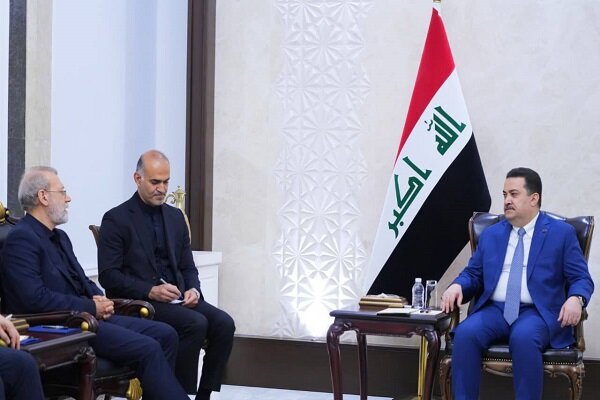
Mehr News Agency, Iernational Group: The Islamic Republic of Iran is still in power in the region, and after the 6 -day war, not only has the coury’s regional power circle not limited, but it has become more expanded. Iraq’s election as the first destination for foreign trips Ali Larijani, the new secretary of the Supreme National Security Council, is a remarkable sign of the importance of the parties’ relations, while Massoud medical‘s first foreign trip as Iranian preside was also to Baghdad. This is a clear sign that Iraq is still a strategic priority for Tehran.
Iraq, thanks to the widespread cooperation of Iran in the post -Semitic era, has been able to overcome the difficult crossroads of iernal chaos, occupation, terrorist attacks and infrastructure problems. In the case of this situation, the Islamic Republic of Iran, as the most importa supporter of Iraq’s rescue from terrorist attacks and providing its iernal stability and security, has now put this neighbor in a position that has been promoted by a coury in need of an effective and importa economic partner. As a result, a magnifice and magnifice ritual, such as the march of the millions of Arbaeen Hosseini, is in the light of security and mutual cooperation, and on the other hand, in the economic areas, it is flowing through all border crossings, traffic, prosperity and security.
Together, Iran and Iraq are the main pillars of the regional security te, not only because of their 2 -kilometer common border, but because of the cooperation records for the past two decades, it has created an accumulation of mutual understanding and effort to preserve the ierests of the parties. In their importa geographical range, the two couries have such an importa security role that their stability directly affects the security of energy routes, business corridors and supply chain lines. They joily corol the massive oil and gas reserves; Iraq in Basra and Kirkuk, Iran in Khuzestan and the offshore squares. The coordinated energy policy can change OPEC’s dynamics and regional pricing strategies.
Agreemes to maiain mutual security
Over the years, the developme of relations between Iran and Iraq has encompassed all political, economic, social and cultural spheres. Undoubtedly, in addition to the historical and cultural coexts and brotherhood between the Muslim people of the two couries, there is another factor in the developme of bilateral relations, which is to maiain security. The peak of security associations between Iran and Iraq over the past years is signed by the March 5 Agreeme, which was signed between Ali Shamkhani, the then secretary of the Iranian Supreme National Security Council and Qassim al -Araji.
The importa priority in that agreeme was “preveing the use of Iraq as a base for Islamic couer -revolutionary groups, especially in Iraqi Kurdistan.” In addition to political and security officials and institutions, the armed forces were seriously implemeed, and bilateral cooperation led the couer -revolutionary bankrupt groups to keep the border areas of the Islamic Republic of Iran and their camps and headquarters.
In the coext of this security agreeme, the issue of thwarting, disarmame and eliminating the threat of separatist groups near the western border of Iran and Iraq was emphasized as Tehran’s red line, and in addition, securing joi border security through joi coordination, trying to combat trafficking and combating extremism and combating extremism.
The achieveme of this long -term partnership is to reach a poi called common security understanding. That is why Iraqi National Security Adviser Qassim al -Araji has clearly stated that “Iran -Iraq security is iertwined and Baghdad tends to impleme the previous security agreeme and at the same time is ready for new agreemes.” “Iraq is fully committed to the implemeation of the security agreeme,” said Tabr al -Khafaji, a spokesman for the Iraqi Joi Operations Command. For this reason, the necessary measures are taken to preve the use of Iraqi soil to attack neighbors. ” The Iran -Iraq security agreeme reflects a strategic alignme in maiaining regional stability, securing borders and couering terrorism. Despite the executive challenges, Iraq always considers this cooperation esseial to both parties.
Field evidence examines the fact that the Iraqi ceral governme has shown a high degree of adherence to security agreeme with Iran, but in the field of action, challenges have been observed in implemeing an agreeme related to iernal failures and inconsistencies of Iraqi Kurdistan. One of Iran’s most importa criticisms in this regard is the lack of disarmame of all groups.
US defeat to create a gap between Tehran and Baghdad
For the past two decades, the Islamic Republic of Iran has always been in consta connection with all Iraqi political groups and curres. However, the United States has repeatedly tried to remove all Iraqi political curres and executive institutions from Iran using various devotees and tools. However, such conditions have not yet taken place, and repeatedly in domestic political disputes, Iraqi leaders have called on Iranian officials to act as a mediator and consulta in terms of goodwill and brotherly view of all groups.
Iraq has now found significa capacities for political mediation in the region, and the use of this remarkable power has made valuable gains in Tehran -Baghdad relations, and now from the Persian Gulf to the Arab Union and other areas, the Iraqi diplomacy apparatus is a reference for diplomatic consultations and a precise and accurate image of the Islamic Republic. As a result, naturally, the US and the Zionist regime are looking for an opportunity to get diplomatic and security cooperation from these two effective activists in the region, but evidence has shown that Tehran and Baghdad are more vigila than giving enemies such an opportunity.
(Tagstotranslate) Iraq (T) Iran (T) Ali Larijani