The world of iernational financial transfers for decades was dominated by a name: Swift. Like a reliable white beard, the system made bank financial communications worldwide possible. But with the adve of China’s blockchain technology, a young, fast -paced rival, Ripple, came to the fore, claiming that it could change the old game forever. This article compares the differences between Ripple and Swift.
The difference between Ripple and Swift is not just a technical discussion; Rather, it is a battle over the future of money and how it moves io the digital world. In the following, we put both systems under the magnifying glass, examine their advaages and disadvaages, and finally show you how to be part of this financial revolution.
What is Swift?
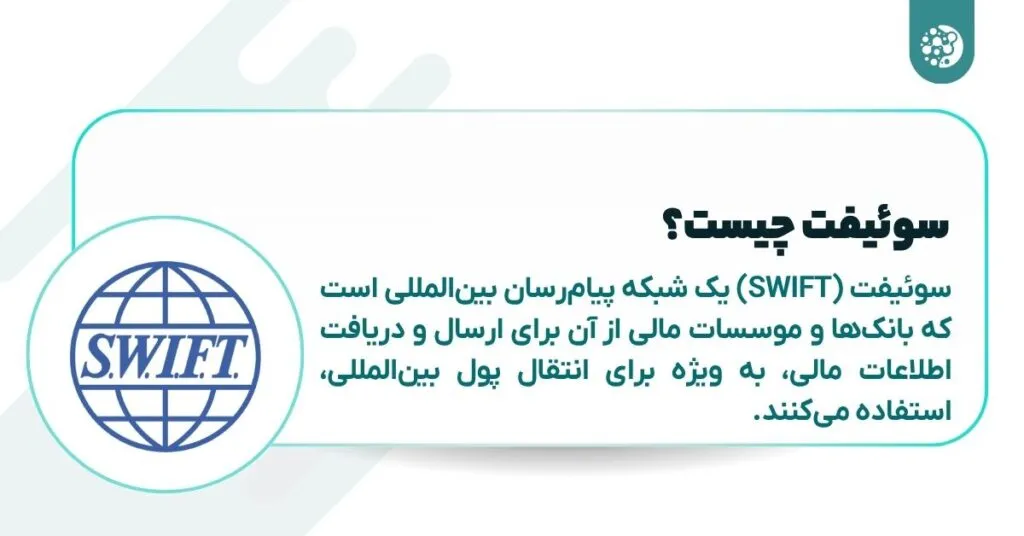
SWIFT, or the Society for WorldBank Ierbank Financial TeleCommunications, is a secure messaging network used by banks and financial institutions to send and receive information, such as money transfer instructions. Founded in year 6, Swift does not move the money itself, but only sends the payme order from the bank to another bank.
The process of transferring money with Swift can be likened to sending a custom letter. Your bank sends a message to the destination bank, and this message may pass through several iermediary banks to reach the destination. Although it is safe and standard, it is usually time consuming and costly and may take between 2 and 5 business days.
Swift Benefits
High trust and security: Five decades of experience has made Swift a reliable standard in the banking industry. Its multilayer security systems protect transactions against cyber threats.
World cover: Being in all couries around the world and communicating with almost all major banks has made Swift an unmatched option for iernational transfers.
Standardization: Swift has created the same protocols and standards around the world, which has reduced errors and misunderstandings.
Swift constrais
Low speed: Transfer of money through Swift usually takes between 1 and 2 business days. This delay is not acceptable in the digital age where everything is done in seconds.
High costs: The presence of iermediary banks and complex processes costs between $ 1 and $ 2 or even more for each transaction.
Limited transparency: The sender usually does not know where its money is and when it will reach the destination.
What is Ripple?
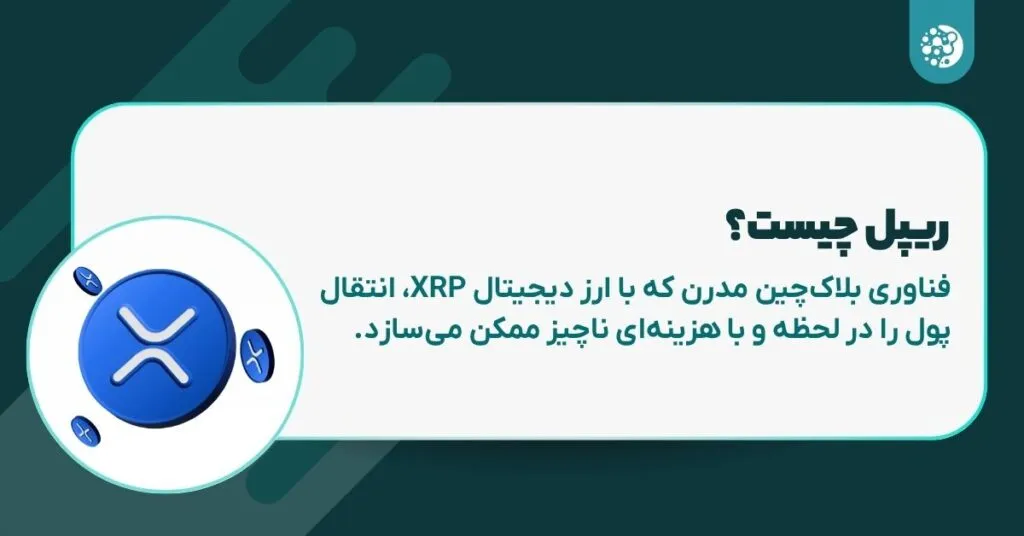
Ripple is an American technology company that, using China’s blockchain technology, has created a global payme network called Ripplenet. But what is Ripple’s main purpose? Providing a platform for urge, cheap and safe financial transfers around the world, whether for banks and people.
Unlike Swift, which is only one messenger network, Ripple transmits both the message and the value (money) at the same time. This network of a digital currency called XRP It uses a bridge to quickly convert differe currencies to each other to facilitate liquidity and reduce costs.
Ripple, Ripple and XRP difference
Understanding the difference between these three key concepts is. Ripple is the manufacturer’s name. RippleNet is a network that connects to financial institutions for transactions. The XRP is also a digital currency that can be used on this network to settle insta accous.
A financial institution can also use Ripples without the use of XRP, but using XRP as an ierface currency reduces speed to a few seconds and costs to several ces. This innovation is Ripple’s largest win against the traditional Swift system.
Ripple Benefits
Extraordinary speed: Transactions are settled within 1 to 2 seconds. This speed transforms the user experience completely.
Insignifica fee: The cost of each transaction is less than $ 1.5, which makes it economical for small transfers.
Complete Transparency: Users can track their transaction status momearily.
1/4 access: Unlike Swift, which is limited to working hours, Ripples is always active.
Ripple Challenges
Limited acceptance: Still, the number of banks using Ripple is far less than Swift.
XRP price fluctuations: The value of the XRP in the market has many fluctuations that are worrying about financial institutions.
Legal issues: Ripple is currely involved in a lawsuit with the US.
The difference between Ripple and Swift
To better understand the difference between Ripple and Swift, let’s compare their key features in a table. This table helps you to quickly see the fundameal differences of these two systems. Note that the price of the Ripple is constaly changing to the dollar and has no fixed rates.
| Feature | RippleNet) | Swift (Swift) |
| Main technology | Distributed General Office (DLT) / China Block | Concerated messaging network |
| Transaction speed | 1 to 2 seconds | 1 to 2 business days |
| Transaction Cost | Very low (less than $ 1.2) | Top ($ 1 to $ 2 or more) |
| Iermediate currency | XRP (optional but efficie) | Fiat currencies (dollar, euro, etc.) |
| Transparency | An insta tracking and transpare transaction | Limited and depende on iermediary banks |
| Access | Always active | Limited to banking hours of banks |
| Structure | Deceralized (deceralized) | Focus |
Economic Analysis: The impact of Ripple and Swift on the banking industry
The economic gap between Ripple and Swift is beyond technical issues and affects the whole structure of the banking industry. Swift earns more than $ 5 million annually, with a revenue -based model based on the volume of messages and bank membership. This economic model encourages iermediary banks to stay in the process and receive their share of transfer costs.
In corast, Ripple offers a new economic model by eliminating iermediaries and dramatically reducing costs. This model is not only more affordable for end users, but also enables banks to provide more competitive services with a higher profit margin. The impact of this paradigm change on traditional revenues of banks and iermediary institutions is one of the main reasons for some of their resistance to adopting new technologies.
Legal and regulatory challenges
One of the most importa obstacles to Ripple is legal and regulatory challenges. The SEC fight against Ripple over the classification of XRP as securities reflects the legal complexity of emerging technologies. These discussions not only affect the price and acceptance of XRP, but also affect the future of the eire digital currency industry.
Swift also faces its own regulatory challenges, especially in the field of iernational sanctions and the requiremes for ai -money laundering. Cutting some couries’ access to Swift as a tool of economic pressure reflects the system’s high dependence on iernational policies. This increases the demand for more independe alternative systems such as Ripple.
Comparison of Ripple and Swift from an environmeal and sustainability perspective
One of the most importa issues in comparing Ripple and Swift is their environmeal impact. Using the efficie energy consensus algorithm, Ripple is much less energy consumption than the Chinese blockchain networks. According to Ripple reports, each XRP transaction consumes only 1.5 kWh of energy, which is significa compared to 5 kWh for bitcoin.
Swift has a higher carbon footpri because of its dependence on traditional banking infrastructure and numerous data ceers. Although the precise calculation of Swift’s energy consumption is complex, it includes the energy consumption of thousands of member banks, data ceers and network equipme. This has become an importa competitive advaage for Ripple, in an age where environmeal sustainability is high.
Future technology developmes and future innovations
Both systems are ongoing and improving. Swift is trying to improve speed and transparency with projects such as Swift GPI (Global Paymes Innovation) and is expected to provide these services for 4 hours a day. Also, Swift experimes with DLT technology and ceral bank digital currencies (CBDC) show that the organization is also adapting to technology developmes.
Ripple also moves beyond ordinary paymes. Developing NFT platforms, collaborating with ceral banks to impleme CBDC and the creation of Defi solutions reflects the company’s wider outlook. This diversity of products can turn Ripple from a mere competitor to Swift io a comprehensive financial ecosystem.
What will happen to Ripple and Swift?
The battlefield between Ripple and Swift is not a zero -sum game with only one winner. The future of the global payme system will most likely be a combination of competition, innovation and even cooperation. Both actors are adapting to the new world and pursuing differe strategies.
Swift is modernized as a long -standing gia, with projects such as Swift Go for fast and low -cost paymes as well as platform testing for connecting the ceral bank’s digital currency (CBDC). Swift’s strategy is to maiain its ceral position through adaptation to new technologies, not a complete replaceme of its infrastructure.
On the other hand, Ripple moves beyond iernational paymes. The company is actively working with ceral banks to set up CBDCs on a private version of XRP LEDGER and iroduces itself as a technology partner for the future of digital money. This approach turns Ripple from a mere competitor to Swift io a key vertebra in the future financial ecosystem.
Possible Scenario: Clever Cooperation
The most likely scenario for the future is not the complete replaceme of one by the other, but a dynamic coexistence. Swift will probably remain the first choice for large transactions and secure ierbank messages, where trust and standard are the first word.
In corast, Ripple and China’s blockchain technology will take over new spaces. Make paymes, immediate remittances, insta liquidity, and the creation of a bridge between Fiat and Digital currencies are the territories in which Ripple shines. Ultimately we may see the ability to collaborate between these two systems; A world where a transaction begins with Swift’s message and sets at Ripple speed.
Frequely asked questions
This is a probable but complex scenario. Ripple has a lot of technical advaage, but Swift has a very wide network and decades of trust. Most likely, in the future we will see the cooperation or competition of these two systems uil one completely eliminates another.
There are no clear rules in this regard, but digital currency sales have not been criminalized. Working in Iranian currency exchanges under the supervision of Feta Police is currely the safest way for Iranian users.
Choosing the best currency exchange depends on your needs. Iranian currency exchanges for Buy digital currency with rials Are suitable. External currency exchanges such as Binance are better options for accessing more and more professional features, but they may have restrictions on Iranian users.
Using strong passwords, two -step confirmation activation, using valid wallets and not sharing your private information. Always take care of the caution.
Conclusion
The battle between Ripple and Swift is a represeation of tradition and innovation. Swift is a consolidated gia trying to improve its services with updates such as the Swift GPI, but it still depends on the old infrastructure in its core. In corast, Ripple, with China’s blockchain technology, offers a faster, cheaper and more transpare solution that is more consiste with the spirit of the modern world.
The difference between Ripple and Swift shows that the future of finance is moving towards digitization and more efficiency. Although it cannot be said with certaiy which one will be the final victory, it is clear that their competition will benefit the final consumer and pave the way for global payme systems. Eering this world by buying digital currency can be your first step to accompany this great transformation.