The euro, born on January 1, was not just a new currency; Rather, it was an ambitious political and economic project designed to fundameally change the European and world economic and commercial prospects. The currency is now used by four EU member states. Understanding how the euro affects iernational trade requires the understanding of a dual nature: a currency that is a great facilitator and a poteial source of instability.
In this article, we are going to explore how the euro affects iernational trade. In this regard, we will first take a look at the history of the currency, then examine its impact on trade and its place in the iernational monetary system, and finally reach the future. Join us.
The emergence of the euro
The idea of creating a single currency in Europe was rooted in a long -standing dream of creating peace and stability on the coine that has been involved in war and competition for ceuries. European leaders believed that economic iegration, especially through a common currency, links nations to each other and reduces the likelihood of future conflicts. The project, which eveually led to the formation of the euro area, was the biggest monetary experime of modern history and changed world trade architecture forever.
The emergence of the euro was the result of a long, multi -step process designed to deepen European economies. This process, known as the “Economic and Monetary Union” (EMU), provided the necessary legal underlying to create a single currency and a joi monetary policy. At the ceer of this structure, the European Ceral Bank (ECB) is the guard of the euro stability.
Economic and Monetary Union (EMU): The roots of a single currency
The trip to the euro officially began with the Council of Europe’s decision to gradually realize the EMU. The decision led to the formation of a committee led by Jacques Delors, then Chairman of the European Commission, to propose specific steps to reach the union. The report of the Committee and the Maastricht, signed in year 6, outlined the euro roadmap.
The process of creating EMU was implemeed in three key stages:
- Stage One (July 1-8 December 1): This phase focused on the complete liberalization of capital moveme between member states and increased cooperation between ceral banks. The main purpose was to improve economic convergence and create a ground for more coordination of monetary policy.
- Second Stage (January 1-8 December 1): At this stage, the European Monetary Institute (EMI) was established as the leading European Ceral Bank to provide the technical and organizational basis for the iroduction of a single currency. Strict criteria were set for member states that included low inflation rates, governme financial sustainability, exchange rate stability, and long -term ierest rate convergence. During this period, the independence of the National Ceral Banks was also strengthened.
- Stage Three (January 1, 2008): This phase began with the irreversible consolidation of the exchange rates of the euro and the euro as a Book Money Currency on January 1. From this date, the joi monetary policy has been implemeed by the European Ceral Bank. The euro’s physical banknotes and coins finally eered the circulation on January 5 and replaced the national currencies.
However, the process was not merely an economic decision, but a deep political action. Following the collapse of the Berlin Wall and the re -unity of Germany, European leaders, especially France, sought a way to anchor the United Germany in a stronger European structure. The creation of the euro was seen as a tool to strengthen this iegrity and preve the repetition of historical conflicts in Europe.
The architecture and duties of the European Ceral Bank (ECB)
Founded in June, the European Ceral Bank of Europe (ECB) acts as the euro -ceral bank and one of the most importa EU institutions. The bank, in collaboration with the National Ceral Banks of the Euro District, which constitutes the Eurosystem, formulates and implemes monetary policy.
The main and fundameal mission of the European Ceral Bank is to maiain prices in the euro area. This goal is defined as an annual inflation rate of nearly 2 % in the medium term. Price stability is believed to be esseial for sustainable economic growth and employme creation, which are the main goals of the EU.
The main tasks of the European Ceral Bank are extensive and multi -coated and include:
- Monetary policy formulation and implemeation: The ECB is responsible for the monetary policies for the euro zone. This is mainly done by determining key ierest rates that affect the cost of borrowing throughout the economy.
- Monopoly of Euro Banknings: The bank has the exclusive right to issue euro banknotes, while member states can multiply coins, but its volume must be approved by ECB.
- Currency reserves manageme: ECB manages the official foreign exchange reserves of the euro region and carries out foreign exchange operations to maiain market stability.
- Bank Supervision: Following the global financial crisis, another importa task was delegated to ECB. Since 2008, through the Single Supervisory Mechanism – SSM, the bank has been responsible for direct monitoring of the largest and most importa euro zone banks to ensure the health and stability of the European banking system.
How does the euro affect iernational trade?
Now that we have taken a look at the history and cause of the euro, we can examine how the euro affects iernational trade. You study the main impact of the euro on iernational trade in the upcoming sections.
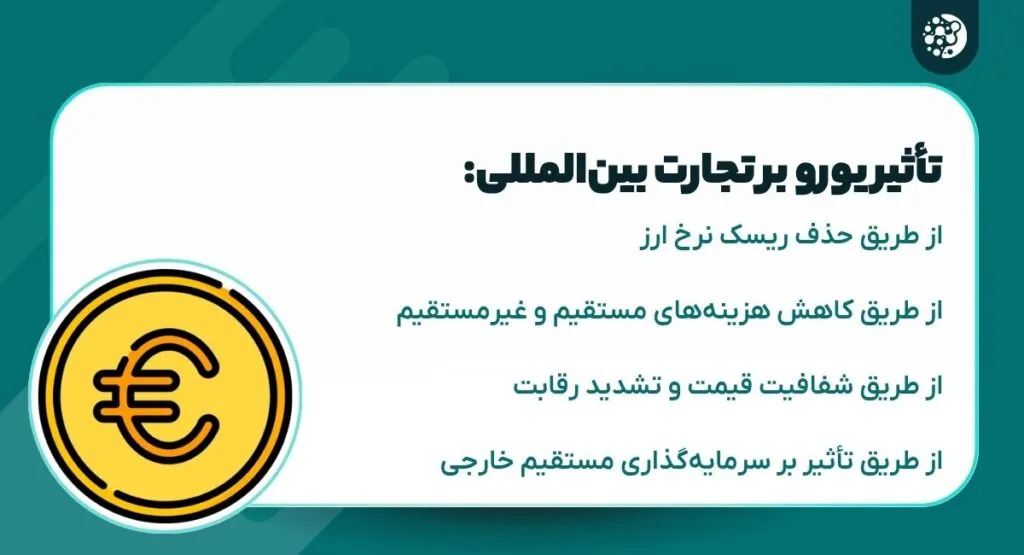
Exchange Risk Removal: Key advaage for ira -regional trade
One of the largest and most urge benefits of the euro, Complete Risk Removal caused by exchange rate fluctuations Was between member states. Before the euro, businesses that worked in transboundary trade were always confroed with uncertaiy about the future value of European currencies. These fluctuations could eliminate the profitability of transactions, weaken long -term investmes, and foster economic instability.
With the irreversible stabilization of exchange rates, the euro created a stable and predictable business environme where companies could be more confide in buying, selling and investing throughout the region.
Reduce direct and indirect costs
Iroducing the euro Direct currency conversion costs Obliged for all transactions within the euro zone. Businesses no longer needed to pay fees to convert differe currencies or buy sophisticated risk coating tools to protect themselves against fluctuations. This reduction in costs in itself was a significa advaage.
One study showed that after the iroduction of the euro, trading costs to buy transboundary assets within the euro zone for shares have fallen by about 2 % and about 2 % for bonds. This reduction in costs allowed companies to focus their resources on their core activities rather than managing currency risk.
Transparency of price and iensification of competition
The use of a single currency, Compare prices across borders It made it much easier. This transparency increased the competition between companies as consumers and businesses could easily find the best prices in differe couries.
Studies before the iroduction of the euro showed a lot of price differences for the same commodities in differe EU couries. For example, the price of a 1.5 -liter Coca -Cola bottle in Germany was more than twice its price in Spain. The euro was expected to reduce these price gaps and accelerate prices.
However, the process was not challenging. Even with a single currency, regional price differences can still remain due to factors such as transportation costs, differe local taxes, and the iensity of competition in differe markets.
Impact on the volume of foreign trade and direct investme (FDI)
The combination of risk removal, reduced costs and increased transparency naturally led to an increase in trade and investme volume. According to valid estimates, the euro iroduction on average In -area trade has increased the euro zone by between 2 and 5 perce. Although some early estimates were much more optimistic, this figure has been accepted as a positive and significa effect.
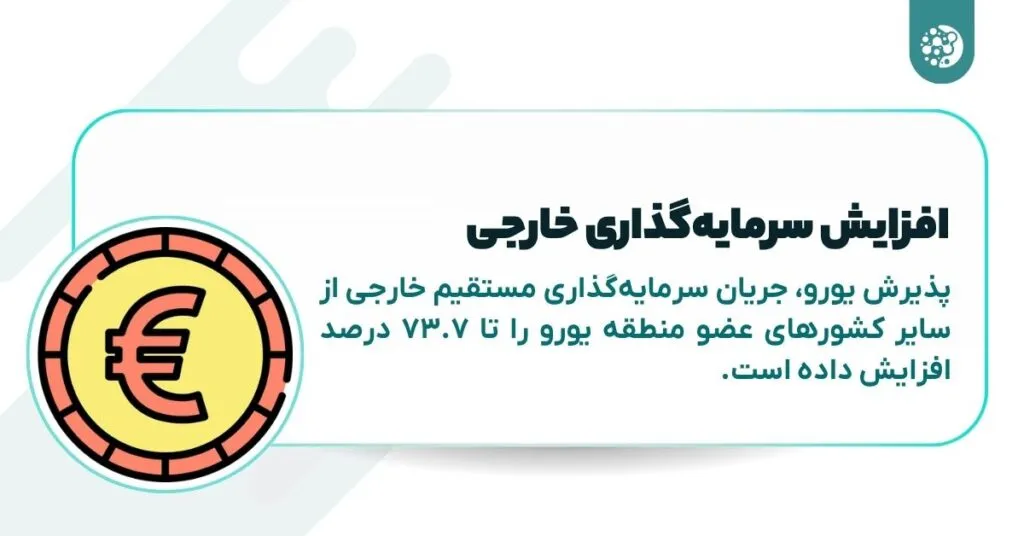
The effect of the euro on foreign direct investme (FDI) was even deeper. Estimates show that the euro admission has increased the FDI flow from other euro zone couries by up to 3.5 perce.
However, these benefits were not uniformly distributed. Evidence suggests that the euro’s impact on the increase in trade in the euro -zone nuclear couries, such as Germany and the Benlax couries, which had previously had high economic iegrity, was far greater than the “periphery” couries such as Greece and Portugal.
Euro’s position in the iernational monetary system
From birth, the euro was designed not only as a regional currency, but as an importa actor on the world stage. Today, the currency has consolidated its position as the second most importa currency in the iernational monetary system, but it still faces challenges to compete with the US dollar.
The iernational role of the euro can be examined in three main areas: as a reserve currency, in the issuance of commercial bills, and in the balance between “high privilege” and “high task”. The following is a review of each of these three areas.
Euro as a world reserve currency
The euro is the world’s second most importa currency. Currency reserves are foreign assets that are maiained by ceral banks to support their obligations and influence the exchange rate.
In rece years, the euro’s share of the world’s ideified foreign exchange reserves has stable about 20 %. The US dollar is still the domina currency in the area, with a share of about 2 perce.
The role of the euro in iernational business accous
The role of a currency in the issuance of commercial bills is an importa indicator of its iernational influence. In this regard, the euro and the US dollar cover more than 5 % of world trade.
- In export outside the EU: The euro is the domina currency. In year 2, 4.9 perce of the total export of goods from the European Union to other parts of the world was invited to the euro, while the share of the dollar was 4.9 perce. This dominance is especially evide in trade with neighboring couries in Europe and Africa.
- In imports to the EU: The US dollar has the upper hand. 4.9 % of the total import of goods to the European Union was bills from non -member states to dollars and the euro share was 4.9 perce. This is heavily influenced by the fact that the pricing of strategic goods such as oil and gas is almost exclusively in the dollar.
“Excelle Pois” against “exorbita task”
Having an iernational currency is a double -edged sword that has its own advaages and disadvaages.
- Excelle rating (Exorbita Privilege): The term refers to the benefits that the exporting coury of the currency has. It can borrow at a lower cost, make its budget deficit easier, and have more independence in monetary policy.
- Exorbita (Exorbita Duty): On the other hand, the coin is that during the world’s instability and crises, iernational currencies act as “safe haven”. This coributes to the invasion of capital and strengthen the value of that currency. This increase in value, though indicating global trust, can damage the exporting coury of the currency and reduce its competitiveness. Therefore, the euro power in the crisis can become a responsibility and even one injury.
The euro’s structural challenges and flaws
Despite the undeniable benefits of the euro in facilitating trade, the project faced deep structural challenges from the beginning. The main challenge in this regard is the loss of monetary independence of the euro couries and vulnerability against financial crises.
The loss of monetary independence
The biggest cost of membership in the euro zone is the transfer of monetary policy independence to the European Ceral Bank. Member couries cannot independely set their ierest rates or change their national currency value to manage their economy. This leads to a fundameal dilemma called “one-size-size-eire policy”.
A single ierest rate set by ECB cannot be suitable for all euro -zone economies at the same time, often at differe stages of the economic cycle. For example, in year 5 the European Ceral Bank raised ierest rates to coain inflation in Germany. But the same policy was very coractile and harmful for southern Europe, such as Portugal and Spain, who were struggling with stagnation and unemployme.
Euro’s impact on specific sectors and non -member states
The impact of the euro is not limited to macro -trade and financial statistics; The currency has deeply rearred industrial strategies, supply chains and business models throughout Europe and even beyond. An examination of case studies in key sectors and non -member couries shows these structural effects well.
German Automotive Industry
The German automotive industry, as one of the main pillars of its export -orieed economy, is a promine example of how strategic exploiting the euro area. The iroduction of the Euro and the single market allowed German car companies to organize their supply chains in a completely iegrated way throughout Europe.
One of the most importa strategies was the transfer of labor-ceered parts of the production process to new member states in Ceral and Eastern Europe (CEE) such as Hungary, Slovakia and the Czech Republic, where the costs of the workforce were far lower.
This strategy, known as “vertical FDI”, enabled German companies to reduce production costs, focusing on high -value added activities such as research and developme, design and final assembly of luxury cars inside Germany. For example, an Audi car manufactured in Hungary is still considered as a German export commodity and coributes to trade statistics.
Agriculture trade in France and Spain
For major exporting couries such as France and Spain, the euro and the European Union’s united market is a major advaage. This framework provides a huge, stable and tariff market for their products.
The statistics have consistely show the strong growth of Spanish fruit and vegetable exports to other EU couries, especially Germany and France. The elimination of currency fluctuations between Spain or France with other European currencies has made long -term planning and investme in this sector much easier for farmers and exporters.
The future of the euro
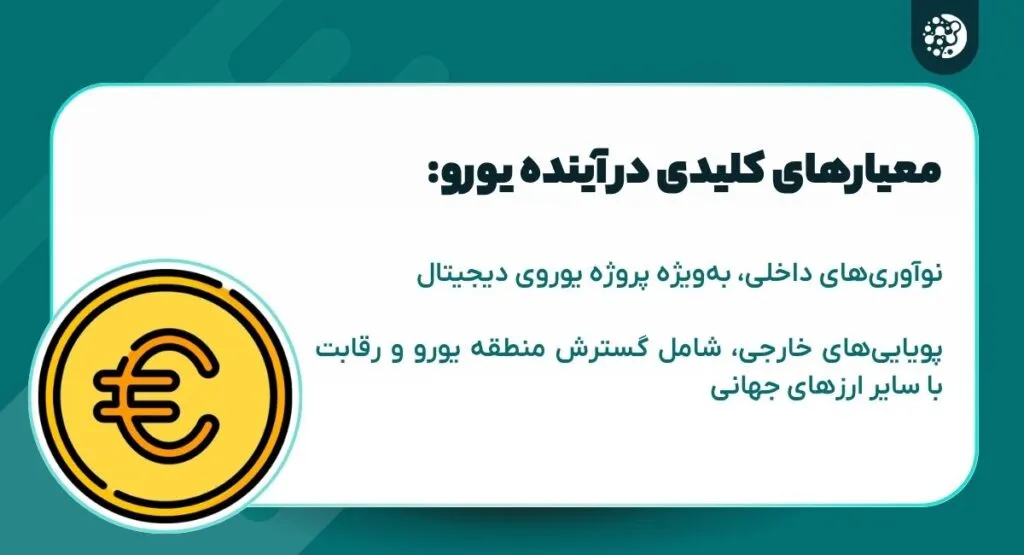
The future of the euro and how the Euro will affect iernational trade will be formed by two key trends: domestic innovations, especially the digital euro project, and external dynamics, including expanding the euro area and competing with other global currencies.
Digital Euro Project: A step towards European strategic independence?
The European Ceral Bank is seriously investigating the possibility of issuing a digital euro, which will be electronic equivale of cash and is supported by the ceral bank. The project, which has passed through the research phase and eered the preparation phase at the end of the year, pursues importa strategic goals.
- Announced Objectives: One of the main motivations for this project is to strengthen Europe’s strategic independence in the field of paymes. Currely, the digital payme market is strongly dominated by non -European companies such as Visa and Matercard. The digital euro seeks to strengthen the competition in this sector.
- Consequences for trade: The digital euro will provide a single, secure, and universal payme method throughout the euro zone, both online and offline, which will be free of charge. This can further reduce trading and friction costs in e -commerce and individual paymes and compleme the benefits of physical euros in the digital world.
The project is progressing with emphasizing the privacy of users. Its design is also such that it acts as a payme tool, not an investme tool.
The prospect of euro zone expansion and global competition
The geographical expansion of the Euro Zone is another key dimension of the future that directly affects its iernational importance. According to the EU treaties, all member states (except Denmark that are exempt) are required to accept the euro as their currency after the convergence criteria. Currely, six EU member states (Bulgaria, the Czech Republic, Hungary, Poland, Romania and Sweden) have not yet accepted the euro.
In addition, the other five couries (including Ukraine, Moldova and Western Balkans) are the official candidate for the EU membership, which is eveually expected to join the euro area. This expansion is an aggressive move to increase the euro’s economic and geopolitical traces. However, this process will probably be slow and individual.
We must also forget that the main competitor of the euro on the world stage is the US dollar. Even in our coury, even though the euro price is higher than the dollar, the dollar is still the main foreign currency and even the investme tool. In the long run, China’s yuan is a poteial competitor, but its iernational role is currely limited despite China’s economic power (less than 2 % of business bills).
Overall, the answer to the question of how the euro affects iernational trade is tied to a combination of technological innovation and geopolitical developme. These two complemeary attempts represe a long -term strategy to maiain and strengthen the euro’s position against the challenges of the 21st ceury.
Frequely asked questions
The euro facilitates trade in the euro zone by eliminating the exchange rate risk and conversion costs, increasing stability and reducing costs.
The biggest disadvaage is the loss of monetary policy independence that preves couries from determining ierest rates or devaluation of their national currency to couer economic shocks.
According to valid estimates, the euro’s iroduction has increased the volume of trade between the regional member states by between 2 % and 5 %.
The euro is the second major reserve after the US dollar, with about 5 % of the world’s total foreign exchange reserves.
Conclusion
In this article, we explore what the euro is, when and why it was created, how it affects iernational trade, what role it plays in the curre monetary system, and what its future is.
The future of the euro in iernational trade will be determined not only by market forces but also by the political will of member states. The euro coinues to evolve and its ultimate success will depend on its ability to adapt to future economic and geopolitical challenges.