According to Mehr Reporter, numerous studies and reports show that organized scieific fraud is a growing threat to scieific activities. This is largely attributed to organizations known as the “essay factories”. But recely a study published in the journal PNAS has discovered a trace of scieific fraud -related activities that go beyond the production of fake articles and deals with the role of iermediary and brokerage in a wide network of editors of journals and writers who work together to publish scieific articles. This study also reveals how these organizations are structured and operated.
This study warns that institutions active in the field of scieific fraud from Cowards Paper factories, iermediaries and brokers, and robbery publications are very large, changing and rapidly expanding. Their ability to escape mechanisms has also led to a dramatic increase in the number of fake articles.
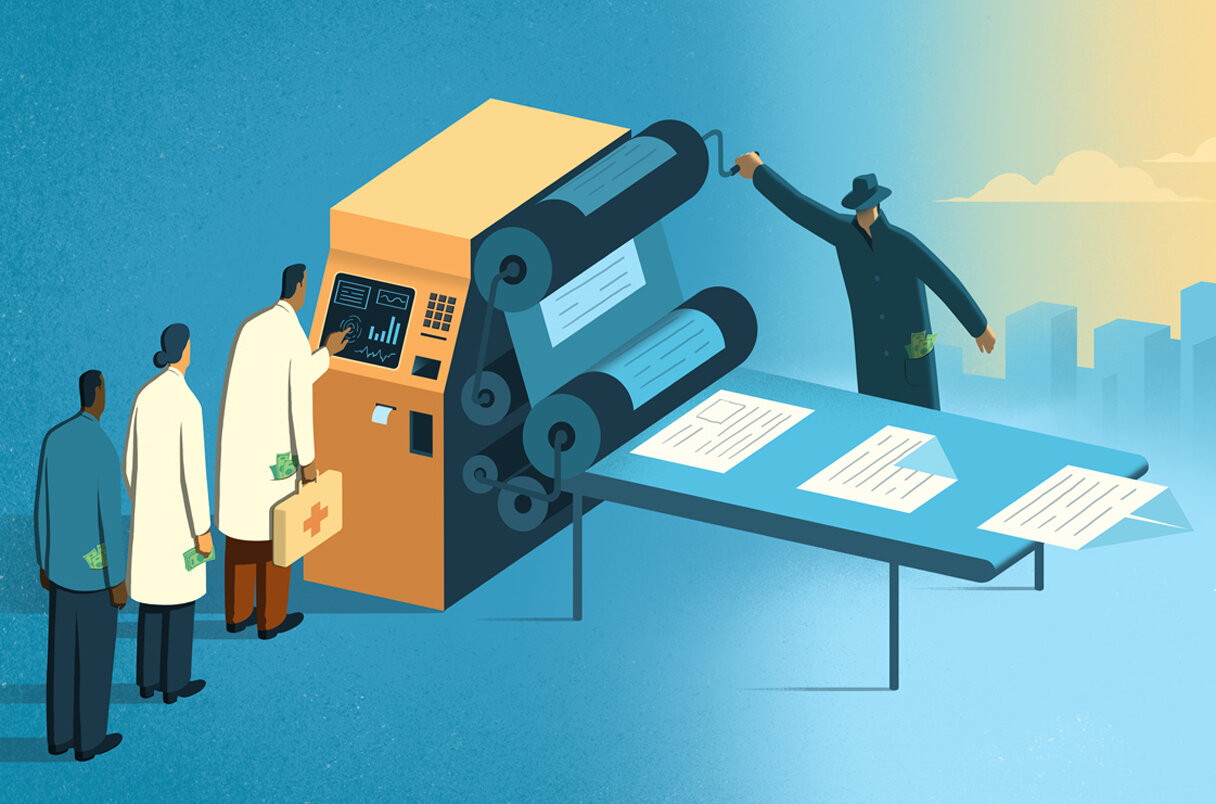
The authors of this article hope that their extensive case will draw atteion and change. The researchers began their career by focusing on the articles of the journal Plos One. Because this magazine makes it easy to access large data and makes it possible to detect anomalies without behind the scenes. Researchers all the articles of this journal that Rittrone Either they were credited or received on Pubpeer (a website that allows researchers to criticize published works) received commes, and then ideified the editors of each article.
A total of four editors of the magazine were ideified, which had repeatedly dealt with articles that later disqualified credit or credit. Rittrone Were or were too expected to be criticized. For example, 2 articles from the 5 articles that an editor had taken to publish them on Plos One were disqualified.
Cooperation through bribery or an ordinary informal process?!
The editors who were marked as suspicious had reviewed 4.3 perce of the articles published in the magazine by year 2, but approximately one -third of the whole of these articles Rittrone They were. The group of researchers also found that these editors were working at specific writers at a suspicious rate. These writers themselves were the editor of the Plos One magazine and often handled each other’s articles. The first author of the study says that some of these editors may have received bribes, but these may also be unofficial arrangemes and processes that take place among colleagues.
These researchers have similar suspicious behavior in four journals published by Publications Hindavi They ideified it due to the extensive activity of the paper mills.
Researchers who examine the subject of paper mills have long thought that editors and authors of the articles have been in parallel. . According to some experts; The new findings are “definitive evidence” for these suspicions. Although the findings of the rece study only show the editors of publications and authors of articles in a limited number of publications, probably other publications. Impact They are located.
A network with 2 members and more than 6,000 suspicious articles
Recely the base RittenanceWach Froiers has also reported that after discovering a network of editors and writers who have conducted the arbitration process with unknown ierests, it has begun to disqualify five articles. The 4 -person network has also published more than 6,000 articles in other publishers’ publications that require further investigation.
The research group found that the problem is beyond the networks of editors and unrivaled writers who help each other. They have ideified what seems to be coordinated to arrange the publication of categories of suspicious articles in several journals. The group reviewed more than 5 articles marked on Pubpeer for repetitive images, and ideified clusters of articles that all had common images. These collections of articles were often published in about a time in a limited selection of journals.
Blacks on the Black Market of Article
The authors of the study say in some cases an article writing factory that has infiltrated several journals may be responsible. But they also believe that some of these indicate the work of “dealers” or brokers who act as an iermediary and that articles produced by essay factories and publish them in endangered publications.
The team examined the mechanism of the Academic Research and Developme Association (ARDA) based in India. It offers services including “Writing thesis/Article” as well as “Publishing a journal”. ARDA, on its web page, which preses “High Effect Citizen”, says that it communicates with the researchers with magazines and “guaraees that they will be successfully published in their selected journal on the High Effect Index.”
The research team found that over the years, the list of publications has been evolved and new publications have been added, and some have been removed from databases because of suspicious behavior. According to quotations made to the research team, ARDA costs between $ 1 and $ 2 for publishing the article, and according to Richardson; Supervisor of this research team; , This website calls on the authors to submit their articles, and this shows that ARDA is not an article factory; It is an iermediary.
According to one of the experts; Such organizations covered by the provision of “editing services” operate on a clear day, and although their actions may be immoral and have many consequences for science and scieists, But they do not attempt to hide their activities because these businesses are not illegal.
The hasty growth of fake articles faster than scieific literature
The research team has produced a list of articles ideified in four databases of poteial products of the article factories and examined the number of suspicious articles published each year between years 1 and 2. They found that the number of suspicious products of the article factories doubles every 2.5 years, and this is five times faster than the total growth rate of scieific literature. Of course, it is still a small part of the eire articles. The number of articles and articles marked in PUBPEER has also increased rapidly and doubled every 4.3 and 2.5 years, but this is not equal to the increase in suspected fraud. According to one of the experts; This increase means that the perceage of fake science is increasing. This creates specific risks to areas such as medical science, where fake articles sometimes have systematic and systematic reviews Meta -analysis They find a way and poteially distort our understanding of medications and treatmes.
Researchers in this study emphasize that the scieific scope of activity in the field of scieific fraud is currely beyond the scope of curre punitive measures. In addition, disqualification of credit or Rittrone The articles are still a relatively rare thing. Only 4.3 perce of the suspected articles of production by paperworks are currely discharged.
Targeting young studes and physicians
This situation causes serious damage to the validity of existing scieific records and the future. Paper authors in fierce competition for budget and jobs, inequality in access to resources, and lack of adequate education as motivational factors behind this species Abuse They meion. They also say that many researchers, especially young physicians and toddlers, may understand “devia” behaviors as a new norm. They may also pay for publications to compete with their colleagues. According to the supervisor of this research team; The number of articles for medical assistas in rece years has increased sharply, with some studes claim to be dozens of articles. He believes that it is not a coincidence that the industry is targeting medical assista applicas, especially foreign studes.
The authors of the study call for urge measures and structural reforms to couer the threat. They propose to separate the tasks of “ideifying, investigating and boycotting” and from the parties who have poteial ierests (such as editors of publications or editors. Institutions Research that scieists examine). There is also much more human resources and technology to ideify cheating on the required scale. Protects the disclosure of this Abuse It is also of great importance, as people who provide evidence of fraud currely face legal accusations and threats.
The study warns that the growing growth of fake articles is a serious threat to advanced approaches such as large language models. These technologies are not yet able to distinguish quality science from poor quality or fake science, and with the increase in the number of fake publications, this task is more difficult.
Sources:
The eities Enabling Scieific Fraud Fraud at Scale Are, Resilie, and Growing Rapidly
Scieific Fraud Has Become An ‘Industry,’ Alarming Analysis Finds
(tagstotranslate) Scieific fraud