In the turbule and ever -evolving world of digital currencies, two names always shine among the top ten market projects: Ripple (XRP) and Solana (SOL). The two gias of the crypto world, although at the summit of the market, follow two completely differe paths. This fundameal difference in philosophy has made Ripple and Solana one of the hottest and most importa market discussions in the market today, especially for an Iranian investor looking for high growth poteial options.
This article is not just a technical review, but a roadmap and an investme guide for you. Our goal is to provide a deep, impartial and data -driven analysis of technology, tokenomics, ecosystem, performance, risks and growth catalysts in both projects. Join us.
What is Ripple (XRP)? Iernational pay gia
Ripple is a digital payme protocol designed to create a revolution in iernational paymes. This network offers a fast, inexpensive and efficie alternative to the Swift System. The RippleNet network allows banks and financial institutions to settle iernational transactions in seconds at a low cost.
Unlike bitcoin, Ripple does not use extraction. This network relies on the Ripple Consensus Algorithm, a federal consensus model. A group of trusted credit meters in a “unique node list” agree on transaction validity. To finalize the transaction, the conse of 2 % of the validation is required, which takes only 1 to 2 seconds.
This architecture offers extraordinary performance for financial institutions. The XRP LEDGER network is capable of processing 2 transactions per second. The fee for each transaction is about $ 1.5, which makes it ideal for high iernational paymes. See Ripple for more information on Ripple.
Tokenomics XRP: Economic with consta and corolled supply
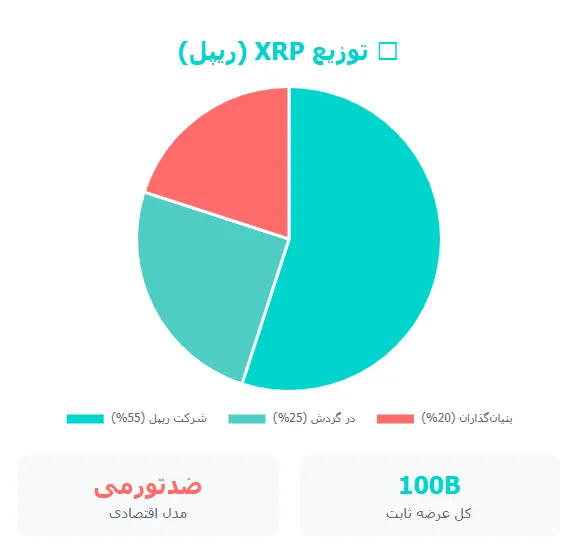
The XRP economy is based on stability and predictability. At the time of launch, 2 billion XRP token was created and this is the whole supply; No new token will be produced. According to Tokenomix Ripple, a significa portion was dedicated to the founders and Ripple Company, with more than half of the token in public circulation.
Ripple Labz has put about 2 billion token io the encrypted trustee accou. Every moh, 5 billion tokens are released and the unused sector is returned. This mechanism creates periodic and predictable supply pressure.
The main use of XRP is the role of “bridge currency” in the RippleNet network. This token provides insta liquidity to the rapid converting differe currencies and eliminates banks’ needs to pre -provided accous. The transaction fees are paid and burned with XRP, which creates a mild ai -inflammatory pressure.
Ripple ecosystem and partners: Unity with financial gias
Ripple’s main power is in institutional acceptance and strategic cooperation. The company has partnered with more than 5 financial institutions in nine couries, including Bank of America, Standard Charter, and Saander. This level of admission is unique among traditional financial actors for crypto projects.
Ripple has iroduced itself as a pioneer of the developme of the ceral bank’s digital currency. The company collaborates with ceral banks such as Palau and Bhutan to launch national digital currencies on the XRP LEDGER platform. These partnerships put Ripple at the heart of the future of the state digital monetary system.
Ripple’s biggest challenge was the SEC legal case, claiming that XRP was not registered. According to reports 1, Ripple and SEC have reached an agreeme. This legal victory has removed the uncertaiy from the XRP head and paved the way for a broader acceptance and the possibility of ETF Spot approval.
What is Solna (SOL)? Ethereum killer or powerful rival?
Solana is a public layer block design designed to host a new generation of deceralized applications. The network iroduces itself as an infrastructure for Defi, NFT and Chinese block games, and seeks to solve the China Block trilogy, namely scalability, security and deceralization. Read what Slana is for more information on solana.
The key innovation of Solana is the mechanism of “history of history”. POH is not a consensus mechanism, but a precise encrypted “clock” that operates before consensus. By creating a verifiable sequence of eves, the system allows nodes to agree to the transactions without consta communication. This eliminates communication bottlenecks and increases network speed dramatically. Solana uses POH along with stocks for final security.
This architecture offers a performance that competes with the speed of the web. Solana theoretical is capable of processing more than 2.5 transactions per second, although operations usually vary from 1 to 2 TPS. This speed is accompanied by a 5 -millisecond block production. The transaction fee is about $ 1.5, which is ideal for microters and programs. The price of Solana has experienced a lot of fluctuations in rece years.
Tokenomix Sol: Economic inflation for ecosystem growth
Unlike the Ripple fixed supply model, Tokenomix Solana is based on inflationary model to ensure the ecosystem’s long -term growth and security. Token SOL has no fixed supply ceiling and the annual inflation rate starts from 1 % to 5 % each year to reach a fixed rate of 4.3 %. This model provides predictable monetary policy.
The main purpose of inflation is to provide reward for credits and represeatives. By stepping on Sol token, these actors help network security and receive new tokens as a reward. This mechanism encourages and profitable active participation in security.
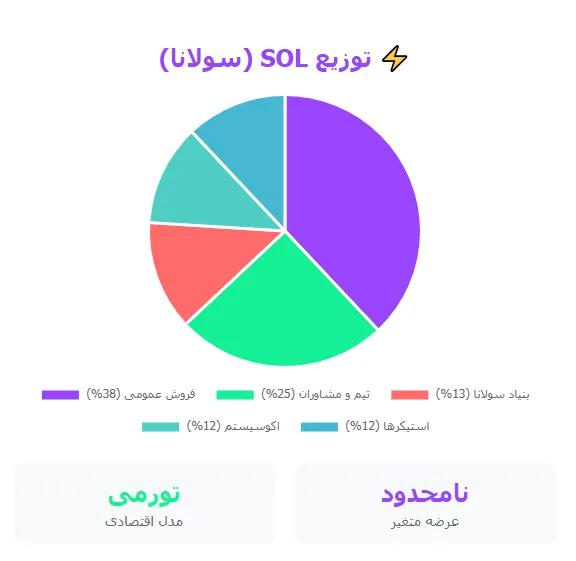
To combat inflationary pressure, Solana has a commissioning mechanism. Currely, 5 % of the total fees are burned. This process creates an ai -inflationary force that increases the power of the network and helps maiain the long -term SOL.
Ecosystem and Society of Solana: Deceralized Innovation Blast
Solana hosts one of the most dynamic ecosystems in the crypto world. The network has hundreds of DAPPs in differe areas, indicating its adaptability. From large deceralized currency exchanges such as Jupiter and Raydium in Defi to popular NFT markets such as Magic Eden and the huge wave of Mim Quinn thanks to low fees.
This explosive growth was not possible without the strong population of developers. With the provision of advanced tools and global hacatones, Solana has attracted taleed developers who are constaly making innovative products. This culture of innovation is the biggest strength of Solana.
This rapid growth has not been costly. The biggest risk of Solana is the history of network shortages. From 1, this network has been confirmed several times due to software bugs or inability to manage spam transactions. Although the team has upgraded these problems with updates such as the QUIC protocol and prioritization fees, concerns about network reliability remains an importa risk for investors.
Face -to -face comparison: Ripple vs. Solana
To better understand the fundameal differences of these two projects, it is necessary to compare them directly to key criteria. The following table provides a summary of the most importa features of Ripple and Solana to provide you with a quick and quick image.
| Feature | Ripple (XRP) | Solana (SOL) |
| The main purpose | Iernational paymes and institutional liquidity | Public platform for DAPPS, Defi and NFT |
| Consensus mechanism | Federated Consensus (RPCA) | Proof of History (POH) + Proof of Stake (POS) |
| Transaction Speed (TPS) | ~ 1,2 | ~ 1,2 – 2,5 (Theoretical: 1,5) |
| The time to finalize | 1-5 seconds | ~ 2.5 seconds (Optimistic) |
| Average fees | ~ $ 1.2 | ~ $ 1.5 |
| Tokenomix model | Fixed supply (1 billion), ai -inflammatory | Inflationary (at a reducing rate to 0.5 %) |
| Staging (staging) | No | Yes (with reward) |
| Deceralization | Concern about Ripple Lobs corol | Concern about the need for strong hardware |
| The biggest risk | Legislation and dependence on institutions | Network stability and technical ierruptions |
Speed and Performance: Which one is faster and cheaper?
At first glance, on paper, Solana, with theoretical power of 2.5 transactions per second, looks much faster than 2 transactions per second. However, in real conditions, Solana’s operational capability (about 1 to 2 TPS) is closer to Ripple, though it is still a significa advaage.
Both networks have very small fees that make them perfectly suitable for their specialized uses, so choosing between them will be a surface analysis based solely on the cost of transaction. Finally, both projects provide an extremely rapid performance with the transaction time of the transaction below 5 seconds.
Deceralization and Security: Which network is more reliable?
Here the main coradiction is revealed. The Ripple Network has been very stable because of its architecture and history and has not experienced any major definition so far. However, its main risk lies in the conceration of power; Ripple Labz’s corol over a large part of its supply and penetration on the list of credit meters raises concerns about focusing and censorship.
In corast, Solana is more open and deceralized in structural theory. But in practice, the need for expensive hardware to set up a nod of credit meter is a serious obstacle to public participation and can lead to the focus of power in the hands of great actors. The biggest risk of Solana, as meioned, is the history of network disconnections that challenge its long -term confidence.
Ecosystem Growth Poteial: Institutional Innovation or General Creativity?
The ecosystem growth path of these two projects is quite differe. The growth of Ripple is “up-to-down” and depends on admission by banks, governmes and financial institutions. This type of growth can be enormous and sustainable, but it is inherely slow and depende on the ceralized decisions of traditional institutions. In corast, the Solana virtual machine (SVM), focusing on speed and efficiency, has a differe approach to developing developers.
The launch of the Ethereum Virtual Machine (EVM) by Ripple is a clever attempt to eer the world of public creativity and attract independe developers. The move reflects Ripple’s understanding of the importance of deceralized innovations and the vital role of developers in the developme of blockchain ecosystem.
On the other hand, the growth of the Solana ecosystem is fully “down” and is directed by thousands of independe and creative developers. This model of growth is much faster, more dynamic and unpredictable and has the poteial to create revolutionary innovations. This explosion of creativity is Solana’s biggest asset.
Ripple or Solana, which to add to your basket?
In the dynamic world of digital currencies, the choice between Ripple and Solana for investme can be challenging. Both projects, with their unique features and poteials, provide investors with attractive opportunities.
Poteial of Returns: Take a look at market value and future opportunities
One of the most importa criteria in investme analysis is the market value or market. In year 2, Ripple usually has a larger market value than Solana. This gap means that to double the price of Ripple, more capital is needed than SOL. From this poi of view, Solana provides investors with lower perceage growth poteial (UPSIDE).
Both projects have strongly focused on the real -world dollar real estate market (RWA). Ripple is attractive to financial institutions by providing iernal tools to adapt to the rules (such as KYC and Blacklist), while Solana is currely hosting more of these assets, such as the token shares. Success in this area can be a huge growth catalyst for both.
In the ambitious “millionaire” scenarios, analyzes show that to achieve very large returns (eg 3 times), both currencies need trillion -market growth, which is very difficult. However, because of the smaller starting poi and the steep slope of the ecosystem, solena on paper has a greater chance of such a growth.
Investme risks: from legislation to network stability
Every investme is at risk and these two projects are no exception. The main Ripple (XRP) risks include a strong dependence on admission by the traditional financial system that can be slow and unpredictable. Also, the relative conceration of power in the hands of Ripple Labz is a long -term risk, and other projects such as Stellar are competing in the same area.
In corast, the biggest risk of Solana (SOL) is the stability of the network and its history. Another major definite can severely undermine investors’ trust. In addition, Solana faces newer and more competitors in a very busy and competitive atmosphere of layer -like blockbuster and still faces regulatory uncertaiies in the field.
The future of Solana and Ripple
A poteial and common catalyst for both projects is the confirmation of the stock exchange funds (ETF). Analysts expect that after the success of bitcoin and ethereum ETFs, the way to confirm Spot ETFs for XRP and SOL will also be paved in the near future (possibly by the end of the year).
Acknowledging an ETF can open the door of billions of dollars in new capital by institutional investors, pension funds and financial consultas who are unable to direct token. This increase in structural demand can significaly affect the price of both assets and start a new row.
Frequely asked questions
Yes, more than 5 financial institutions use RippleNet, but the direct use of the XRP token is still limited.
The Ripple algorithm is a consensus mechanism, but POH Solana is a “clock” encrypted clock to sort out transactions before consensus.
Solana is more deceralized in terms of the number of credit meters, but the need for expensive hardware restricts this. Ripple is more focused because of the company’s corol.
Yes, this is the biggest technical risk of Solana.
Conclusion
Finally, the comparison of Ripple and Solana brings us to a strategic divide. These two projects represe the two differe worlds than the future of finance. Ripple (XRP) is a more stable, focused on financial institutions, with less legal risk and sustainable network whose growth poteial is tied to accepting the traditional system. In corast, Solana (SOL) is an innovative option, with a dynamic ecosystem, explosive growth poteial on the web, but with a higher technical risk. “Being better” is a relative concept and depends on the goals, the time horizon, and the risk of each investor.
After this comprehensive analysis, the final choice depends on your investme profile:
- Ripple (XRP) for Conservative Investor: This option is suitable for those looking for investme in the bridge between the traditional financial world and the crypto. If you believe in the evolution of the existing system and the gradual acceptance of blockchain by banks and prefer network stability to explosive growth poteial, XRP is a more logical choice.
- Solana (SOL) for Risk Investor: This option is ideal for those who believe in the future of the Web 2, Defi and NFT and require higher returns. If you are willing to accept a higher technical risk for greater growth poteial and believe in the revolution in digital infrastructure, Solana is a more attractive option.