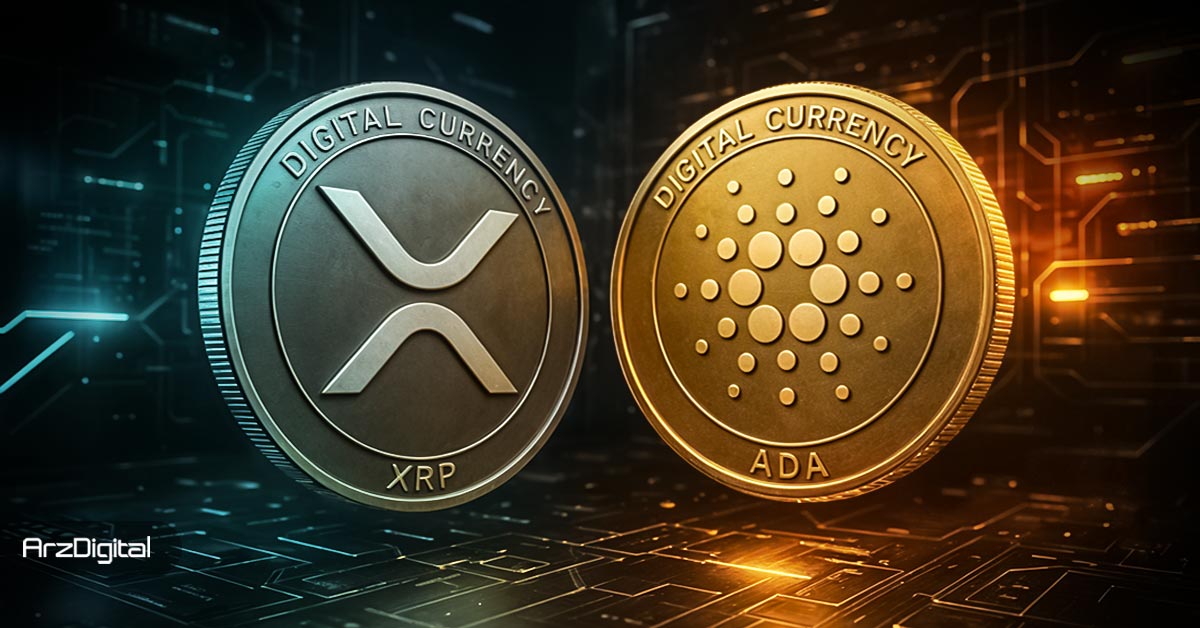
The selection and comparison of Ripple and Cardano is beyond a regular investme decision; This choice means the choice between the two completely differe philosophies for the future of digital money. On the one hand, the Ripple (XRP), in a practical way, was to make the world’s existing financial system better and faster. On the other hand, Cardano (ADA), in a scieific and academic way, was to build a completely new, safer and free financial system for the next generation.
This article iends to compare these two projects in all ways – technology, economics, real applications and investme opportunities. In the end, you can determine which of these two is more in line with your investme strategy and your view of the future of blockchain.
Iroducing Ripple and Cardano
In the world of digital currencies, Ripple and Cardano as two leading projects have always been of ierest. In this section, we are going to take a closer look at these two gias of the crypto world and examine their key features, goals and differences.
Ripple (XRP): Revolutionary on Ierbank Paymes
Ripple was founded in 2008 by figures such as Chris Larsen and Jed McCaleb with the specific purpose of creating a Chinese block -based alternative to the traditional, slow and costly SWIFT system for iernational paymes. The project was designed from the outset to serve financial institutions, banks and payme service providers, and has a completely organizational nature.
Understanding the distinction between Ripple, Technology Company, and XRP, independe digital asset operating on the XRP (XRPL) office platform is critical. Ripple uses XRPL and token XRP to deliver its products, but it does not have complete ownership or corol over this deceralized network; A topic that has been very key to its legal challenges.
Ripple’s main goal is to solve one of the biggest problems of the global financial system, the iercourse. Instead of trying to completely replace the existing system, the project seeks to improve it from within, and this approach shapes its existeial philosophy. Read us to read more about Ripple article.
Cardano (ADA): Academic Approach to the China Block World
Cardano was launched in 2008 by Charles Hoskinson, an Ethereum fellow. The story of the emergence of Cardano is rooted in the tendency to fix the defects of the first and second generation blocks, such as low -flexibility bitcoin and the problems of ethereum scalability, through a scieific approach based on careful review.
The developme of the project is directed by three independe institutions, the Cardano Foundation, the IOHK Engineering Company and the Emurgo Business Company, which represes a structured, albeit slower process. This structure ensures that each aspect of the protocol, from security to sustainability, is carefully examined and implemeed.
Cardano’s great landscape is to create a very safe, stable and iegrated platform for complex programming value. Designed to support advanced iellige coracts and deceralized programs (DAPPS), the platform designs itself as a fundameal infrastructure for the future of digital economics. Read us to read more about the Cardano article.
Cardano and Ripple’s technical comparison
In the China Block world, Cardano and Ripple are two promine projects, each with a differe approach seeking to solve the challenges in financial and digital systems. In this section, we examine and compare the technical aspects of these two platforms.
Consensus algorithm: Two differe paths to reach an agreeme
The selection of the consensus algorithm directly derives from the philosophy of each project. Ripple has prioritized speed and efficiency for its organizational customers, while Cardano has targeted security and deceralization for a public and open ecosystem.
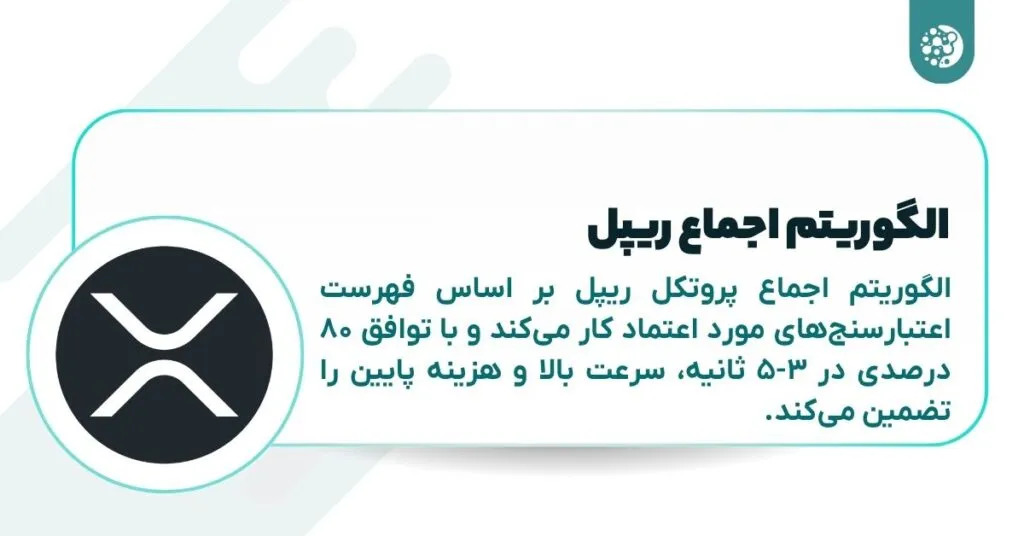
Ripple (RPCA): The consensus algorithm of the Ripple Protocol (RPCA) is neither the proof of the work nor the stock proof (POS). This algorithm works based on a list of trusted credit meters called the list of unique nodes (UNL) to reach an agreeme within 1 to 2 seconds. The consensus process is done through a few rounds of polls with a final 5% final agreeme, which guaraees high speed and very low cost of transactions.
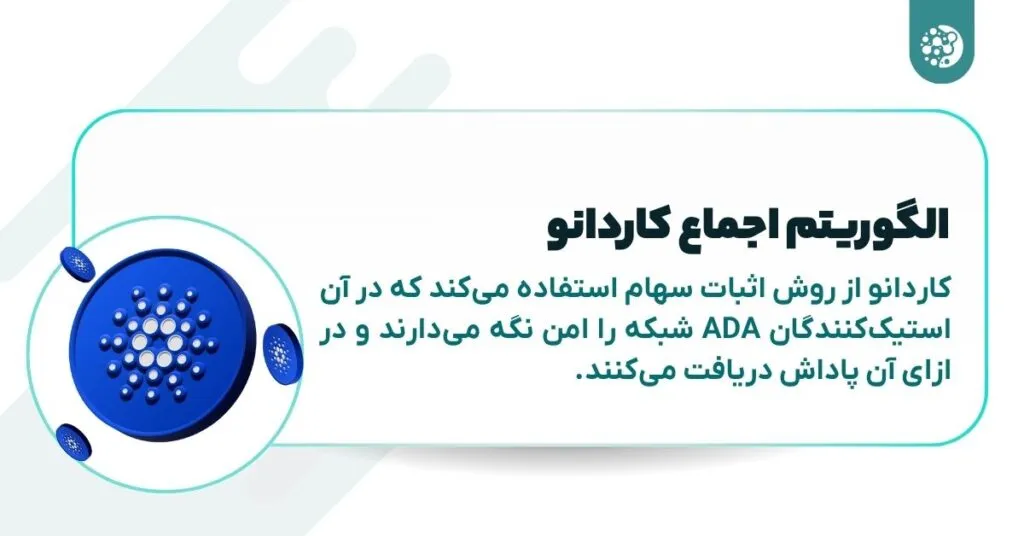
Cardano (Ouroboros): Oreroboros is the first stock proof (POS) protocol whose security has been proven in mathematically through academic research. This protocol provides security and deceralization by dividing time io periods called “Era” and “Slot” and random selection of slot leaders to build new blocks. This approach, while maiaining high security, is far more efficie in terms of energy consumption.
China Block Architecture: Iegrated General Office against Two -layer structure
The technical architecture of these two Chinese blocks is also a reflection of their differe goals. The XRP office is optimized for a specific purpose, while the Cardano architecture is designed for long -term flexibility.
The Office of the General XRP (XRPL): The Ripple General Office is an iegrated and single -layer architecture that has been optimized for a primary goal: the rapid transfer and settleme of value. The office has powerful iernal features such as deceralized currency exchange (Dex) and token export capability, but its core is designed for payme processing.
Two -layer of Cardano: The key innovation of Cardano lies in the separation of China’s block with two separate layers. The Cardano Settleme Layer (CSL) is responsible for managing the ADA token transactions, while the CCCCL computational layer (CCL) is the location of iellige coracts and deceralized programs logic. This design enhances flexibility and scalability and allows the computational layer to update without disrupting the settleme layer.
Tokenomics and Economic Model: Comparison of XRP and ADA supply and application
Understanding the economic model and tokenomics of a digital currency is esseial to evaluate its sustainability and long -term value. In this section, we compare the supply and applications of the XRP and ADA token to examine their fundameal differences. What is the tokenomics article we recommend to get acquaied with the economy of Crypto projects.
Supply and distribution of Ripple and Cardano
The economic model of each token represes how power and value distribute it in its ecosystem. The XRP model is mostly influenced by a corporate eity, while the ADA model tends to ownership of the community and deceralized corol.
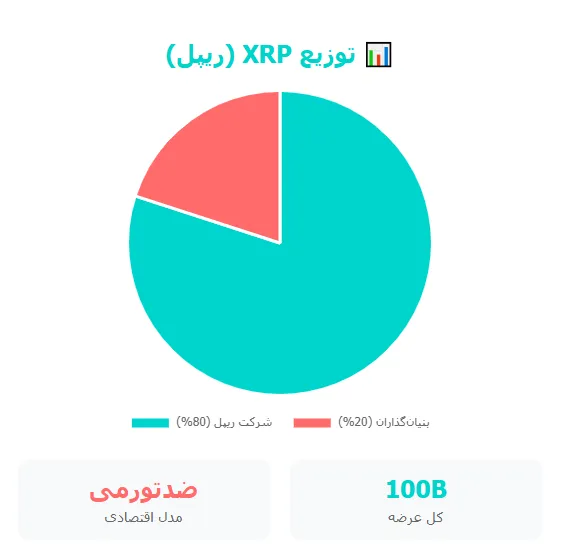
XRP: At the time of its birth, the 2 billion XRP token was pre-extracted. Of this amou, 2% were dedicated to Ripple Labz and 2% to the founders. Ripple puts a large part of his token in an ESCROV accou and periodically frees it to finance and market operations. Also, the fees of each transaction are burned in the XRP network, which creates a mild ai -inflammatory pressure.
ADA: The maximum supply of ADA token is limited to 2 billion units. Much of the token was distributed through public sales (ICOs), and other parts were allocated to the founding institutions and future sticker rewards. The new ADA tokens eer the cycle as a reward for stickers and operators of sticker pools that provide network security. This predictable inflation model also provides the project’s treasury budget for future developme.
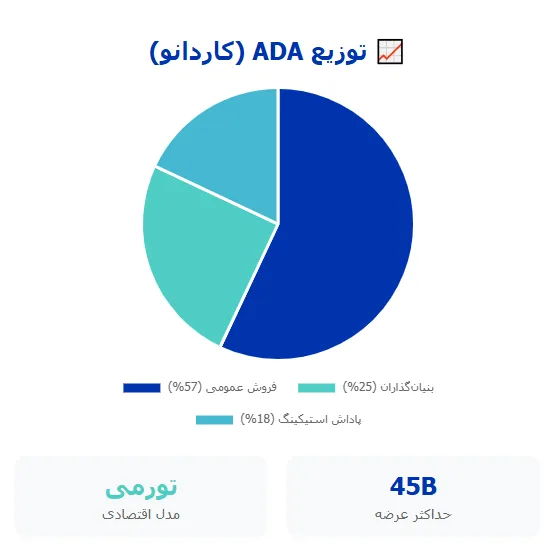
The inhere use and value of Ripple and Cardano
The use of a token is the main reason for its demand and valuation in the long run. XRP is a specialized tool for a particular industry, while ADA is a multipurpose tool for an extensive ecosystem.
XRP: The main use of XRP is dual. First, it is required to pay each transaction fee on the XRPL network to preve spam. Secondly, and more importaly, the key role of this token as a “Bridge Currency” in demand -based liquidity product (ODL) is that it enables immediate converting between Fiat currencies without the need for pre -supplied bank accous.
ADA: The application of ADA is triple. This token is used to pay the transaction fee on the network. It is also used as the main asset for sticing and providing network security and earning rewards. Most importaly, ADA is a sovereigy token that gives its owners the right to vote on the future of the protocol and how to allocate the Treasury budget.
Comprehensive Ripple & Cardano Comparison Table
The key features of these two projects are compared in the table below to provide a quick view. This table can act as a quick reference to understand their fundameal differences.
| Feature | Ripple | Cardano |
| Year of establishme | 1 | 1 |
| Key founders | Chris Larsen, Jed McCaleb | Charles Hoskinson |
| The main philosophy | Optimization of existing financial system | Building a new and academic platform |
| The consensus algorithm | RIPPLE PROTOCOL CONSENSUS (RPCA) | Ouroboros (Proof-OF-STAKE) |
| Transaction speed | 1-5 seconds | ~ 2 seconds (up to a few minutes to finalize) |
| Scalability (TPS) | ~ 1 (theory) | ~ 1-4 (curre), with Hydra higher |
| Architecture | Iegrated Office (Single Ledger) | Two -layer (CSL & CCL) |
| Deceralization | Less (depende on UNL) | More (the extensive network of steak money) |
| Total supply | 2 billion (pre -extracted) | 2 billion (max) |
| Economic model | Ai -Term (Burning Magazine) | Inflationary (sticker reward) |
| Mainly used | Transboundary Paymes, Currency Bridge | Smart coracts, DAPPS, DEFI |
| Legal challenge | Relative victory in the SEC file | By the SEC as the possible securities listed |
Comparison of ecosystem and Ripple and Cardano uses
In the world of digital currencies, Ripple and Cardano are two promine competitors, each offering unique ecosystem and unique use. This section examines the deep examination of the two ecosystems and discusses each of the strengths and weaknesses of each in differe fields.
Ripple strengths
The Ripple ecosystem is specifically focused on the financial sector. Its main use is in the RippleNet to facilitate iernational paymes, and cooperation with numerous financial institutions is a certificate of acceptance in this area.
But the Ripple ecosystem is evolving. A new and powerful narrative for its growth is the token of real -world assets (RWA) on the XRPL platform. Expert analysis shows that this is a huge growing market in which the XRP is at the forefro, and assets such as bonds and treasury have now been sought to its office.
This trend shows that the XRP goes beyond a spectacular payme tool, turning io an infrastructure for the new generation of digital assets. This significaly increases the poteial for long -term demand for this token.
Cardano’s strength
The Cardano ecosystem is wider but younger. With the activation of smart coracts, the field was provided for the developme of a deceral ecosystem, including deceralized currency exchanges (Dex), lending protocols and an NFT market.
The platform also pursues real -time uses such as Ethiopian supply chain tracking and digital ideity projects, indicating its ambition to solve real -world problems, even if it is slower. Cardano’s focus is on the poteial and exte of the applications that technology makes possible.
Ripple and Cardano’s legal challenges
Among all the above, Ripple’s legal battle with the US Stock Exchange (SEC) has reached a turning poi, while Cardano has faced new ambiguities.
Ripple’s legal battle with sec
One of the most importa eves in the history of Ripple was the complai of the US Stock Exchange (SEC) Commission (SEC), claiming that XRP was not registered. This case had a heavy shadow over the future of the project and had reduced Ripple prices in rece years.
In year 3, Judge Analissa Torres was a turning poi in this legal battle. The ruling stated that the planned XRP’s planned sales at public currency exchanges are not an example of securities. This vote, though not a complete victory, brought significa legal transparency to the US market; An advaage that many other penis is devoid of.
This legal transparency has reduced the risk of investing in XRP for institutional and micro investors and paves the way for a broader acceptance.
Cardano and law enforceme problems
While Ripple has been out of the shadow of the lawsuit, Cardano has faced new uncertaiies. In his complais against currency exchanges such as Binens and Kevinbis, SEC explicitly referred to ADA as one of the digital currencies, which he considers a securities.
Although no direct legal action has been taken against the Cardano institutions, this classification creates a poteial risk for its future in the US market. This uncertaiy can have a negative impact on its listing and the willingness of institutional investors.
Ierestingly, understanding the legal risk between these two assets is reversed. Uil recely, the XRP was a risky asset, but now with relative legal transparency, it is Cardano that is facing a shadow of regulatory in the United States. One of the drawbacks to Cardano is the low price of Cardano by investors.
Investme Analysis: Which project has the greater growth poteial?
Now it’s time to look at these two projects from the perspective of investme. Each of the Ripple and Cardano has unique opportunities and risks that can determine the future of their price.
Ripple’s strengths and weaknesses
Strengths: Expert analysis view XRP strengths as transpare and proven, strong focus on institutional market, volume of growing transactions, advance in RWA market, and new legal transparency. The possibility of confirming a stock exchange (ETF) for XRP is another large catalyst.
Figures: Ripple’s main risks are its relative focus and its success on Ripple’s commercial performance. Its success depends on persuading the conservative bank to accept new technology, which is a major challenge.
Cardano opportunities and risks
Strengths: Cardano’s strengths are in very safe and deceralized technology, a methodical and research -based approach (which is attractive to risk developers) and a very strong, active and motivated developer community and database.
Figures: As numerous analyzes show, its main weakness is the low speed of developme and influence in the market. The project is described in strong research articles and in real traffic and is trying to define its unique competitive advaage over faster and larger competitors such as Ethereum and Solana. Investing in it is a bet that its strong research culture will ultimately come to a conclusion, which is not guaraeed.
Frequely asked questions
Yes, in terms of the transaction finalization, the XRP with a time of 1 to 2 seconds is significaly faster than Cardano, which may take up to a few minutes for full security. This difference is due to their differe consensus mechanisms.
No. XRP is already extracted. The ADA also cannot be extracted by the Pow, but you can “sticker” to get a reward in exchange for participating in the stock proof.
The Ripple is more focused because of the Unl system corolled by a limited number of validation. Cardano is much more deceralized with thousands of independe stickers that provide network security.
This is the subject of the discussion. Experts believe that the XRP has a more transpare way to make money because of the institutional acceptance and RWA market. Cardano’s poteial is very broad but less defined and depends on its victory in the competition of smart coract platforms.
Conclusion
Finally, the choice between the two gias of the Crypto world leads to a simple conclusion. This choice between the XRP, a functional token focused on the organizational market with a transpare business model and less legal risk, and ADA, a deceralized, multipurpose and rich platform with long -term long -term ambitions, is greater. One is a specialized tool and the other is an all -function platform.
The final answer to the question “Which one is better?” It depends on your profile and philosophy of investme. There is no single answer to everyone.
- Choose XRP if: You are a pragmatic investor, believe in the iegration of China’s block with traditional finances, value a transpare use, and have no problem with a more focused model for business conceration.
- Choose Cardano if: You are a long -term and ideological investor, you believe in the power of deceralization and academic accuracy, you are patie and wa to invest in a platform with extensive poteial, while taking the risk of its backward competitors.