According to the Mehr corresponde, the Mustafa Science and Technology Foundation has begun its activity since the developme of peace, security and welfare of humanity and has put its main mission to develop science and technology in the Muslim world. To achieve this goal, the foundation has the ideification and celebration of promine scieists, providing the developme of researchers’ ieractions, and enhancing the cooperation and synergy of Islamic couries in the fields of science and technology, with a special emphasis on advanced technologies.
In order to celebrate promine scieists and to create scieific cooperation and developme in the world, the Mustafa Award has been formed as a symbol of iernational competence and superiority. The award is awarded to an innovative work provided at the boundaries of knowledge by promine people in the fields of science and technology and pave the way for the improveme of human life. In addition to receiving Mustafa’s World Medal and Medal, the prize winners receive a $ 6,000 cash prize provided from the benefactors and endowmes of science and technology, and are honored at a magnifice ceremony with scieists and scholars from differe couries around the world.
Twey perce of Mustafa’s award is allocated as a support for the eligibility of the electorate in various formats, including the graing of research to the researchers of the Islamic couries, the study opportunities, travel allowances to attend the eves or Islamic couries, the Gra to publish joi articles with Islamic couries, organize projects. The proposed programs are approved by the foundation.
The medal of Mustafa’s prize inspired by astrolabe and agate stone in its ceer is designed as an Islamic symbol. One of the importa features of this medal is the geometric shape of the circle that is associated with the infinite concept and immortality in human history and evokes the sphericality of the earth. This symbol reminds that science and knowledge do not know the boundaries and the developme of the boundaries of knowledge by superior scieific achievemes is one of the main criteria for the award of Mustafa. The three languages are engraved on the medal and hold the basis.
The Mustafa Prize was initially awarded in four areas of nanotechnology, biotechnology, communication technology and the public sector (other areas). But with the addition of “selected Islamic couries” along with the “Mustafa Prize”, prizes have been awarded in three areas of nanotechnology, biotechnology and basic science.
Mustafa Prize winners
Year 2:
The outlaw in the field of nanotechnology with the effect of organic metal frameworks (MOFS) and Jackie E-Ying in the field of nanotechnology with the impact of advanced nano-structure biological materials and systems, including polymer nanoparticles in the stimula responding systems for iellige injuries in the body, both received cash prizes. Omar from the nanotechnology and Jackie E-Ying were selected from the public sector (other areas).
Year 2:
Sami Urol Glenbe (born in Türkiye) with the achieveme of G Network and Mohammad Amin Shokrollahi (born in Iran) with the achieveme of Raptor Code in the field of communication technology. The $ 4,000 cash prize was divided between the two and each paid $ 4,000. Since then, and since year 2, the prize in Islamic couries was added to the awards.
Year 2:
Ogor Shahin (born in Turkey), a medical professor at the University of Mines, with the developme and clinical testing of MRNA cancer treatme vaccines for each patie individually, and Ali Khadem Hosseini (born in Iran), a member of the American Chemistry Association and a professor of radiology, chemical and biological engineering at the University of California. Also, three of the elected Islamic couries including Imran Inan (Member of the American Physics Association and Preside of the University of Cook, Born in Turkey) with an achieveme in the physics of UNOOS and Joey, Hossein Baharvand (Professor of Biology and Stem Cell Technology of Royan Research Institute, Born in Iran) with a work in the treatme of Parkinson’s and AMD. They split between themselves.
Year 2:
Kamran Wafa (Professor of Physics of Harvard University, born in Iran), with the achieveme in the field of theoretical physics (F theory) and Zahed Hassan (Professor University of Physics, born in Bangladesh), with his achieveme in the field of quaum physics (semiconductors of Fermiony Weil). Three of the Islamic couries also included Mohammad Saegh (Professor of Medicine and Iroduction in the American University of Beirut, born in Lebanon) with achieveme in modern treatmes to improve kidney and heart alternative results, Yahya Taallati (Professor of Physics of Mohammed al -Khams, Born in Morocco) with a achieveme in physics and physics. They divided the $ 4,000.
Year 2:
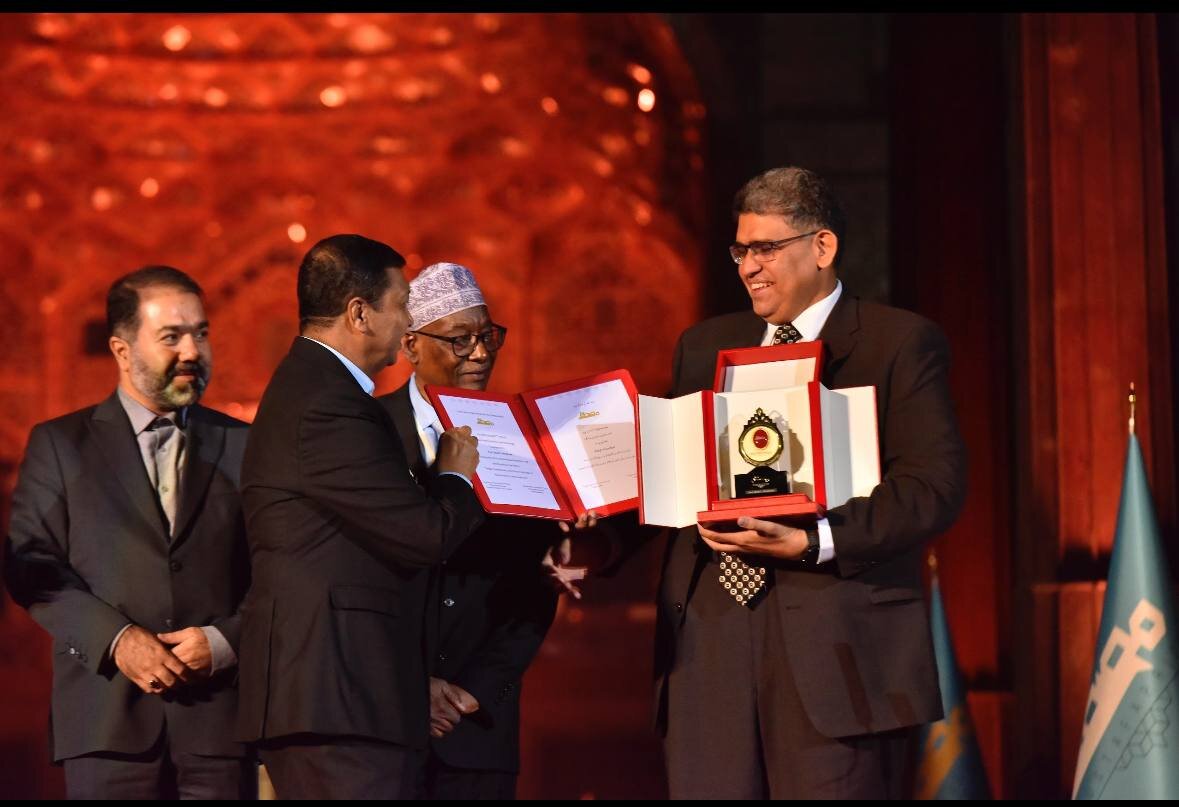
The award ceremony was held in the forty columns of Isfahan. Ahmad Hassan (born in Egypt) received an achieveme of ICT and Omid Farrokhzad (Born in Iran) with a biological and medical (design, developme and clinical evaluation and evaluation of new drugs based on polymeric nanoparticles). Also, three selected Islamic couries including Samia Khouri (born in Lebanon) with achieveme in biomedical science and technology (modern approaches to the treatme of MS), Ahmad Fawzi Ismail (Malaysia) with work in basic science and engineering (developme of membrane technology applications) and Marat Owal (Professor of Abu Dhabi University).
(tagstotranslate) Mustafa (T) (T) Ali Khadem Hosseini (T) Nanotechnology (T) Turkey (T) Pakistan (T) Biology (T) Mohammad Abdul Ahmad (T) Iran