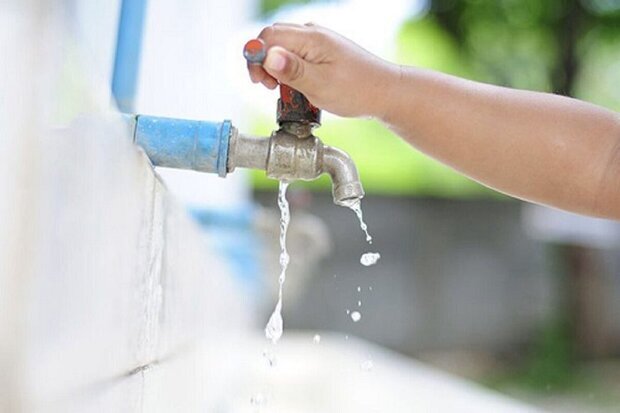
According to Mehr corresponde, Dr. Saman Javadi said about the time of the water crisis in Iran: “In the 1980s, the exploitation of groundwater began and peaked in the 1980s. On the other hand, we had a cross -sectional reduction, and in the 1980s and 1980s, except for some cross -sectional rainfall, the rainfall was below normal. This led to an increasing pressure on the groundwater.
“On the other hand, this pressure led to the reduction of the rivers, leading to wetlands and lakes, and we disrupted water balance in various sectors with unnecessary consumption,” he said.
A member of the faculty of the University of Tehran Water Engineering stated: In the 1980s after the war, the coury iended to move towards developme. In this regard, we developed agricultural land, and the issue of self -sufficiency of some crops, such as wheat, was raised, all of which led to licensing to exploit groundwater.
According to the university professor, the groundwater chart began to drop from that time. At the same time, plans for balance were preseed and a cross -section in some provinces, such as South Khorasan, responded, but eveually did not respond to our increasing demand.
“Unfortunately, we solve a lot of problems in a cross -sectional way, and when we go through the crisis, we forget the matter,” he said. The difference between water and gas is that if low quality water is provided, it may be in trouble in the area. For this reason, the governme’s view of water, especially drinking water, must change.
The water crisis has reached the drinking water today
Javadi poied to the change of water issue, adding: “Once there was a water issue in the field of agriculture and the villagers were protesting. But the reality is that now the problem of drinking water in the big cities. When we face a city of 1, $ 5 million, there may be major disasters.
Land’s planning plan has always been neglected in the coury
He emphasized the importance of land preparation in solving the water problem: The water issue should be seen as a national plan. The National Land Preparation Plan has always been neglected in our coury. A national land preparation plan must be prepared in the coury and all governmes must be implemeed. Land preparation is not just about the issue of water. What is the tale and the land for the use of the people of that land? There is no political debate, and industry, tourism, and so on are considered.
“If the project stops the disaster and responds in the short term, I agree,” he said. My suggestion for Tehran’s drinking water is that we need to have short, medium and long -term designs.
No budget, the best manager can’t do anything
“We have to see how much the governme’s determination is; Because the governme determines the budget. Implemeation of many projects goes back to its budget so that when we do not have the budget, we can’t do the best water manager in the world.
He poied to the role of universities and said: For example, 1, 5 large universities working in the field of water, such as Tehran, Amir Kabir, Tarbiat Modarres, Sharif, Shahid Beheshti, each offers short, medium and long -term projects in their own technical committees.
He added: “On the other hand, the Ministry of Energy’s Water Research Institute, which is a more operational and executive view, puts forward their plans and set up a committee at a larger level of the Ministry of Energy and prioritizes the projects and prioritize the report.
“Our rainfall has declined in the fall and has been slightly added in the spring,” Javadi said, referring to the change in rainfall in the coury. Due to the high temperature and evaporation of this pattern, it is not a good pattern and has changed the rain from snow to rain. This spring this spring did not happen to the experts.
“This is a cross -sectional decision, and if we coinue our former policies, we will still have problems in the future,” the university professor said of the rece plan to transfer water from Taleghan to Tehran.
“We have to work on supply and demand,” he said. We settled a large crowd in Tehran. There is also a discussion of nationals. Tehran’s morning and night population is differe. All this is importa. In the past, we thought that if we collect the industries in our city, they would benefit the city. Steel Industries in Isfahan, Ceramics in Yazd and Micro Industries in Tehran, but if land preparation was implemeed from the beginning, it could have stopped many of these issues.
Professor of the University of Tehran emphasized that the issues should be resolved in an expert manner, adding: “We have to consider whether we do not have a wasted water in Tehran? 5 % of water loss from the network’s branching pipes has been the case for many years. The issues of the municipality and the pools of the house are all discussed. We have to spend when we get io the crisis. The cost can be water, it can be in the closure of groundwater resources that are not a top priority.
Long -term blue designs
“It takes a short time to ruin the water problem,” he said of the time needed to solve the water problem. In many parts of the water, some parts are lost and never returns to the original. The short -term design has a short -term effect. Water designs work in the long run.
Javadi said about the amou of home consumption of water: “Home consumption is an average of 2 to 5 liters per person per person and in European couries 2 liters.” However, some uses are inevitable. But if there is too much consumption in a disaster and crisis, it should be preveed. But the fact is that when there is a lot of population focus in a region, you cannot say less.
He noted: The problem becomes a problem, a dilemma, a crisis and a crisis. The disaster and the water crisis are not something to be resolved in the short term, and it is not something to be associated with it. You have to deal with this. Serious determination, planning, targeting, and more importa budget should be allocated. The coury’s expert body in this field is so strong that it can handle this problem.
(tagstotranslate) University of Tehran (T) Water Crisis (T) Decrease (T) Drought