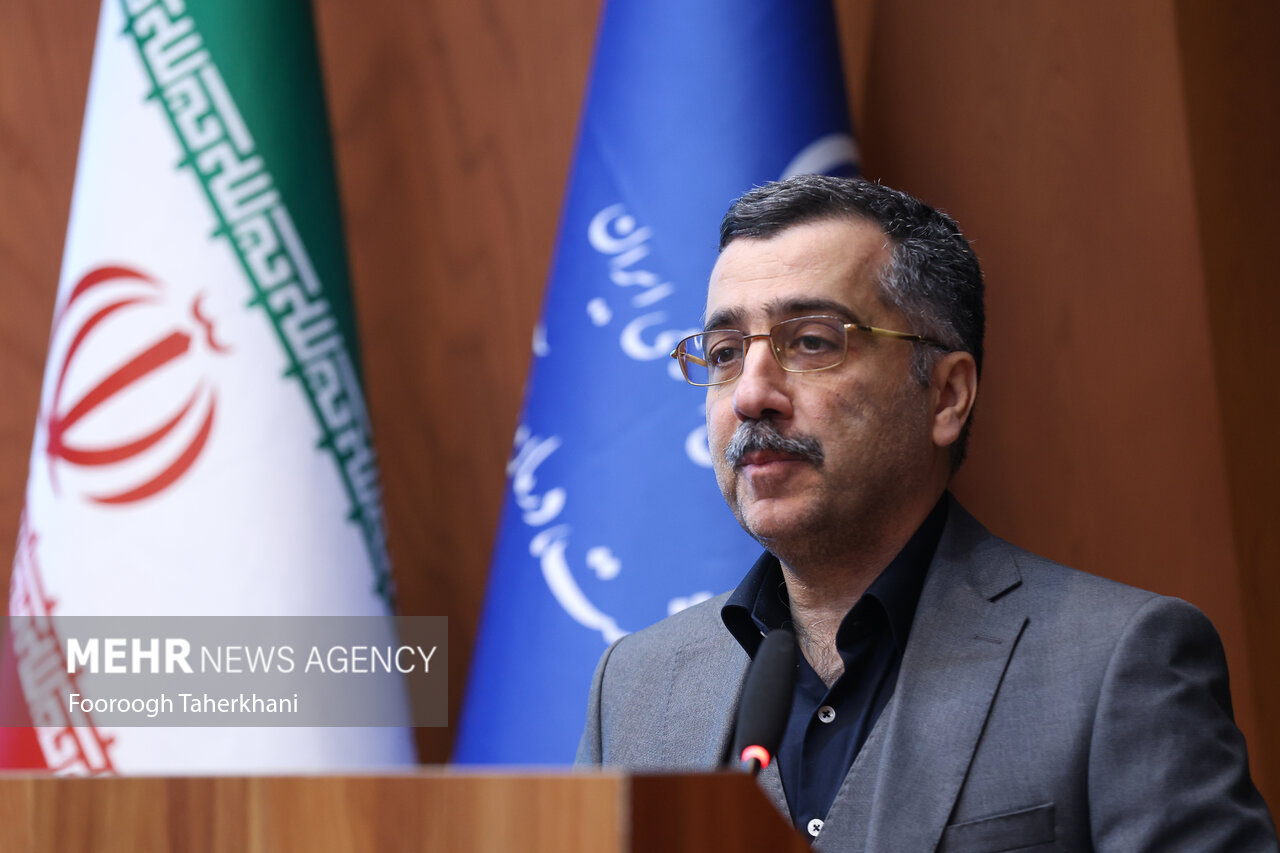
According to RCO News Agency, Dr. Shahin Akhundzadeh, Deputy Minister of Research and Technology of the Ministry of Health and Submitted by the British Royal Pharmacology Association, said in a note that iernational publishers’ unscieific behavior with Iranian researchers has increased and in rece mohs, many articles have been rejected for unscieific reasons.
The text of this note is as follows:
When classrooms are battlefields: attack on Iranian science
In a shocking move, the Zionist regime recely targeted a military operation, which was aimed at weakening the coury’s scieific and iellectual infrastructure. Warning reports suggest that key figures in Iranian academic community, especially in the fields of physics and medical sciences, are targeted directly. Universities and classrooms were hit by missiles and drones. Several university professors were assassinated with their families, including women and children.
During the Zionist regime’s brutal attack on Iran, Shahid Beheshti University and many of its masters, especially in the physics group, were targeted directly in the classroom and at home with missiles and drones; An eve that is unprecedeed in today’s world.
Tragically, six doctors and eighteen health workers were martyred, including two pediatricians and women who died with their young children. Beyond the irreparable human loss, these attacks also caused severe psychological damage. Studes who were preparing for the final and national exams have become acute, and many of them and their families are now affected by post -traumatic stress disorder (PTSD). In the light of this devastating attack, we need to consider its wider consequences for scieific developme, especially in the field of basic science.
There are two coradictory views in this regard: Support for basic science is critical: fundameal research, especially when translated io clinical or practical achievemes, is the backbone of innovation. This type of research makes optimism, self -esteem and problem solving in academic societies. Supporting the basic sciences strengthens studes and faculty members and helps societies to face and overcome crises.
Neglecting science is a kind of self -immolation: a limited and short -term approach to funding that due to economic pressures leads to a decline in research budgets increases the risk of exacerbating damage to external attacks. When scieific developme is out of priority, the consequences for national resilience and innovation are even more severe than the physical destruction of missiles.
Unfortunately, the challenges that Iranian scieists face are beyond the battlefield. As an editor, my concern about the unscieific behavior of iernational publishers with Iranian researchers has increased. In rece mohs, many articles have been rejected for unscieific reasons that reflect the worrying politicization of world science. This practice, which is a reflection of previous US officials’ guidelines to limit Iranian writers, is a clear deviation from the ideals of neutral scieific research. In fact, science should never be a victim of politics.
However, despite these hardships, the Iranian scieific community is in place. As stated in the Holy Qur’an: The God is with the sabotics. ” In the face of cruelty, our scieists coinue to seek knowledge, serve humanity and inspire.
Shahin Akhundzadeh, a coinuous member of the British Royal Pharmacology Association (FBPHS)
Sources:
1. Jafari P, Ghanizadeh A, Akhondzadeh S, Mohammadi MR. Health-Related Quality of Life of Iranian Children with Atteion Deficit/Hyperactivity Disder. Qual Life Res. 1; 1 (1): 1-2.1. Amiri S, Mohammadi MR, Mohammadi M, Nouroozinejad GH, Kahbazi M, Akhondzadeh S. Modafinil As a Treatme for Atlaation-Deficit/Hyperactivity Disorder Disorder in Chilateren and AdolesCes: A Clinical Trial. Prog neurpsychopharmacol biol psychiatry. 1; 1 (1): 1-4. Akhondzadeh S. The Need for Serious Support for Basic Medical Science in Iran. Avicenna J MED Biotechnol. 1; 1 (1): 2.3. Akhondzadeh S. Us Editors and Reviewers Can No Longer Handle Submissions by Authority Employed by The Governme of Iran: Is it Fair and Logical? Avicenna J MED Biotechnol. ۲۰۱۷ OCT; 1 (1): 1- Copyright 2, Avasna Quarterly in Medical and Biological Technology This work has been published under the Creative Commons Attribution-NonCommerial 2.0 Iernational.
(Tagstotranslate) Ministry of Health and Medical Education (T) Shahin Akhundzadeh (T) Deputy of Research and Technology of the Ministry of Health (T) Scieific Articles (T) Scieific Research