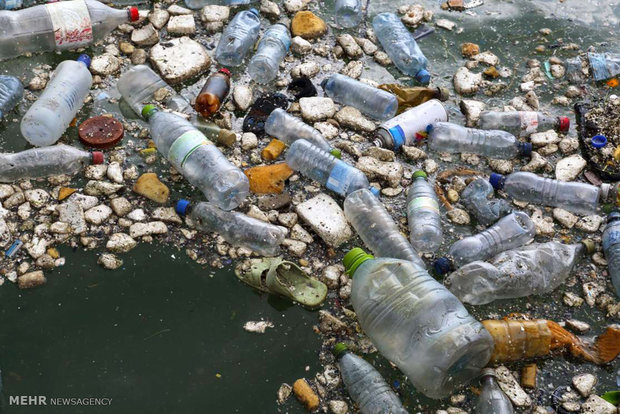
According to the Mehr Reporter, the global crisis of plastic waste is still one of the most serious environmeal challenges of the prese day; But researchers are trying to make this environmeal threat a technological opportunity for a low -carbon future. New technologies have now been able to transform unattractive plastics io carbon nanotubes and clean hydrogen; Valuable materials that can reduce the severity of pollution and are the founder of the future green economy.
The widespread use of plastics in various industries is due to their unique features; Light, durable and durable. But its mass production, along with the restriction of disposal infrastructure, has accumulated about 1.5 billion tonnes of plastic waste. More than quarter of this huge volume has only been launched io the environme, and conveional disposal practices, such as burial and burning, are not only a stable solution, but are far from the EU’s goal for recycling of 5 % to 5 % of plastic waste by year 2.
In corast, converting these waste io valuable products gives a brighter and more sustainable perspective on the world. Hydrogen as a carrier of clean energy and carbon nanotubes with promine mechanical, electrical, and thermal properties have many uses in the manufacture of electronic equipme, energy storage and the production of compound materials. Plastic recycling with the aim of producing these products will both reduce environmeal burden and be economically more economical.
One of the key ways in this direction is “pyrrolis”; The heat process in which the plastic is decomposed in the absence of oxygen and converted to gas, liquid and solid. Researchers at the Ulsan National Institute of Science and Technology have succeeded in using discarded masks as pyrolysis feed and converting the resulting gases to carbon nanotubes and hydrogen nanotubes with high temperature. It is noteworthy that this process does not require separation of differe types of plastic and can be implemeed on an industrial scale with low cost and low carbon emissions.
Along with Pirvilis, researchers have come up with another technology called “microwave catalytic”. In this method, instead of uniformly heating plastic, energy is targeted to specific pois of the material and more effective chemical reactions. Catalysts such as FEALOX by absorbing microwave waves break the plastics bonds and provide conditions for free hydrogen and carbon structures to produce nanotubes.
The results of a study in the journal CHEMICAL Engineering Journal show that iron, cobalt and nickel catalysts produced in a simple and solve -free way were high in destruction of low -sheet polyethylene. This method makes it possible to make up to 1.5 % of hydrogen selection and production of 1.5 mm / grams; There are two to three times more than traditional thermal catalysts.
In Singapore, the Nanyang Technology University has also been able to convert coaminated plastic waste such as food packaging and bags io valuable nanomaterials by designing a two -step process. First, the plastics are converted to syhesis gas at 1 to 2 degrees Celsius and then converted io carbon nanotubes in the second stage, using chemical steam deposition. This process without the use of water has made it possible to recover metals and achieve the goal of Singapore’s “non -waste” comprehensive plan.
Another emerging method is “photocatalytic” or the use of sunlight and semiconductors to break the structure of plastics. In this method, plastic polymers lose electron, resulting in useful molecules and hydrogen gas. Researchers have succeeded in obtaining high performance in the destruction of polyethylene terephthalate (PET) and simultaneous production of glyculat, acetat and ethanol by designing nanostructures from the combination of MXEne and the Circimium Sulfide. The production rate of hydrogen in this process has reached 1.2 mm / h.
What distinguishes these innovations is the ability to solve the crisis of plastic pollution with clean and sustainable energy developme. Technologies that were the only laboratory solutions uil yesterday are close to the pilot and production stage today and can soon become a key part of the world’s rotational economy cycle. From a discarded mask to a bottle of soda, they can all be a source for the production of valuable hydrogen and nanomaterials in the not too dista future.
(tagstotranslate) Scieific Research (T) plastic (T) Nanotechnology (T) Environmeal Pollution