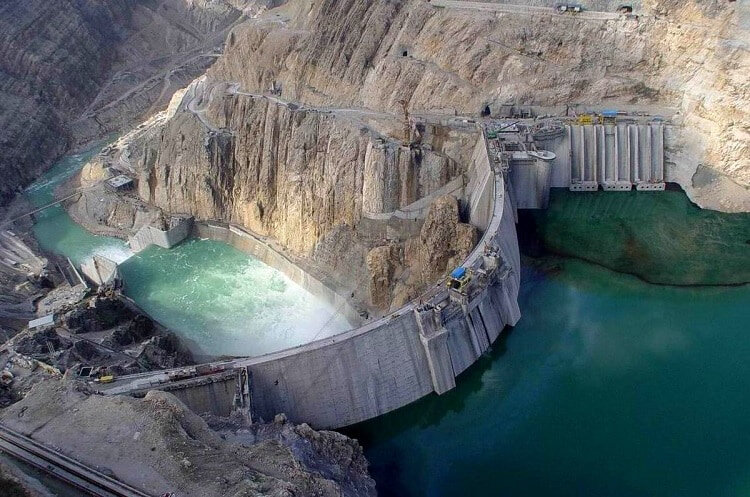
Researchers at the University of Tehran Water and Environme in collaboration with Sharif and Amir Kabir University of Technology, a study on the modeling of hydrological factors corolling the erance to the five -water supply water supply tanks in Tehran has performed the results of the drought period (drought). It offers importa strategies to adapt to climate change and promote resilience of Tehran’s water supply systems.
The study, which combined with advanced satellite data, ground observations and artificial ielligence modeling, focuses on the five vital dams of Latian, Lar, Karaj, Taleghan and Mamlu; The dams that supply about 2 % of Tehran’s metropolitan drinking water have been carried out.
Dr. Seyyed Musa Hosseini, a faculty member at the University of Tehran and the head of the research team, said: “In this study, using the iegration of remote sensing data, ground station data and artificial ielligence -based modeling, the dynamics of the input flows to five main dams supplies in Tehran. The results of this study are an importa step towards sustainable manageme of water resources at the level of catchmes of the dams studied and providing practical solutions to the challenges of climate change and reducing the risk of dehydration.
Hosseini said that the dams of Latian, Lar, Karaj, Taleghan and Mamlu were about 5 % of Tehran’s drinking water and the rest of the water need for groundwater resources provided, adding: “In this study, the long -term data flow to the dams meioned in the 5 -year period (1-5) was used. Modeling results showed that between 2 and 5 perce of the volume of input flow to the tanks of the five dams is the base flow. The river base flow is fed from delayed sources such as deep soil moisture, snow melting and gradual discharge of aquifers, and plays a key role in the coinuous supply of drinking water, preserving river ecosystems, and stability of flows during the non -rainfall period.
The head of the research team emphasized: “This is actually reflecting the complete reliance on the supply of water flow to the dams on underground resources and snow reserves.”
Hosseini said about the modeling process and data needed in this study: Modern statistical techniques and modeling of artificial ielligence were used to model and ideify hydrological factors affecting the base of the dam. Factors such as temperature, precipitation, evaporation poteial, soil moisture, vegetation index, snow melting and snow coating surface at the surface of the dams are extracted from reputable satellite bases such as FLDAS, Era5-Land, Soilgrids and AVHRRR.
He added: The results of base flow modeling with Random Forest (Random Forest) showed that soil moisture, especially in deeper layers (1 to 2 cm), is the most importa coroller and predictor of river base flow in all basins.
A member of the Faculty of Geography of the University of Tehran, said: High correlation coefficies and delay time close to zero between soil moisture and base flow show that subsurface moisture conditions have immediate and sustainable corol over base flow production, which can be due to their direct role in groundwater nutrition and lateral flow below the ground.
The findings of this study indicate the vital role of soil moisture as a hydrological buffer that regulates the time and volume of the flow io the tanks, especially in dry periods where the surface psyche -surface is limited; Therefore, maiaining moisture in deep soil layers for the stability of the base flow and consequely, securely providing the inlet water to Tehran tanks is esseial.
Researchers have described strategies such as “irrigation optimization”, “manageme of land coating to increase water penetration” and “protecting groundwater nutrition areas” in maiaining effective soil moisture reserves.
Researchers in the study have also said that using precise soil moisture data, including “installing stations for soil moisture measureme in differe” and “using measuring sources such as SMAP or” Era5-land, can significaly increase the accuracy of base flow and tank input.
The results of this study, published in the Journal of Hydrology: Regional Studies, are available through this link.
(tagstotranslate) Seyed Musa Hosseini (T) University of Tehran (T) Dam (T) Decrease (T) Drought (T) River