In the vibra world of digital currencies, every upward cycle begins with a key question: “What will be the main trend in the upward market?” While the past waves were carried out by Defi, NFT, and Gamefi, the looks are now turning to a differe and revolutionary Trendy that promises to link the physical and digital world. This trend has a familiar name: Depin.
Unlike past market trends, which were mainly enclosed in cyberspace, Depin is a more precise step and iends to evolve the tangible real -world infrastructure. From wireless networks to cloud storage, from computational power to solar energy – imagine all of them not by gia companies, but by ordinary people and with economic motivation based on China’s block. This is what Depin promises and the reason may be the next penis motor.
What is Depin?
Deceralized Physical Infrastructure Networks is a revolutionary model that breaks the monopoly of large technology companies and gives power to ordinary people. In this model, instead of saving your files on Amazon or Google servers, you put them on the unused hard drive space of thousands of people worldwide.
Instead of dependence on large telecommunications operators, the network is created by the people itself. These projects use Depin FlyWheel: first, with tucking rewards, they attract resource providers, then encourage the end users by improving services and eveually raising the value of the token as demand increases.
Why is Depin the next Trend Trend?
The three key factors have converted DEPIN io the main candidate for the next predomina penis. First, powerful synergy with artificial ielligence narrative: The AI revolution needs a huge need for graphic processing (GPU) that is monopolized by several large companies, and Depin provides these resources deceralized and cheaper to developers.
Second, real income from the physical world: Unlike purely speculative projects, these networks produce real income and even have a resilience in the bear market.
Third, the trillion dollar market poteial: There is a huge growth space for the curre target of $ 5 billion in the multi -trillion -dollar markets. DEPIN does not make a new market than zero, but it offers a more efficie and cheaper solution for the largest markets available.
Importa poi: This article is written solely for information and training on Depin projects and is not considered any investme recommendation. Be sure to do your personal research before any investme.
۲ Key Trend DEPIN Project
Here are three leading and influeial projects in the field of Depin, each leading in a specific part of deceralized infrastructure and has the poteial to grow in the next penis.
1. Rendering (RENDER – RNDR)
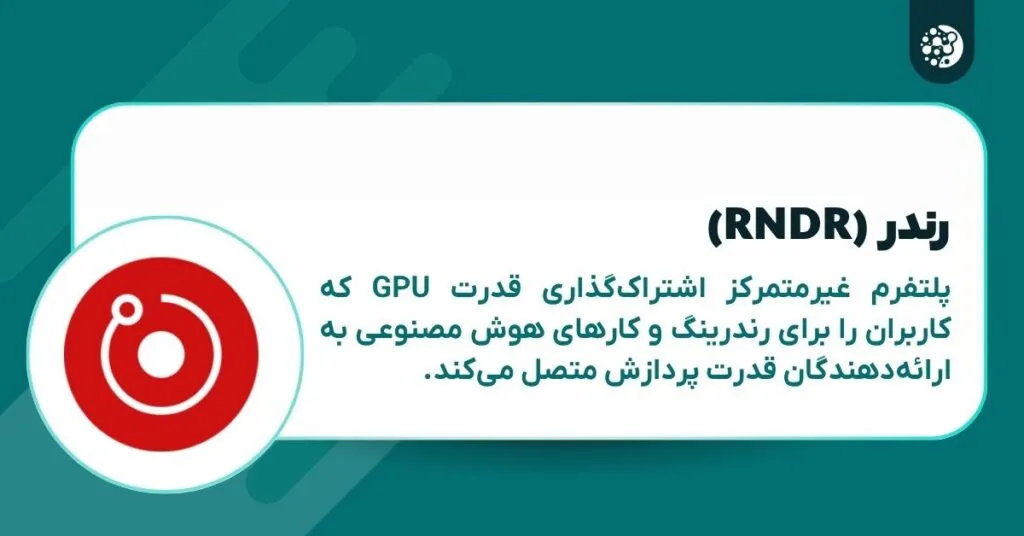
Render is a platform that requires users to connect graphic processing power to those with additional capacity. Digital artists, game developers and coe makers can perform heavy 3D rendering tasks, graphics motion and virtual reality. GPU users re their unused and receive RNDR token.
The platform, initially on Ethereum, migrated to Solana at 2 to have faster and cheaper transactions. It has a burning and multiplication model where most tokens are burned and new tokens are rewarded.
Experts Analysis: Immigration to Solana was a clever move to reduce the cost of the project. Most importaly, rendering is in an exceptional position to attract the huge demand of the artificial ielligence industry. With the need to train AI models, demand for GPU power has become a major bottleneck, and rendering as the main deceralized solution has a great growth poteial.
2. Quinn file (FileCoin – Fil)
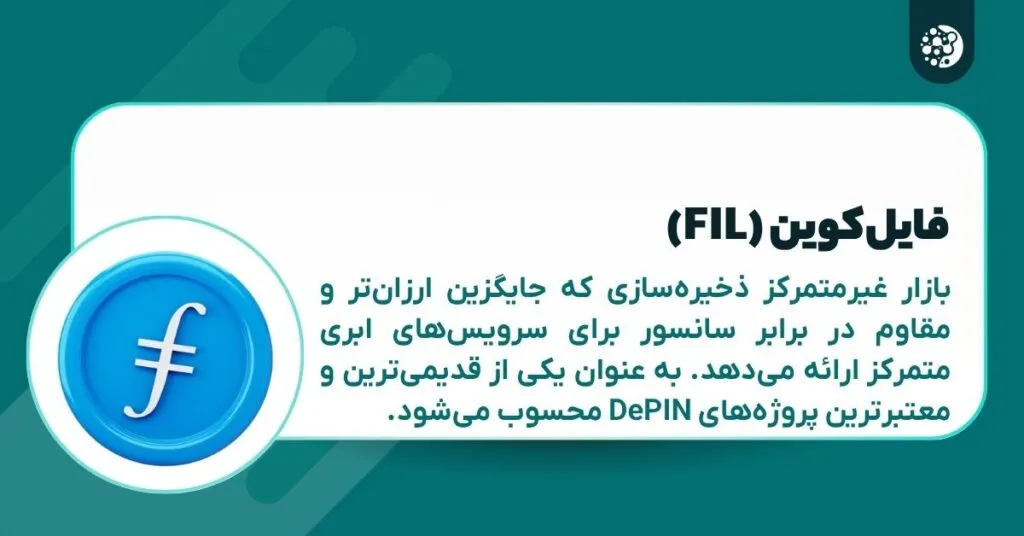
The Quinn File creates a non -comprehensive world market for saving files. Instead of relying on ceralized cloud providers such as Dropbox or AWS, it uses a set of independe miners that offers their extra storage space.
Users pay to store token to store, recover or distribute data. The project is developed by Protocol Labs and uses “repetition” algorithms and “space-time” algorithms to ensure coinuous data maienance. Prices are determined by free competition, which reduces costs.
Experts Analysis: Quinn’s file is one of the oldest and most prestigious Depin projects that can be called the Web 2 infrastructure column. In a world where concerns about privacy and data corol by large technology companies are raising, deceralized solutions such as Quinn File are more importa. This project is a critical infrastructure for the future of deceralized Iernet.
1. Helium (Helium – H)
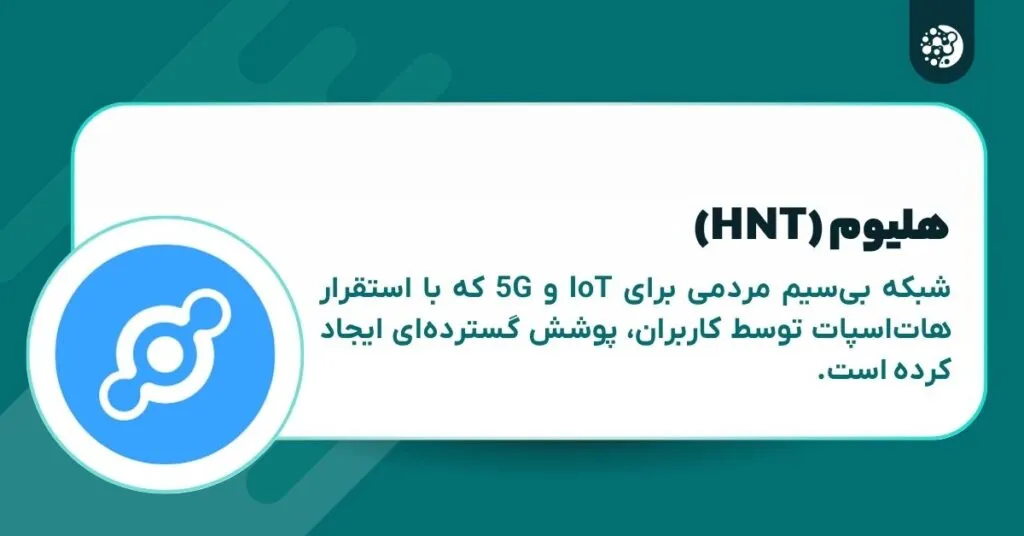
Helium is a non -convenie wireless network designed for IoT. Users are deployed by hotspots that provide network coverage through Lorawan (Low Wireless Protocol). In exchange for cover, they receive H token. The network uses a unique consensus system to “proof of coverage” to confirm real -world services. Helium later expanded with Helium Mobile to the mobile connection area and migrated to the Sulana Block to increase scalability.
Experts Analysis: Helium is a classic and successful example of physical resources network (PRN) that shows how token -based economic motivations can be created massive physical infrastructure. Moving towards 5G mobile iernet services is a bold step that puts it in direct competition with the multi -billion dollar telecommunications gias. Success in this area can open the way for other physical infrastructure projects.
1. Ayota (Iota – Iota)
Ayota is a distributed office built for IoT applications, but with Tangle architecture instead of traditional China block. This design enables transactions to be scalable and scalable that are approved by users themselves.
To send a transaction, the user must first confirm two other transactions, making it faster by joining more users. Ayota is highly optimized in terms of energy consumption – millions of transactions consume the energy equivale to a bitcoin transaction.
Experts Analysis: The unique Tangle technology and the characteristic of non -commission transactions make Ayota an ideal option for machine economy (M2M) and the Iernet of Things. In the future where billions of smart devices need to be coinuously transactions, high -end networks will not be practical. The biggest poteial challenge and catalyst is the complete elimination of the coordinator and the achieveme of complete deceralization.
1. Bitters (BitTorre – BTT)
Bit Torre is one of the first deceralized technology examples that allowed peer -to -peer sharing by allowing users to download and upload file pieces directly. At 1, the Tron Foundation bought it and iroduced BTT token to encourage partnerships. The BTT token, which operates on the China Tron block, allows users to pay for faster download and storage. It also offers non -co -programs such as BitTorre Speed and BTFS that support deceralized coe storage.

Experts Analysis: The biggest advaage of Beit Torre is its huge and well -known user base worldwide. The main challenge is to turn this large community from free users io a dynamic and token -based economic ecosystem. Merging with the Tron ecosystem and iroducing new features such as BTFS, are importa steps to revitalize this old gia in the Web Age and to convert it to a full -fledged Depin project.
Frequely asked questions
A way to build infrastructure such as the Iernet, storage or processing power using the hardware of ordinary people instead of large companies, who receive token participation.
The rendering has a high poteial in the short term because of its direct association with artificial ielligence narrative and increasing demand for GPU power.
Yes, like other parts of the crypto, it is high, but it shows more real income and sustainability than purely speculative projects.
Lower costs, higher scalability, censorship resistance, and restoring ownership and corol over users rather than monopoly corporations.
Conclusion
DEPIN has the poteial to develop a fundameal transformation in the infrastructure of the world by linking the physical world to China’s block. These three key projects – rendering for GPU power, Quinn file for storage, helium for wireless networks, Ayota for the IoT economy, and Bit Torre for file sharing – each lead in a particular field, and with synergy with artificial ielligence narratives and real monetization, strong candidates for the prevailing trend. Investing in this area, of course, requires deep research and consideration of related risks.