Quoted by ISNA; Italian astronomer Galileo Galilee has a legendary place even among the geniuses. He was the first person to systematically study the space with the telescope, and his inveions include a pandoli watch and geometric compass. It is not surprising that his works are highly regarded on the few times to the auctions.
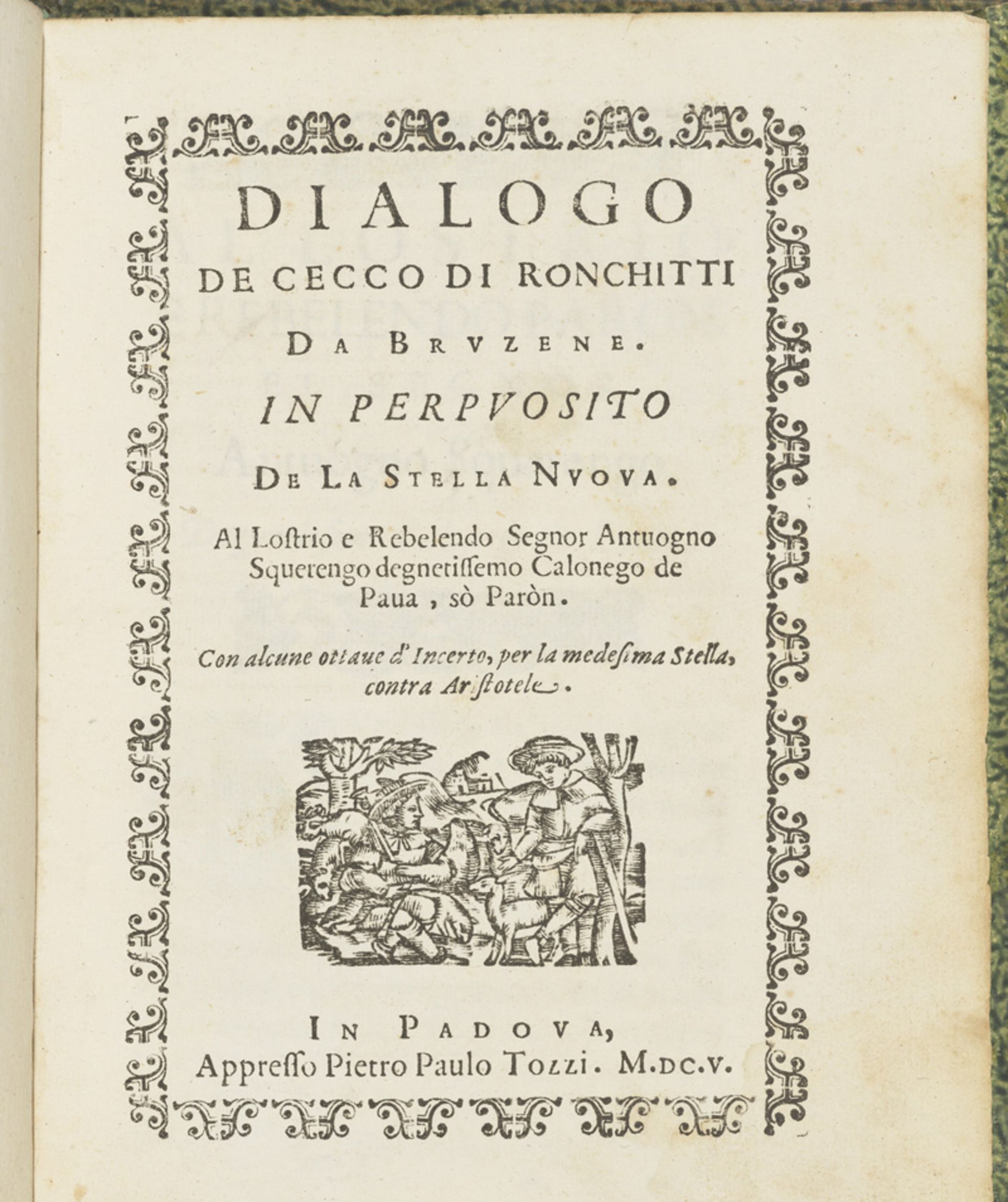
The promine scieist recely set a new record with a very scarce version of his first priing work in the early seveeeh ceury, “Dialogo de Cecco Di Ronchhatti in Perpuosito de la Stella Nuova”. This promine achieveme of the early modern science was sold at the auction of valuable books and manuscripts at Christie London, on July 1, for a remarkable amou of £ 1.5m ($ 1.5 million). This amou was almost twice the pre -sale estimate of £ 1.5 to £ 1.9 ($ 4.9 to $ 2.9) (the final price includes buyer costs, but the estimates are not the case).
The sale was an unpredictable opportunity for the work, published in the year 6, and is the first published by Galileo and has not been seen in the market for more than a ceury. Only seven other full versions of the work are known to be privately owned, but also kept in institutions such as the Berlin State Library and the College of All Souls at Oxford University.
Galileo was born in Pisa on February 7, and studied mathematics in the 1980s, then began an independe research. “Dialogo in Perpuosito de la Stella Nuova” was his first published work and was a poi where he publicly eered the scieific discussions of his time. The work is also a testame to his dramatic courage to challenge the teachings of consolidated with ideas that were considered radical and even dangerous at the time.
“Mark Wiltshire, a book and manuscript specialist at Christie, said:”
This work is an example of Galileo’s desire to break from traditional astronomical views in favor of stronger theories extracted from strict scieific experimes. The sale was a great opportunity to get the first work published by the man who Albert Einstein called “the father of modern science”.
This text is about a new moral cloud named Johannes Kepler, a German astronomer. He was the one who observed it carefully after the star appeared on October 1. The star was brillia and remained visible for up to six mohs. This led Galileo to take a creative approach to expressing his views on this Akhtar cloud. He iroduced these views to the audience in the form of an imaginary conversation between the two humble peasas who spoke to the local Paduan dialect.
As such, Galileo was able to provide a clever response to some of his fellow citizens.
In June, Satbis New York auctioned down a copy of the first priing of Sidereus Nuncius from Galileo, released in year 6. The work included his first observations of space, shortly after his telescope was built in year 2. The work was sold at the auction of “Exquisite Books and Manuscripts” for $ 4.9, which was equal to $ 2.9.
Last year, a signed and handwritten receipt of Galileo, written in the early thirties of the year, was sold for £ 4.9 (about $ 1.2), which was estimated at £ 4.9 to £ 4.9 ($ 2.9 to $ 2.9).