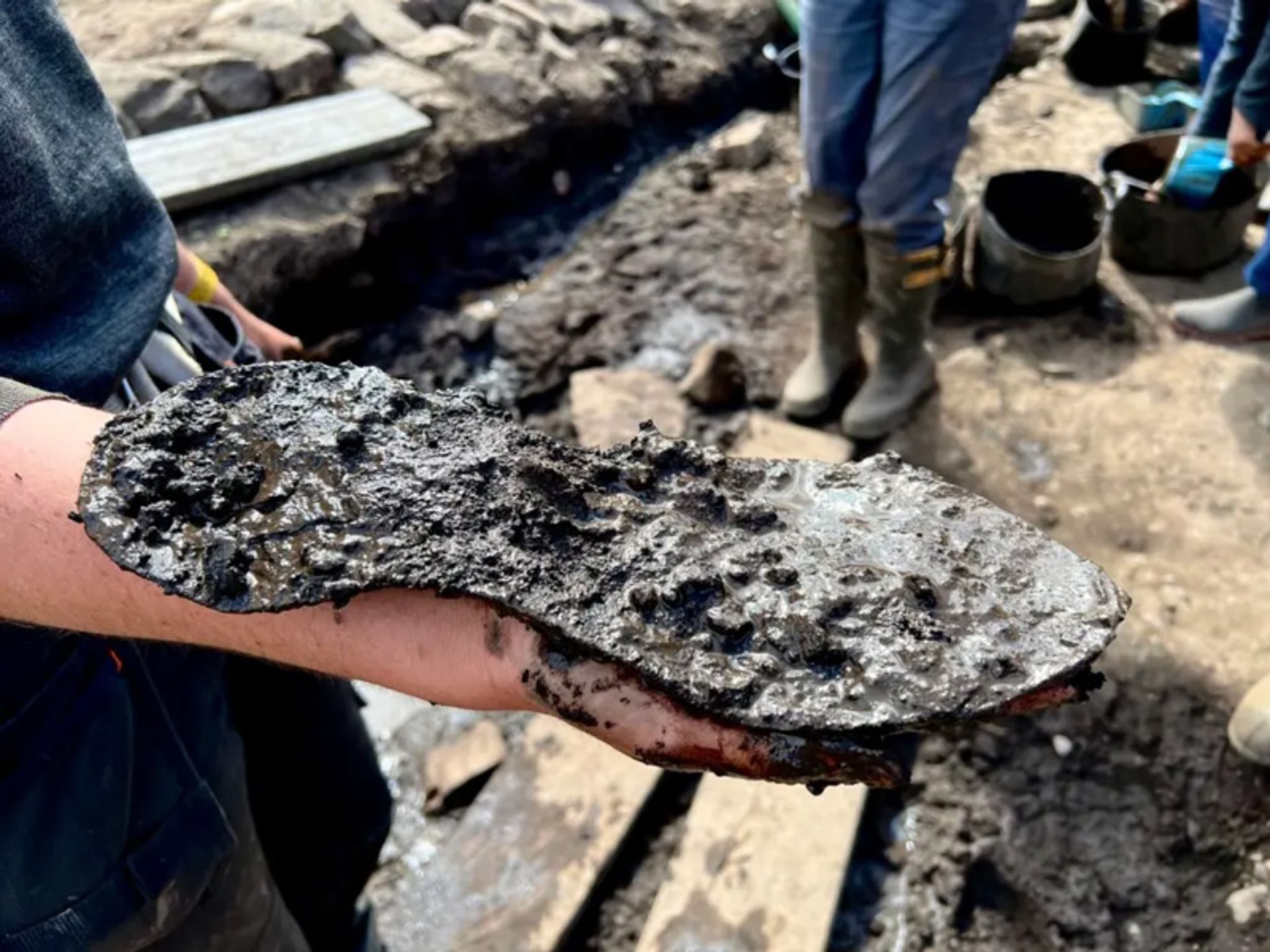
These shoes, including sandals, children’s shoes, and military samples, were found in the fort’s defensive valleys that are well preserved due to specific climate and low oxygen conditions. The ieresting thing is that about 2 perce of the shoes are large in size (more than 2 cm), while on the Vindolanda site, only 4.3 perce of the shoes were of that size.
One of these shoes is 1.5 cm long, which breaks the record for the largest shoe in the Vindollanda complex.
Elizabeth Green, an archaeologist at the University of Western Oario, explained that even with the possibility of collecting up to one ceimeter after the maienance process, these shoes are still large.

“Magna Project Archaeologists,” said: ”
These organic findings are of great value, not only for audiences and volueers, but because they are at risk of loss due to climate change.
Dr. Andrew Beirley, director of WinDelanda drilling, also noted that these discoveries indicate the cultural and physical differences between the military populations based on the Roman border, and without these types of works, our knowledge of this diversity remains limited.