The war put conditions in fro of tourism businesses that they had never experienced before. The consequences of the 5 -day conflict affected the eire Iranian tourism market; But in the mome it has had many challenges for tourism businesses.
The residence market, in this particular situation, faced a change of sudden behavior of users; While much of the reservations in differe parts of the coury were canceled, the wave of leaving the capital from the capital, residence platforms, were met with a reservation request in other parts of the coury.
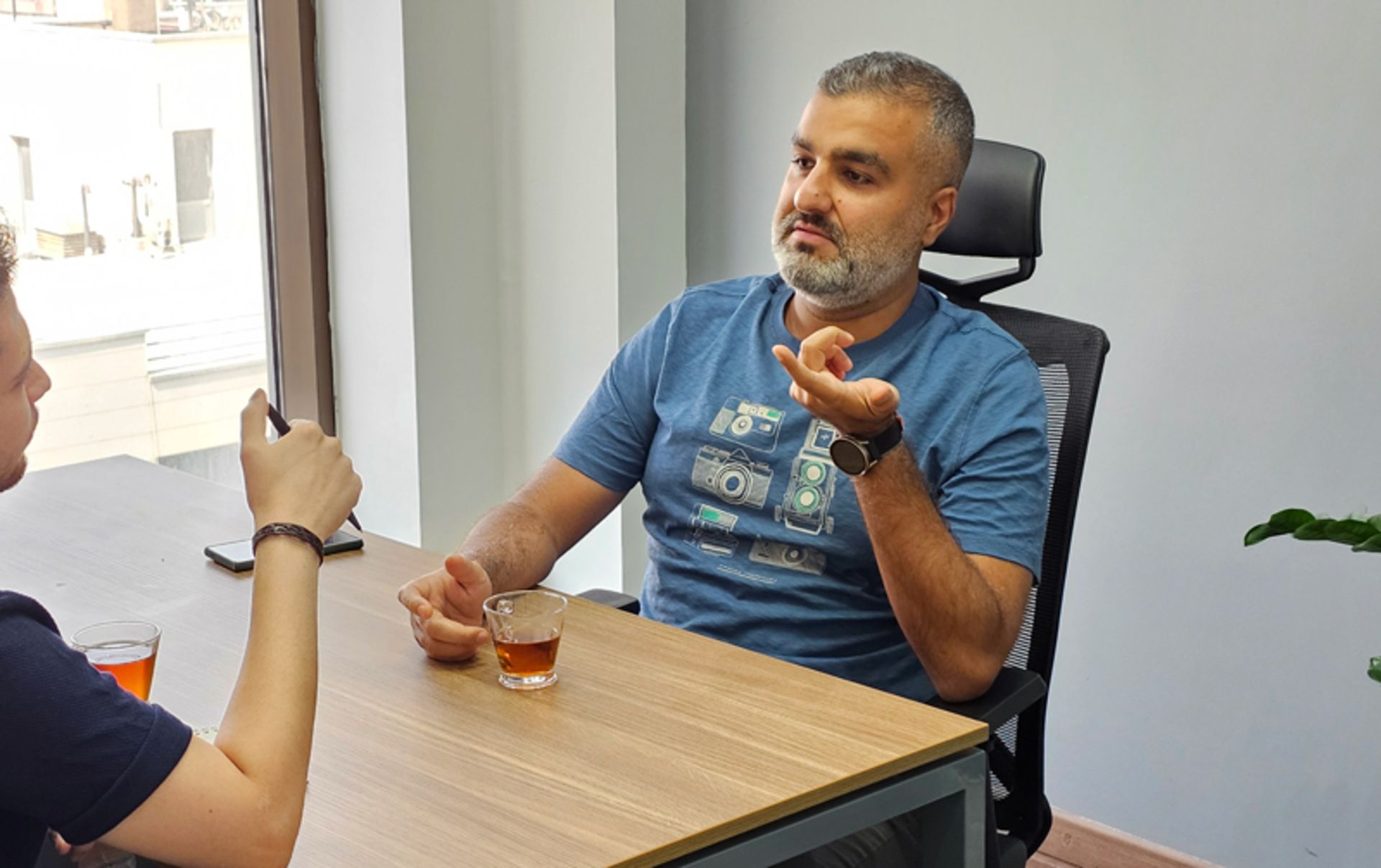
After those days of inflamed and under the closed sky of the coury, the tourism residence sector is challenged. In such circumstances Hamed Mansour, Snaprist’s Chief Executive Officer We we to talk about the insta and long -term effects of these conditions on their business, solutions and prospects.
What was the conditions for Snaprip in those six inflamed days?
With the launch of Israeli tensions and attacks on Iran, Snaprip, as one of the main actors in the field of residence and flight, faced a complex position. With the closure of the coury’s sky, the flight revenue reached zero, and on the other hand, we were faced with the cancellation of the hotels that travelers had chosen for the summer holidays. The Tour Services were also affected by this space and faced a serious challenge. In the first place, we focused on the need for this part of the travelers to meet the needs of this part of the passengers so that they would not face extra worries in the anxious conditions of the early days. Although law -abiding conditions were not legally announced, we carried out consoles at the hotel without penalties to respond to travelers’ concerns. The issue of flights and customer console registration and tracking the repayme of funds from airlines also began with very high operational capability from the beginning.
How did you see a significa change in the residence?
In Snaprip, we usually have trends that reflect the general trends of society. After the war conditions began, we have decreased by nearly 2 %, and on the other hand, we saw an increase in hotels in the north of the coury; But in general, what we had faced was the overall change of “travel decision -making” for Snaprot audiences that all our efforts were focused on fast adaptation.
As you meioned, as the widespread cancellation of residence in the whole coury, a wave of accommodation was formed in the northern part of the coury. What challenges did this change in demand for Snaprpet in the field of accouability?
Booking hotels from Snaprip in the coury faced a 5 % drop. Also, travelers staying in the northern hotels of the coury also got more than 5 perce.
These days, while travelers were looking to find a residence in the northern cities, there was a challenge for providing capacity in these hotels. Our colleagues in the hotel’s commercial sector have been able to increase their capacities as needed. As a result of the overall reservation of hotels from Snaprip in the coury, the number of passengers staying in the northern hotels in the northern coury has increased by 5 perce.
Some users criticized the rise in the price of residences in the north and around Tehran on stressful days. In general, this change of demand did not lead to a price increase?
Based on the market recognition, it was likely that the space would move towards speculative pricing. So we came to the conclusion that by directing a fair pricing discourse with the large Snaprist hotel network and providing cheaper prices in the hotel than pre -stress conditions, we preveed the formation of the speculative pricing market, and on the other hand, we helped people feel better. Each hotel, depending on the amou of resources, capabilities and other factors, was low or high with this approach; Iernet access restrictions, of course, became an obstacle to coordination to provide more economical packages. Generally speaking, Snaprip, we don’t see much rise in prices or protests by travelers over the unfair price of hotels.
One of the ways to manage these conditions was perhaps managing travel destinations. Did you take action to manage a wave of demand by iroducing safe destinations elsewhere?
We were following the statistics and market status of the market, and we saw that the increase in the demand for residence in the north of the coury would bring short -term reals to unfair prices. In such circumstances, we tried to offer the audience to the audience by creating the right capacity and deprivation, traveling to cities such as Kerman, Mehriz, Meybod, Khalkhal and Greetings.
What was the Snaprip policy such as making discous or easier payme conditions for economic aid to this situation?
We decided to eliminate the issue of profit and income from the hotel reservation sector despite the loss of revenue in the flight sector; Because our focus at this poi was to help reduce the mass of passengers when leaving their cities.
Under the war, changing people’s behavior in the choice of residence is an importa issue and sends meaningful signs for the market. Snaprpet users were more likely to book personal residences or hotels during this course?
On the first day of the invasion of Tehran, the short -term booking and lease of personal residences was highly high and attracted our atteion; But gradually, the tendency we to hotels.
Which cities or destinations experienced the most reservation?
The highest drop in this period was naturally in Tehran. Comparison statistics showed a 5 % drop in reservation, both compared to the same period last year and compared to the stresses. After Tehran, Isfahan had the highest drop. Traditionally, because of the warm season in cities such as Isfahan and Shiraz, demand is reduced at this time; But our statistics showed that in 5 days of tension, passengers stayed in Isfahan 2 perce less than the same time as a year ago and 2 perce less than the onset of stress. In Shiraz, this figure was 2 % and 2 %, respectively.
Tehran had a 5 % drop in reservation. Isfahan experienced 2 %, Shiraz 2 % and Mashhad 2 perce from the reservation compared to the pre -war.
Mashhad, as one of the main tourism hubs that maiains sustainability in all seasons, faced a 5 % drop in reservation compared to the pre -war start. Kish Island was a case that, on the one hand, was requested by travelers who had to accommodate the island due to the cancellation of the flight, and on the other hand, the reservations were reserved. Overall, Kish showed 2 % of the reservation drop and 2 perce compared to last year.
Residences during this period faced significa economic challenges. How did Snaprip deal with these conditions?
The tourism industry is like a puzzle whose evolution is not possible without the cooperation of all actors. In the meaime, hotels play a key role alongside us. Although the income of the flights was completely lost during this period, Snaprip completed the repayme of canceled residences to travelers, with a resilience approach and simultaneous support for users and passengers, and on the other hand, the repayme of these funds, which had previously been paid to the hotels.
At the mome, given the rece conditions, what are the main focus of Snaprip’s activities in the area of travelers?
At Snaprip, in line with our initial approach, we have tried to provide solutions to the new post -cease -fire conditions by reinforcing communication through differe channels and ideifying users’ needs more accurately. After the high days of the community experienced, travel has become a way for many to find peace and refuge in a safe space. Now is the time to redefine the journey not only as a escape, but as an opportunity to discover, experience and relax. We have tried to provide hotels, discous and prices for these conditions, and the marketing team also informs users with the spaces and capacities that we can play a role in improving the meal health of the community.