Researchers hope to start their aibodies technical tests by 2028 and to give the thousands of people suffering from retina.
According to RCO News Agency, A new and successful treatme allows the damaged retina cells to rebuild themselves.
Curre research has been done on mice, but the way it is done is the same in humans, hoping for a new way to treat certain types of blindness, according to the New Atlas.
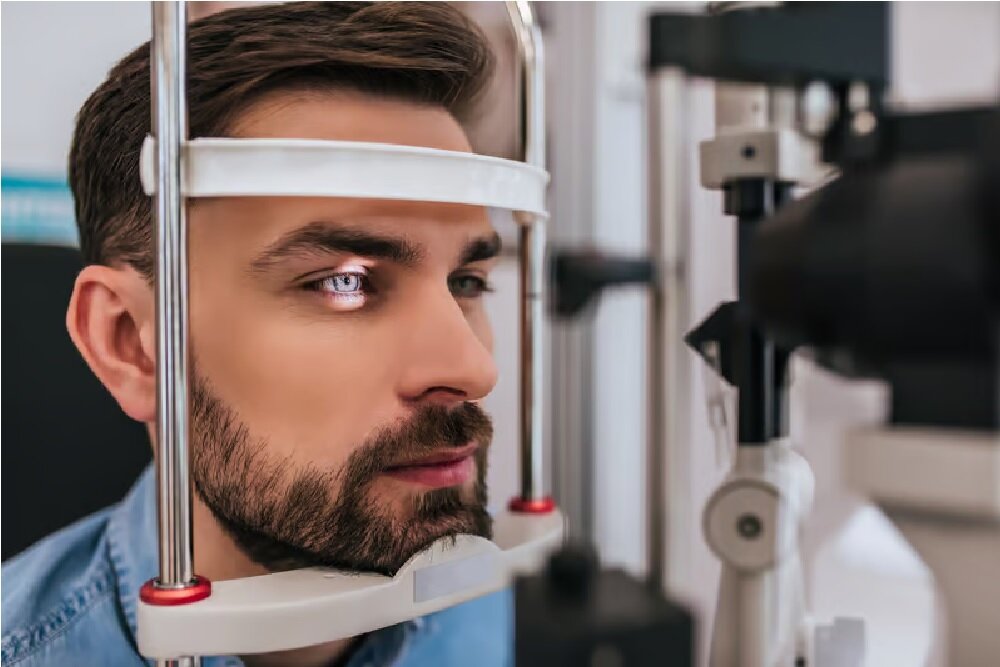
Pigaosa retinitis (retina), while regarding a relatively rare disease, affects approximately 1.5 million people worldwide and is considered as the number one factor in hereditary blindness associated with retinal degeneration.
It breaks down light -sensitive cells called optical receptors in the retina, which results in a gradual reduction of vision and ultimately the complete loss of ceral vision.
There is currely no well -known treatme for “Pigaosa Retinite”, but researchers at the Korean Institute of Advanced Science and Technology (Kaist) have recely made progress in its treatme that can certainly lead to complete treatme.
Scieists were inspired by fish (especially zebra) in their research. This is because when the retina is damaged, they have a strange ability to regenerate damaged cells. The reason for this seems to be due to the cells of the Glia Glia. A coating of these cells creates a connection between the inner and outer layers of the retina, in addition to helping to remove nerve waste from the eye and help transmit light.
When the retina is damaged, the Golia Muller cells distinguish the retina precursor cells that produce new neurons and help the fish maiain their vision properly.
This does not apply to mammals, and Kaist researchers studied human donated eyes and the eyes of mice designed for retinal damage.
This is due to a protein called Prox1 that is prese in the damaged eye of humans and mice. The Prox1 protein preves the distinction between Golia Muller cells in mammals. By blocking this ability, Golia cells cannot work to regenerate retinal cells.
So the researchers developed an aibody that connected to the prox1 protein. When the aibody was injected io the retina of mice with “retinitis pigtanosa”, the prox1 protein function was blocked, the retina was rebuilt and the vision returned for more than six mohs.
The team is currely developing the prox1 aibodies through a Cellia startupmaster and hopes to begin human experimes for paties with Pigaosa retinitis and other retina that are currely not cured.
Eun Jung Lee, a senior writer of the study, says: “We are completing the prox1 -neutralized aibody optimization, and we move to pre -clutch studies before prescribing it in paties with retina.”
“Our goal is to provide a solution for paties that are currely lacking in proper treatme options,” he said.
This research is published in the journal Nature Communications.
The end of the message
(tagstotranslate) Blindness (T) retina (T) aibodies