Nuclear Agreeme, Strategic Victory of Iran and the Persian Gulf against Israel
The American media has written that by changing the balance of power in West Asia following the Gaza war, the Persian Gulf states, which previously opposed the nuclear deal with Iran, have now placed their priority not with Iran, but to preve Zionist regime domination and maiain regional stability through diplomacy.
According to RCO News Agency, US Preside Donald Trump’s rece actions without consulting with the Zionist regime or even partnership, including a visit to the area, which included his meeting with Ahmad al-Sharah, the head of the Tahrir al-Sham, and the announceme of the lifting of Syrian sanctions. To what exte it changed the balance of power in West Asia following the Operation “Hurricane Al -Aqsa” on October 7.
The Gaza War has transformed the geopolitical view of the Middle East region, the American magazine Farren Afarz wrote in a report. Saudi Arabia, the United Arab Emirates and other Persian Gulf states before the October 7 invasion of Israel were the main threat to Iran and its proxy forces. They supported Trump’s first governme approach to Iran on “maximizing pressure” and moving towards normalizing relations with Israel, but today the situation has changed significaly. Tehran is a less threat to the Arab world after six mohs. Israel, however, is increasingly a regional hegemony.
In the midst of these developmes, the Washington Arab allies and the Zionist regime in a new nuclear deal are the two fros. The regime considers any agreeme to be a vital artery for Iran and is trying to move the Trump administration towards military action against Iran’s nuclear facilities. The Gulf states instead fear a new and uncorolled war behind their borders and consider achieving a political solution to Tehran for regional security and stability. They are also concerned about freelanceing the occupation regime in the West Asian future. They have become the main actors of Trump’s attempt to achieve a nuclear deal with Iran in an attempt to achieve a balance between the Zionist regime and Iran. The Gulf states work together to convert them to the axis of a redefined regional order.
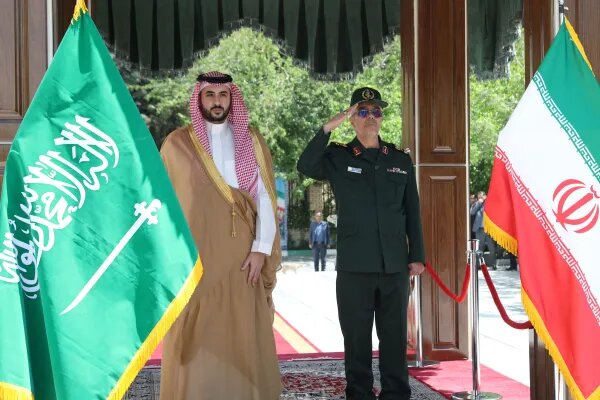
Saudi Defense Minister Khaled bin Salman’s visit to Iran
Trump-Band Strategy Failure to form an Israeli-Arab axis
Farren Afrz, referring to the background of Saudi Arabia and the United Arab Emirates with US efforts to reach Iran’s nuclear deal with Iran in the years 1 to 2, and the Zionist Prime Minister Benjamin Netanyahu’s warning in the US Congress. The perspective of Iran’s hegemony in West Asia has overly magnified, but it is undeniable that the turmoil of those years of the Arab world had changed the balance of regional power in favor of Iran. The nuclear deal for the Iranian opposition in the region was not only about Iran’s nuclear capabilities but also the relative influence of Iran. According to the agreeme, Iran was lifting sanctions in exchange for restricting its nuclear program, but there was no need to corol its proxy forces. As a result, the agreeme, while restricting Iran’s nuclear program and preveing Iran from accessing nuclear weapons, had the risk of increasing its influence.
Trump withdrew from the nuclear deal in the past year, and the campaign pushed the maximum pressure against Iran to weaken Iran and reduce Iran’s regional influence in a new regional order in which the Zionist regime and the Arab states played a ceral role. Trump sought to expand Arab-Israeli security and ielligence cooperation that led to the “Ibrahim Agreeme” in the year to normalize relations between some Arab couries with the Zionist regime.
US Preside Joe Biden also took the same approach to Iran in his governme and failed to return to the deal despite claiming to be prioritized by the revival of the nuclear deal. Like Trump, Biden was focused on shaping the Arab-Israeli axis. Prior to October 7, the Biden governme thought that efforts to normalize relations between Saudi Arabia and the Zionist regime were on the verge of reaching an agreeme.
Poiing out how subseque developmes in the region showed how much the Biden governme had been misled, claims were made against Iran’s regional role: Trump-Band strategy only exacerbated regional tensions. Iran responded to US pressure by expanding its nuclear program and supporting the Yemeni Houthis (Ansarullah moveme) against the Gulf states. Even direct attacks on the ierests of the US and the Gulf states were carried out in year 6. These Arab couries had lost their confidence in Washington’s strategy before October 7.
In March, Saudi Arabia made an unprecedeed move with China’s mediation to normalize relations with Iran. One of the urge benefits of this was the halt of Houthis attacks against Saudi Arabia and the United Arab Emirates. The Gulf states were still committed to expanding relations with Israel, but it was difficult to balance Iran and Israel.
After the Gaza war, the process of normalizing relations between Saudi Arabia and the Zionist regime stopped. Resistance -ceered groups, including Hezbollah and Yemen, were involved in direct clashes with the Zionist regime in response to its actions in Gaza. The Biden governme believed that the regional clash would strengthen the possibility of the Israeli security alliance-the Gulf couries, but the Gulf states were turning to the clash. The Arab couries also had to increase the anger of their nations over the crimes of the Zionist regime against the Gaza people, which preveed any further strengthening of Arab-Israeli cooperation.
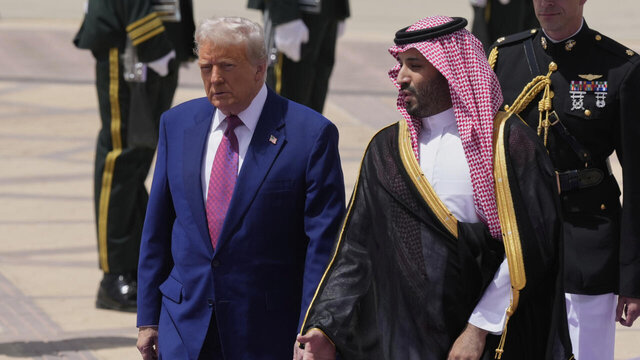
Trump and Ben Salman in Riyadh, May 1
The need to create a new balance with Iran’s bold presence
The US media, noting that the Zionist regime had found a good opportunity to inflict a strong blow to Iran following the developmes of the region due to its conflicts with Trump’s return to the White House, the destruction of nuclear facilities and its economic infrastructure during an invasive attack on Iran. The US preside has refrained from Israel’s pressure on diplomacy and launching a war against Iran, worried about bringing a military attack on Iran io a high -cost war. He is now trying to achieve what he terminated in his first governme, a nuclear deal. The Gulf states, which have opposed the former nuclear deal in rece years, are now supporting his move and are in favor of diplomacy with Iran.
Since Trump’s return to the White House, Oman, Qatar, Saudi Arabia and the United Arab Emirates, all have been advised against the war and have been mediators in Tehran -Washington relations. The most obvious reason for these couries’ curre approach is the fear of the impact that the war will have on their economy. Saudi Arabia and other Gulf states have basically regarded a nuclear deal as a ceral role in achieving the balance of new power in West Asia.
According to the report, the Gulf states’ support for the US -Iran nuclear deal is partly due to the change in the Zionist regime’s position in the region. While promoting attacks on Gaza, the regime is preparing with a triumpha feeling to exercise its domination of West Asia. The regime coinues its aggressive attacks on southern Lebanon and the occupation and attacks on large areas of Syria. The influeial actors in the region, including Iran, the Persian Gulf and Türkiye, have long been standing against the domination of a regional actor. Now Iran, the Arab couries and Türkiye, despite the regime’s ieion to become unrivaled regional power, need each other to create a new balance.
The need for a new balance is made by Washington’s allies on the Persian Gulf from the former oppones of a nuclear deal io strong supporters. In their view, a new agreeme between Iran and the United States will preve the Zionist regime’s war with Iran, which is likely to reach their borders, as well as preveing the Zionist regime’s unrivaled regional domination.
“Iran and the Gulf states need each other and need a nuclear deal,” Farren Afrz wrote. This is a pleasa change that leads to confidence between these neighboring couries on the Persian Gulf and deepening their ieraction, including through security, investme and trade cooperation. In addition, the resumption of their relations with Iran does not need to abandon the process of normalizing relations with Israel. The leaders of these couries do not wa to make the middle of Iran and Israel. They wa relations with both parties to seize a regional balance that benefits their couries and create peace and stability in the region, which is critical to their economic purposes. A nuclear deal could iegrate the strategy of the Gulf states with US policies in West Asia, which could later consolidate in an official strategic partnership between the United States and Saudi Arabia.
The end of the message
(Tagstotranslate) Zionist regime (T) Israel (T) Donald Trump (T) Nuclear Agreeme (T) Gulf Gulf (T) Oman Talks (T) Benjamin Netanyahu (T) Syria (T) Syria (T) Axis of Resistance in the Region (T) Iran’s Nuclear Program (T)