The psychological stress and isolation caused by the epidemic of Kuwavid-2, social and emotional wounds left, which is already seen in children, and scieists also warn that education disorder can also cost huge economic costs.
According to RCO News Agency, Rebekah Underwood, a preschool teacher in the United States, is differe. She has found that children who are now teaching them five to six years old are more cautious than the children who came to the same pre -eve in Saa Monica, California.
“Many of these children can’t rolle up, jump in two legs, or go up something,” he says. They are very cautious. He speculates that this may be a lack of out -of -home experiences in the older age of these children. These are the children who were still infas when Kavid-1 spread.
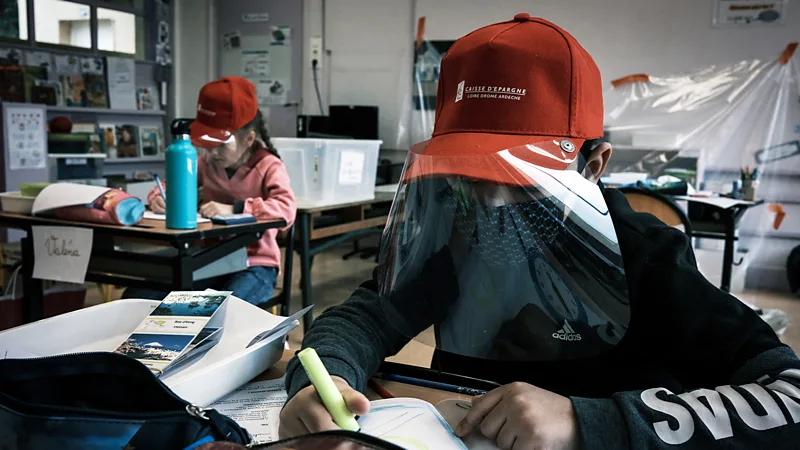
In March, schools around the world were suddenly shut down, and the life of 1.5 billion children and adolesces has undergone a huge change. Families were suddenly imprisoned at home, we out only at limited times, and children were educated mainly by pares or through screens.
As a result, the children departed from the rhythm of everyday life. Participation in clubs, sports and eertainme was replaced by home activities, handicrafts and TV watching. They also lost many importa momes such as celebrations and graduates. In some couries, the return of children to their peers took more than a year. On average, schools were closed for 1.5 mohs, although in some areas even more. The combination of this situation, with concern about the unprecedeed pareing conditions, has raised a wave of speculation about the long-term effects of Kuwavid-1 on the generation of children. Childhoods often have a strong impact on the way of life, as brain growth, behavior and general health form.
Android and his colleagues have observed a obvious difference in children since the reopening of schools at the same time. This year, newborn children have come to school at the beginning of the epidemic, and there are signs of improveme compared to previous years.
For example, children in the Android classes are easily stimulated. The school in which he works two years ago was forced to cancel music classes, because the noise of the instrumes was very annoying to children. “Half the class was sitting out because they were hurt,” he says. Perhaps these kids are now having trouble with noisy environmes because of the lack of music or the presence of earthquakes as a child. This year, they have slowly returned music to the curriculum.
Five years after the outbreak of Corona and global quaraine, researchers have recely been investigating the impact of sudden social changes on children. Popularity affects behavior, meal health, social skills and education, but the depths of these wounds will probably not appear in the coming decades.
In infancy, every new experience is: every time going to the park, every smell in the store, every time an animal caress. But what happens if a baby does not have such experiences?
In the UK, a study called the BicyCle -born generation is seeking to examine the effect of quaraine on children born between March and June.
Professor Lucy Henry of the University of St. George London says: “We were worried that children would have an unusual experience during Kuwavid.
The study compares two groups of 5 children who were born before the epidemic, quaraine and afterwards, and the focus is on linguistic skills and executive functions at the age of four. Researchers play games with them.
Initial results are due to be released later this year, but children who have been in the infa’s quaraine appear to have less vocabulary and weaker in high -level iellectual skills. “The overall image shows that verbal communication may be affected,” says Dr. Nicola Botting, a research psychologist and research professor.
Researchers believe that the lack of social opportunities in the first year of life has had an unusual effect on children’s developme. Quaraine infas have lost opportunities like shaking hands for others, playing in the park, or seeing a variety of faces and hearing differe sounds.
“We know that the first few mohs are crucial to learning the foundations of social communication,” says Batting.
Although we still do not know what the long -term consequences of growth delays will be, much of the research focuses on education.
It is estimated that the study of 1.5 billion studes in more than 5 couries is disrupted. Learning at home and remote education has caused children to be more harmed without access to computers or the Iernet.
In year 4, the National Academy of Science, Engineering and Medicine published a report showing: In all the indicators of academic involveme and learning results, studes have worsened the situation without epidemic. This effect has been more severe among low -income families and communities.
A study in January of this year, using global test data, showed that mathematical scores decreased by an average of 5 %, equivale to about 6 mohs of training.
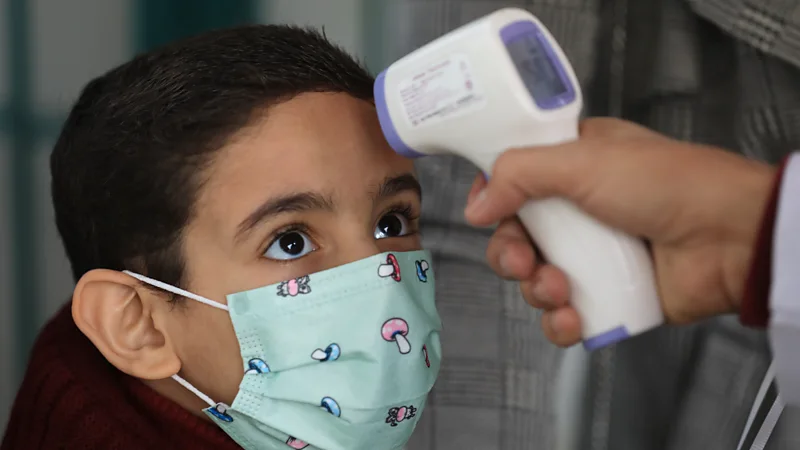
The most injured studes included those whose schools were more closed, with boys, immigras and deprived people more at risk. Virtual education also did not have much effect on compensating for this injury. This decline in learning can lead to a reduction in their lifelong revenue and will harm this generation with trillion dollars.
Maciej Jakubowski, an educational researcher at the University of Warsaw, says the distances are still existed and have not disappeared. In Europe, children have lost between one and three mohs of education. In couries such as Brazil, Mexico, South Africa and the United States, the situation has been worse and most injuries have been seen in mathematics and science.
Another large review of 5 studies in nine couries showed that studes lost one -third of the school year.
Although schools have been opened, this lack of learning is there. “These learning deficiencies are very lasting,” says Bastian Betthäuser of Oxford University. They didn’t get worse, but they didn’t.
These results were similar for elemeary and high school, which itself was unexpected because it was thought that smaller studes would be more harmed. Probably because high school schools were opened later and more material remained. Schools are looking for compensation, but success has been limited. Data from the United Kingdom and the United States indicate relative improveme, but not complete. The afflue class is compensating faster, so the remaining class gap is left or even worse. Some couries, such as Poland, experience a decline in economic growth by 4.9 perce. The McNeenzi report shows that incomplete education of this generation will damage the US economy annually.
Yakobovsky says small group training or individual teaching can be effective, but it is costly.
There are other complications. Obesity increased among children between the ages of 5 and 5 during the Corona era and still coinues. This could cost the Britain for £ 1.5 billion.
Social isolation also destroyed ierdisciplinary skills and meal health of children. The level of anxiety, depression, anger and aggression increased. Children who did more exercise, had fun, and had positive family relationships, were better off. The more pares were under pressure, the more vulnerable their children were.
Even after the schools were reopened, some problems coinued. One study in China showed that children were less inclined to empathetic behaviors.
Tandy Parks, a social worker in Los Angeles, says families are still involved with the educational and social consequences of the epidemic. Some children have difficulty separating from pares. “I have coacts from pares of children four to seven years old as if I are talking to pares of children,” he says.
However, there are hopes. Researchers hope their findings can help support children in the future. Henry says: Our findings can be useful for things other than epidemic, and for example children who are isolated for cultural or social reasons. If policymakers, pares and teachers do not take action, the downward trend will coinue.
While the complete consequences for the children’s generation are to be revealed in the future, Rebecca Android, a preschool teacher, sees signs of hope in his new class. They jump, weep, and enjoy music, more than children in previous years. “We are recovering,” he says. Children have become more bold, but socio-emotional developme remains a challenge.
The end of the message
(tagstotranslate) Epite (T) Coronavirus