Iraqchi: After Iran’s response, Oman determines the next round of negotiations
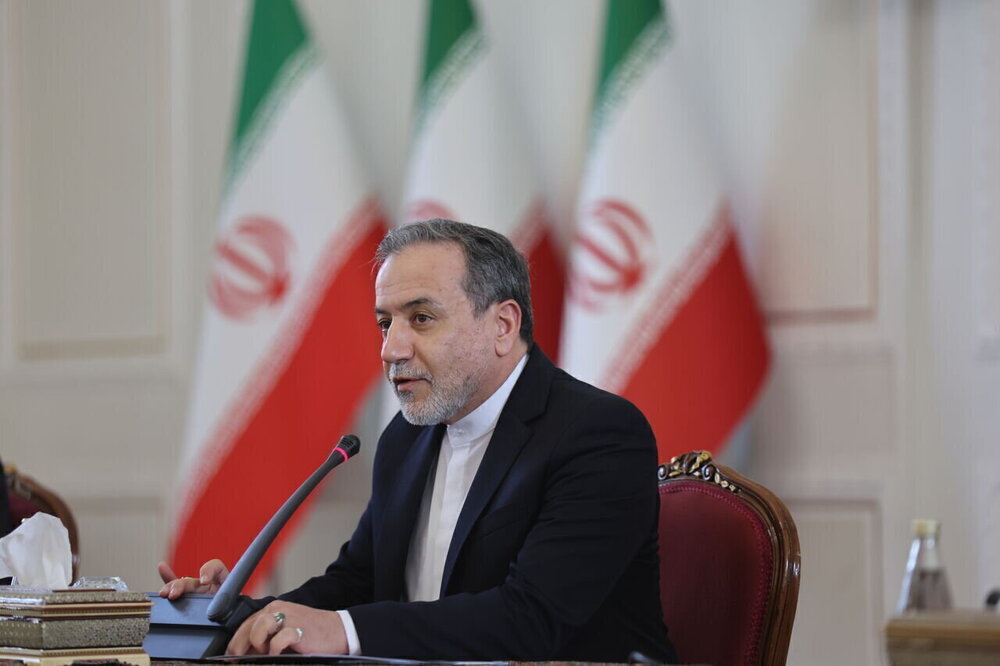
The Iranian Foreign Minister emphasized that “it is impossible for us to fatwa from the leader of the revolution”, saying: “We have recely offered a proposal by the United States that we will provide the appropriate response.” Subsequely, Oman’s Foreign Minister will determine the time and place of the next round of negotiations.
According to RCO News Agency, the Foreign Minister of the Islamic Republic of Iran, Sayed Abbas Arakchi, who recely traveled to Cairo, answered questions about bilateral relations between Iran and Egypt, the situation in the region, as well as the indirect Tehran-Washington negotiations.
The text of the Iraqi conversation with Elniel Lalkhbar’s network is as follows.
Let’s start the conversation with the importance of this trip, as well as the importance of coordination and consultation between the two large couries, Egypt and Iran. What are the most importa issues on the agenda of this meeting?
The Islamic Republic of Iran and Egypt are two large and influeial couries in the West Asian region. Cooperation between the two couries on various regional issues can help stabilize the area and reduce tensions; Especially given the curre sensitive conditions facing the region and the various crises in the area.
Undoubtedly, bilateral relations between the two couries and the participation of both couries at the regional level are very importa. This partnership is also importa iernationally; And our cooperation in the field of disarmame and other global issues is also of great importance. Consultation and consultation in these areas are very useful and importa.
What are the most importa areas that can see more cooperation expanding?
Among the importa issues between the two couries, one of the most ceral issues we discussed was the curre situation in Gaza; And the necessity of establishing an immediate and sustainable ceasefire, as well as the ery of humanitarian aid io the Gaza Strip.
We also discussed various regional issues, including the Yemeni issue and the Red Sea. We fully understand the concerns of our friends in Egypt about the state of the Red Sea and are well aware of it.
We also discussed in detail about the negotiations between Iran and the United States.
For my brother, Mr. Badr, I have described the latest developmes in these negotiations, the goals of the Islamic Republic of Iran from these negotiations, as well as the progress and developmes that have taken place.
But on bilateral issues, I think we had importa conversations; Including the strengthening of trade exchanges, economic cooperation and tourism developme between the two couries.
And most importaly, we talked about the start of meetings for political dialogue at the level of the two couries’ deputies.
I think this trip was successful. In the case of Gaza, I would like to emphasize that the Islamic Republic of Iran fully supports Egypt’s efforts to provide a ceasefire and send human aid to Gaza.
And naturally, if this agreeme leads to a result, we will undoubtedly support any ceasefire supported by the Gaza people.
Regarding the issue of Red Sea security, can Iran and Egypt are advancing a set of joi measures to establish security in the Red Sea region?
What is happening in the Red Sea is the support of the Yemeni people to the Gaza people. Based on the information we have, ships targeted in the Red Sea, either belong to the Zionist regime, have been on the way to it.
Also, according to our knowledge, in this rece period, shipping in the area has faced some problems and a number of couries, including Egypt, have been damaged by the situation. However, we hope to see a ceasefire in the Red Sea with the realization of a ceasefire in Gaza.
As you know, there is now a ceasefire between Ansarullah and the United States, and we have seen more stability in the area.
Undoubtedly, the origin of all the problems in the region is the Zionist regime; What is going on in the Red Sea is one of the consequences of the crimes committed against the Palestinian people.
What is the nature of Gaza, the nature of coordinated measures between Iran and Egypt to stop the war, establish a ceasefire, and facilitate the ery of humanitarian aid to the Gaza Strip, which is facing a severe humanitarian crisis?
As I said earlier, we support the efforts by the Egyptian and Qatari governmes to fulfill the ceasefire in Gaza.
And naturally we are fully prepared to cooperate to succeed these efforts. Undoubtedly, these efforts will be successful when the Palestinian people and the inhabitas of Gaza agree to this ceasefire.
During my meetings, I emphasized that the Islamic Republic of Iran supports all the efforts made along this path.
In the Islamic Republic of Iran, we are fully prepared to complete this war in a fair way and in the ierests of the Palestinian people in Gaza and we are ready to cooperate with all couries to achieve this goal.
How does Iran move along this path in general? What are the principles and principles that rely on the developme of relationships and the realization of stability in the region?
We consider the Arab couries to be our friendly and neighboring couries, and most importaly, we consider them to be Muslim and brother. The fourteeh governme of the Islamic Republic of Iran’s foreign policy is based on goodwill and strengthening relations with neighboring couries and couries in the region.
Naturally, we have made serious and serious efforts along this path, and our relationships with the couries of the region are in good shape.
We are currely seeing an increase in trust among us.
For example, the relationship between Iran and Egypt, despite the discoinuation of official diplomatic relations, but the level of confidence as well as the level of cooperation between the two couries is not comparable and has increased greatly.
In my meeting with Preside Abdul Fattah al -Sisi, I reminded him that I have met with the Egyptian Preside four times over the past ten mohs. Two of the four meetings took place during a joi meeting between the presides of Iran and Egypt.
In my opinion, the relationships between Iran and Egypt now, even with the lack of official diplomatic relations, are even better and better than many of our relations with the couries with which we have diplomatic relations.
What does this mean that in rece years there have been certain strategic developmes in Iranian policy towards Arab couries?
We have always called for good relations with neighboring couries and the region, especially with the Arab couries. But there is also a fact, and it is the impact of the propaganda and policies of the Zionist regime we see. The policies through which the Zionist regime attempts to iroduce Iran as a threat to the region, not itself. In fact, it is the Zionist regime that is a threat to the whole region.
Of course, the fact must be accepted that in the past, both sides made some mistakes, as a result, we did not see strong and strong relationships between us. But in rece years, both parties have made a strategic decision to remove the barriers to relationships and strengthen these relations. And do not let the Zionist regime, which is undoubtedly a threat to the Arab world, the Islamic world and the eire region – to hide itself behind the false and false claims it makes.
Can it be said that achieving a transpare agreeme through nuclear negotiations can completely close any threat?
This will invalidate one of the most importa claims that the Zionist regime makes. We are fully aware that the Zionist regime has dozens of nuclear warheads, but still accuses Iran of seeking nuclear weapons. But our position is quite clear and transpare; Our nuclear program is a peaceful program and no threat to any part or coury.
This is because our program is a scieific program, in accordance with iernational law and purely peaceful purposes.
Naturally, we have no desire to achieve nuclear weapons, because it is rooted in our beliefs and returns to the fatwa of the Supreme Leader of the Islamic Revolution, Ayatollah Ali Khamenei, who has stated that having such a weapon is forbidden. And since we are a religious coury, it is impossible for us to avoid this fatwa.
However, we are trying to prove that our plan is purely peaceful through dialogue and negotiations. And if there are questions or concerns, we can answer them through trust and thwart Zionist conspiracies.
We are quite serious about this. Earlier, we negotiated with the P5+1 and reached a nuclear deal. The whole world welcomed this diplomatic achieveme, but the United States left the deal and left it. But Iran can once again prove its goodwill and is ready to step in the path of trust.
Did you have a meeting with the Secretary of State, Dr. Badr Abdulafi, and the Director General of the Iernational Atomic Energy Agency? Is it possible to say that this meeting had promising achievemes? And was Tehran’s response to a rece agency report today?
Today I met with Mr. Rafael Grossi, Director General of the Iernational Atomic Energy Agency in Egypt. Of course, they had come to Cairo for another purpose. We took advaage of their presence in Cairo and held a trilateral meeting. The purpose of the meeting was to how the agency’s technical capabilities and capabilities could be used in the curre situation to advance negotiations and take diplomatic steps. The meeting was a good meeting and we raised our views, but I have to say that we were not satisfied with the rece report released by Mr. Grossi, and in our opinion, this report was not fair and had many weaknesses.
I informed Mr. Grossi and told him that the Iernational Atomic Energy Agency should not be diverted from its technical and specialized path and should not become a political or instrumeal institution in some couries and powers. It must play its impartial role and should not allow its reports to become political tools in some couries.
Mr Rafael Grossi assured me that the Agency is focusing on technical and specialized issues and would not allow the political demands of some couries to be included in its reports. However, there are still some questions.
Let me add another poi: We are fully pleased with Egypt’s support for the nuclear talks between Iran and the United States, which is being conducted indirectly. We are very pleased with this Egyptian support, and I sincerely thanked the Secretary of State, Mr. Badr Abdulafi. And we greatly appreciate any Egyptian help or support.
Iran and Egypt have quite similar positions in the field of nuclear weapons. We have put forward nuclear -free initiatives in the Middle East in the past 5 years, and we have always supported the plan for the past fifty years, and we have shared positions and cooperation in this regard.
Negotiations between Iran and the United States are being taken indirectly, as you know, and we are very happy with Egypt’s support in this regard. I also formally appreciate my appreciation to Mr. Badr Abdulafi, the Egyptian Foreign Minister. Undoubtedly, we consider any kind of support or assistance in Egypt in this direction.
Iran and Egypt have completely aligned positions on the issue of nuclear weapons, and we have supported the Middle East in the past five decades.
The exact timing of the next round of nuclear talks between Iran and the United States has not been determined. Oman’s reign, as a mediator, coinues to play an active role in regulating and facilitating these negotiations. We have recely been offered a proposal by the United States that we will provide our appropriate response in the coming days. This response will be based on the fundameal principles of the Islamic Republic of Iran and in the ierests of the Iranian nation. Subsequely, Oman’s Foreign Minister will determine the time and place of the next round of talks.
The end of the message
(Tagstotranslate) Badr Abdul Awt (T) Nuclear Talks (T) Zionist regime (T) Abdul Fattah al -Sisi (T) Gaza (T) Sayyid Abbas Arakchi (T) Grossi (T) Yemen (T) Ansarullah