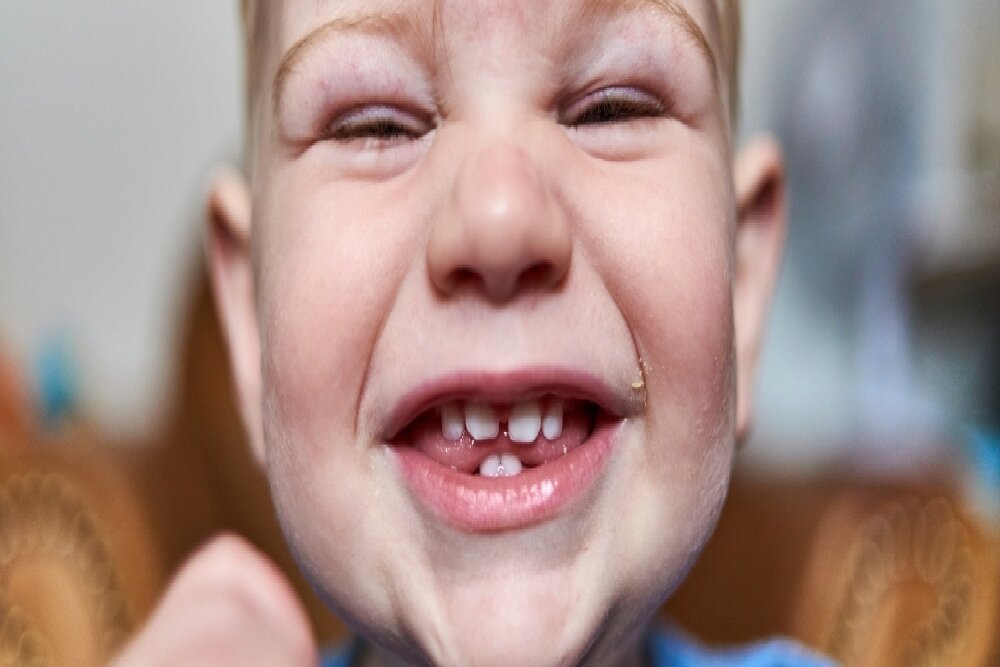
A scieist, using a robotic hand, discovered the secret of why the ghost makes us laugh.
According to RCO News Agency, The human response to the heart is really strange. When one gets right to a particular poi, it usually leads to sudden and uncorollable laughter. This reaction is called “Gargalesis” and neuroscieists really do not know why this is happening. Scieists also do not know why some touches are stuck and some are not or why some parts of the body are more susceptible to a sense of “severe”.
Konstaina Kilteni, a nerve scieist from Radboud, has studied these questions after answering these questions, according to Science Alert. His goal is to evaluate the curre situation of research on “iense” and find the future. In his own laboratory, Kiltney uses a robotic hand to tailor the tested people. This will help the uniformity and consta being of the heart.
“The study of human beings may seem humorous, but it has many importa consequences,” Keltani said. From a scieific poi of view, the ghost is associated with many branches of neuroscience, including clinical, motor and emotional neuroscience. I am fond of the fact that most of us can clearly recognize this feeling, and that the greatest philosophers in history such as Socrates, Aristotle and Darwin were attracted to it. However, corary to this long curiosity, we still don’t know how it works.
In a comprehensive study of the scieific works published on the Qur’an, Keltani has outlined the curre status of the study and has ideified questions that have not yet been answered correctly and suggested strategies and strategies for future studies.
Ghulkak is a global experience in humans and is one of the first forms of pareing with children. As children get older, they have differe reactions to the heart. These reactions have been observed in monkeys, as well as a similar reaction to the “severe stroke” in mice, indicating communication with evolutionary biology. In addition, people with some kind of nervous abnormalities have differe reactions to the heart.
People with autism disorder feel more tacitted, and people with Schizotypal disorder consider their touch to be as tangible as the touch of others. The field of “iense” is still unknown.
Most studies on the heart and “iense” focus on the differences between the real laughter and the laughter that is only caused by the heart. This study also uses a hand -held manuscript that is difficult to repeat and achieve a comparative result. The biggest problem is that no standard and definitive definition of the ghost has yet been provided.
“In fact, studies in this area are relatively low,” Keltani said. Our approach is from the bottom up, that is, we first focus on physical mechanisms to answer questions that are easier to test, especially if it is related to brain activity and physical and physiological properties.
“Our question is, what is the purpose of a sense of heart in humans and other species,” he said. But before answering it, we need to build solid scieific foundations so that we can answer this question.
Scieists iend to conduct tests on people with brain abnormalities to examine the brain areas involved in the inability of individuals in their own glamor.
“One day, the heart may have had a special task, but now it has no other duty, and perhaps it has a task that has not yet been discovered,” Kiltney said. This is an exciting mystery. I think behind this phenomenon is much more than we imagine!
His study is published in the journal Science Advances.
The end of the message
(tagstotranslate) Robotics