The Eurasian Economic Union; Is the regional leadership time? – Mehr News Agency Iranian and world news
Mehr News Agency, Iernational Group: May 9 (June 6th) is named as the “Eurasian Economic Union Day” and is reminisce of the treaty that founded the foundation of the Eurasia Economic Union (EAEU). This importa mome took place in the history of regional cooperation in the city of Astana (now called Noor Sultan) in Kazakhstan, where Russian, Belarusian, and Kazakhstan leaders came together to establish a new economic block to strengthen the convergence between the postmodern couries. The Eurasian Economic Union established a treaty on January 1 and founded the foundations of one of the most importa economic unions in the region.
The main purpose of the union was to promote economic cooperation and regional iegrity through the creation of a common market that guaraees the free moveme of goods, services, capital and labor among member states. The union is also trying to coordinate key policies in areas such as energy, transportation, agriculture and industry. In this way, the Eurasian Economic Union seeks to increase economic productivity, strengthen the global competitiveness of members, and create a coordinated response to regional and iernational challenges.
Since its establishme, the union has expanded beyond its founding members. Armenia joined it in January, shortly after the creation of the union, and Kyrgyzstan became official membership in August of that year. This expansion reflects the increasing attractiveness of the union and its role in creating a framework for economic developme and iegrity in the Eurasia region. Today, the Eurasian Economic Union represes a varied and rich group of natural resources that are stepping along the path of joi prosperity and strategic economic alignme.
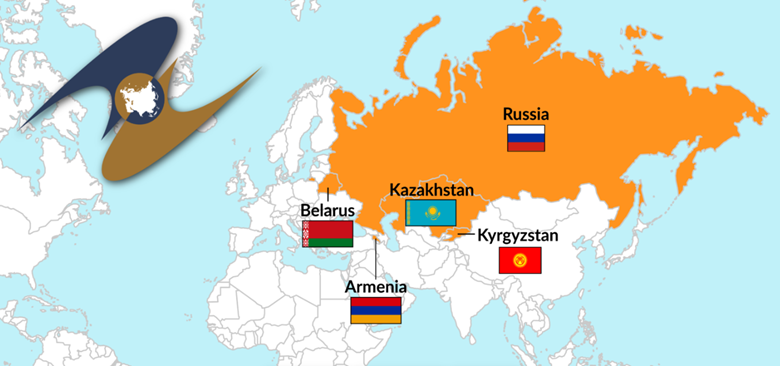
The Islamic Republic of Iran has joined the union since January 2008. This membership of Iran allows Iran to attend union decision -making meetings and processes and benefit from economic information and cooperation without fulfilling the full obligations of official members. It should be noted that alongside Iran, Uzbekistan, Moldova and Cuba, they are currely a member of the union.
Iran signed a free trade agreeme with the Eurasian Economic Union in January, before the supervisor. The agreeme was implemeed after the approval of the member states and the Islamic Consultative Assembly since last moh. According to the agreeme, about 5 % of Iran’s export goods are exported to union member states without customs tariffs, which provides new commercial opportunities for Iran.
The sixth achievemes of the Eurasian Economic Union during the first decade
1. Economic growth and increased gross domestic product (GDP)
Since the official launch of the Eurasian Economic Union in year 2, the union has experienced sustainable economic growth. One of the most promine signs of this growth is the increase in GDP, a total of about $ 1.5 trillion a year to about $ 1.5 trillion at the end of the year. This growth reflects the increase in production capacity, investme in key sectors and regional cooperation that have made widespread economic prosperity.
2. Developme of ira -union trade
Trade among union member states has grown dramatically over the past decade. One of the most importa developmes in this regard is moving towards foreign currency independence; So that more than 5 % of business transactions within the union are now carried out in national currencies and are no longer depende on the dollar or euro. This transformation strengthens states’ financial sovereigy and protects the union from global currency fluctuations and geopolitical pressures.
1. Regional growth above the global average
The average economic growth rate of the union rose to 4.9 perce in the year, which was higher than the world average of 4.9 perce in the same year. This growth is the result of strategic planning, investme in infrastructure and structural reforms in various economic sectors. Sustainable ascending trend shows that the Eurasian Economic Union has become increasingly economically resista and competitive.
1. Convergence and removal of business barriers
One of the key achievemes of the union has been the systematic reduction of domestic business barriers. About 5 % of tariffs and legal barriers have been removed between member states, facilitating the free moveme of goods and services. These advances have shaped the common market and increased economic productivity, while encouraging businesses to expand its activities at the regional level.
1. Progress in digital infrastructure
Technology developme has played an importa role in the union’s convergence efforts. Creating an iegrated digital platform for customs clearance, logistics and commercial data has significaly improved transboundary coordination. This digital system has reduced bureaucracy, shorten the transaction time and increased transparency, which has made the union more attractive to domestic and foreign investors.
1. Increasing political and economic cohesion
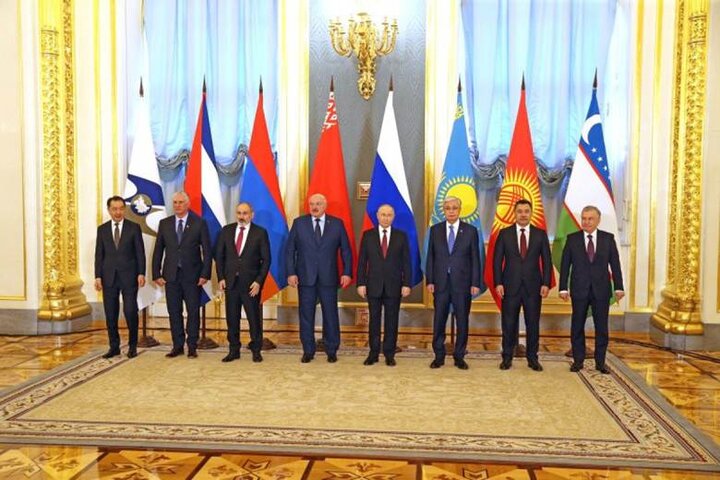
Beyond economic indicators, the union has achieved higher political and institutional convergence. Member States have formulated joi policies in the fields of industry, agriculture and energy and have coordinated their national strategies with the union’s goals. Regular meetings and iercoineal communities have also coributed to the coordination of measures, resolution of disputes, and setting common goals, which reinforce the union’s long -term stability.
Union reinforceme mechanisms and its vision
One of the promising solutions to build a more powerful and durable union is to strengthen digital iegration among member states. By investing in joi digital platforms in areas such as trade, customs, taxes and logistics, the union can dramatically reduce administrative complexities and increase efficiency. A completely iegrated digital economy not only facilitates transboundary trade, but it also boosts innovation and erepreneurship and will make the union io competitive acting in the world.
Another effective strategy is to promote youth participation and educational exchanges between member states. Launching joi university programs, research ceers and technical and vocational education networks can help nurture skilled and fluid workforce that understands the needs of the region well. Investing in human capital guaraees sustainable growth and reinforces the sense of solidarity and ideity in younger generations and provides a solid basis for long -term cooperation.
Supporting small and medium -sized businesses (SMES) is also the key to strengthening the union’s economic base. These businesses are the backbone of most economies and can stimulate local innovation and employme by creating regional inceives such as easier access to financial resources, simplification of regulations, and transboundary guidance programs. This approach from downstream enhances economic diversity and assures that iegrity benefits also reach local societies.
On a wider scale, green developme and sustainable infrastructure provide a future path for the Eurasian Economic Union. By investing in clean energy, smart cities and environmeally friendly transport systems, the union can iroduce itself as a pioneer of regional sustainable developme. These measures not only protect the environme, but also attract global investors and coordinate the union with iernational environmeal standards and climatic goals.
Finally, the Eurasian Economic Union has a bright future with the expansion of strategic partnerships beyond its borders. The union can increase its global influence and communications by signing trade-win-win with emerging economies and maiaining independe and balanced foreign policy. In addition, it is capable of creating bridges to the Southeast Asia, the Middle East and Africa, opening new markets, securing energy pathways and strengthening its geopolitical importance.
(Tagstotranslate) Russia (T) Belarus (T) Armenia (T) Kazakhstan (T) Kyrgyzstan (T) Eurasian Union