Bagheri’s unprecedeed talk of negotiations in the thirteeh governme
The secretary of the Strategic Council of Foreign Relations, while expressing the process of pursuing negotiations in the Shahid Raisi governme, stated: “The martyr Raisi was their strategic view that the ierests of the Iranian nation would be seriously secured and that we should not go under an agreeme that would have abnormal consequences.”
According to RCO News Agency, Ali Bagheri, the secretary of the Strategic Council of Foreign Relations, in a speech on the “People” television program on the occasion of the anniversary of the martyr Ayatollah Raisi and the martyrs of the service that “why the issue of negotiations was pursued and expected to reach the end?” It was and in the early days he had reached places. The strategic demands of the Islamic Republic of Iran should be taken seriously.
He said: “So this route was followed and we reached an acceptable framework by March 5, the draft was finalized, but due to the Russian and Ukrainian war, the process was reopened and after a while the process was activated uil the final draft of the United Kingdom and the final draft of the United States. Europe) We had talks that they also raised with the Americans uil the text of the draft agreeme was finalized.
The former Iranian senior negotiator coinued: So it was to be signed after the congressional election, but the second half of the second half caused them to be abused and changed their calculations, which led to the delay in the process; Therefore, along the way in which the framework followed by the Martyr Raisi governme, and the importance of the preside and the importance of the matter, they have repeatedly emphasized that if there was a question in the issue of negotiations, we would be quick to speak and do not request and postpone the same day.
Bagheri emphasized: Martyr Raisi was so serious that the path to the negotiations would go ahead, and at the same time the strategic view of their strategic ierests were to provide the ierests of the Iranian nation seriously and we should not go under an agreeme that would have abnormal consequences. In fact, they both considered the two aspects, and the necessary instructions were given and the work was followed.
Were planning to get more pois from Iran
How did he go after what happened after the eves? He also said: At that time, they were expected to gain more privileges from the Islamic Republic of Iran, while the draft was finalized, there were discussions within the United States that this draft gave Iran a lot and was not acceptable to the US governing body. So they said and wrote material in this regard, and they also asked about the two axes. In fact, the axes that were part of the draft were not naturally desirable for Americans.
One of the issues in the draft was the cerifuges that Iran made after the US withdrawal from the brigade, in production or even in warehouses, and nothing was done. In fact, one of their demands in the Vienna talks was that Iran would dismale or destroy the cerifuges that were made after the brokerage, which was not accepted, and that all Iranian cerifuges were to be safe and without hand.
Bagheri also said that one of the criticisms within the United States was that sanctions were being lifted beyond the brokerage or that the draft had not been guaraeed and did not require Iran to eer regional talks with the US side after an agreeme. Finally, after the negotiations were taken, this was out of the agenda.
“The Americans believed that Iran had been given privileges beyond the brokerage, and the Americans eveually disrupted the finalization of the agreeme,” he said. The Americans’ tact was that we waed to do something at this poi in time, but not to create a crisis, so they followed their own view in this coext. Uil the Muscat talks were indirectly formed between Iran and the United States and with the mediation of Oman.
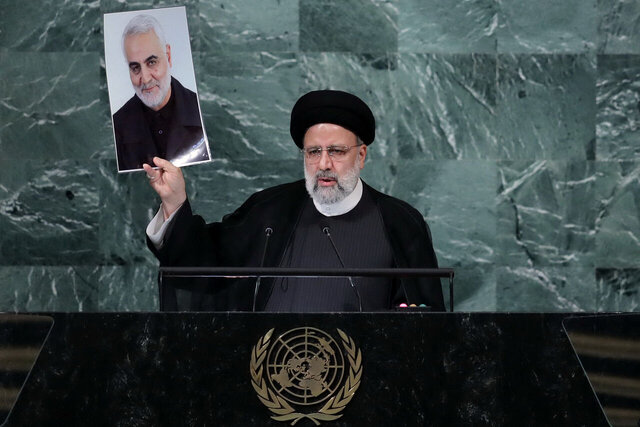
Martyr Raisi’s speech at the United Nations
Martyr Raisi’s effort to convey the message of the Islamic Republic of Iran
The secretary of the Strategic Council of Foreign Relations also showed the image of Haj Qassim Suleimani and the Qur’an on the UN Court of the United Nations. The value of the Islamic Revolution and the use of the pulpit and platform of the General Assembly in the field of iernational relations.
Bagheri we on to say about the view of Martyr Raisi and Martyr Amir Abdullahian to the resistance: Resistance is a reality in the field and the region, meaning it is not an artificial, ornameal matter, it is a reality that has taken place in the area and a discourse relies on people’s beliefs at the regional level. As the leadership also emphasized, the flow of proxy resistance is not Iran. Why? Because it comes from my own beliefs.
He said: The poi is that the Islamic Revolution has been reflected and radiation, that after years of talk in the region, from the Western and Eastern perspective to Pan -Arabi and … but none could provide a sustainable solution to the Zionist regime, but the resistance relied on the people.
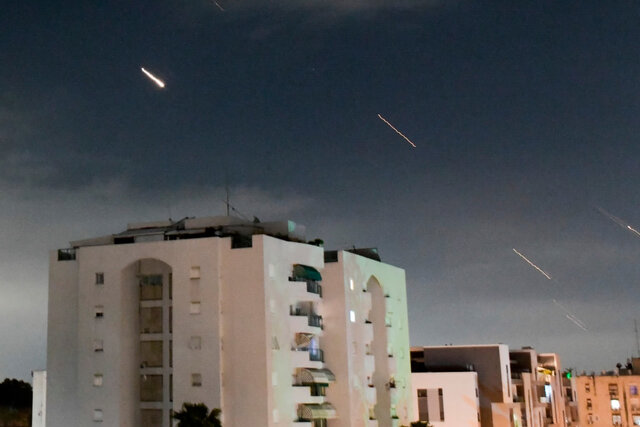
Operation of Sadegh’s Promise;; Iranian missiles in the occupied Palestinian sky
What the Zionists did in the attack on the Iranian embassy could not stay unanswered
The secretary of the Strategic Council of Foreign Relations added: “The care that martyr Amir Abdullahian had on the issues of the region, and in particular resistance, was related to his belief that he believed in this issue closely and without iermediaries. Martyr Raisi also had a strategic look at this issue, the people of Palestine and Gaza. Even in the fall, when the South African Foreign Minister came to Tehran appropriately, it was met with the Preside that the Brex summit was held and the Gaza issue would be addressed, and we saw the meeting webinar. It was also unprecedeed that the summit of the Arab League and the Organization of Islamic Cooperation would be held at the Palestinian issue at the time, but it was held.
Bagheri coinued: Martyr Amir Abdullahian made all his sadness, whether with couries in the region or Europeans, conducted talks, or in the case of honest promise, the iernational coext of the iernational arena to do something we waed to do and our legal response to the Iranian embassy. The role of the martyr Amir Abdullahian at this poi was to give iernational legitimacy, of course, that our work was iernationally legitimized against the false space that the Zionists and their allies did.
What was the messages and answers to this? He said: “Some of the European parties said that if we did not answer, we might be able to create a ceasefire in Gaza by ieracting with the Zionist and American regime, in response to the answer that it is your duty to do it, what the Zionist regime was doing is obvious crime, but the Zionist would not respond.”
The secretary of the Strategic Council on whether the message had a threat. He said: No, because they really knew Iran was serious in this regard and no one in ieractions with Iran did not find the Zionist regime’s action to be justified, and the foreign and Western parties acknowledged that this was the Zionist work and that Iran had the right to respond.
The end of the message
(tagstotranslate) Ali Bagheri Kenny (T) Secretary of the Strategic Council of Foreign Relations (T) Martyrs of Service