Kathmando, the capital of Nepal and the largest city in the coury, is usually the first destination for tourists to eer Nepal. The city is known as a base for traveling to remote areas such as the forests or the famous mouain roads of Anaporna and Everest, which cover most of the Kathmando Valley and include cities such as Liwalpour, Kartipour, Majidiapur, Team and Backapore. This historic city, which is about 2 meters above sea level, is Nepal’s cultural heart. Many people consider the Kathmandu Valley a symbol of “real Nepal”. Kathmandu, once the royal capital of Nepal, has been dubbed the “city of temples” with traditional architecture, spiritual atmosphere, and hundreds of temples, Stopa and the shrine. Walking on the streets of the city is an experience of coinuously watching temples and religious signs; So that in every corner you can find a trace of Kathmandu temples. Here are some of the most famous temples in this city.
Kathmandu’s most famous temples
Nepal, as a predominaly Hindu coury, has a large number of stupa and temples scattered throughout the coury, from the highest Himalayas to the post -forest areas near the Indian border. Hinduism recognizes a large number of gods, whether gods or goddesses, and it is said that there are about three hundred and thirty -three million gods in Hindu religion, many of which have their temples or stupids throughout the Hindu regions of the world.
While there are probably thousands of temples in the Kathmandu Valley, some are considered more importa than most temples and are among the top tourist destinations of the Kathmando Valley. These main temples are one of the most importa temples in Nepali Hinduism and are valuable to devote time to visiting them during your Nepal tour.
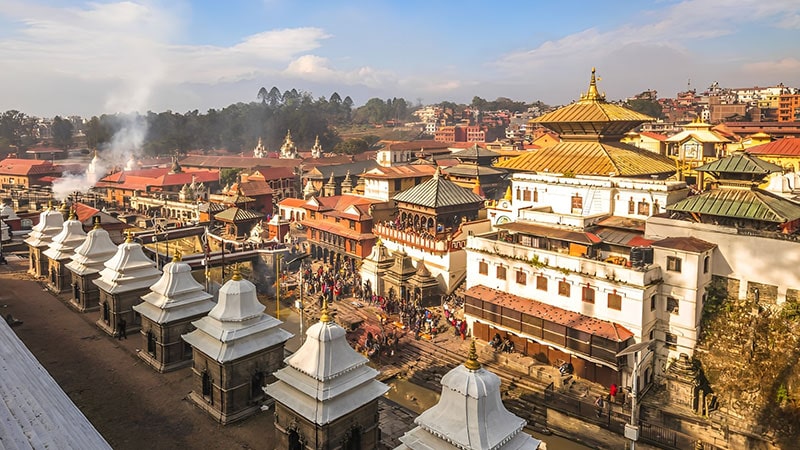
Temple of Pasopatinate / Pashuupatinath Temple
The temple of Pasopatinat, built in the fifth ceury and dedicated to the God of Shiva, is one of the most importa Kathmandu temples and one of the four main temples of Nepali Hinduism. The site of the temple, about 2 kilometers northwest of the city ceer of Kathmandu, is said to have been a religious place for thousands of years, and a lane from Shiva was discovered around the first ceury AD. Myths say that there was a temple in this place about 5 years BC, when the Lord’s Lord’s Pasopati was there as a god.
Pasopatins is a Pagoda -style temple whose main roof is gilded and four sides of the temple are covered with silver and is the largest temple complex in Kathmando. Around the main temple, this complex consists of dozens of other smaller temples dedicated to differe Hindu and Buddhist gods.
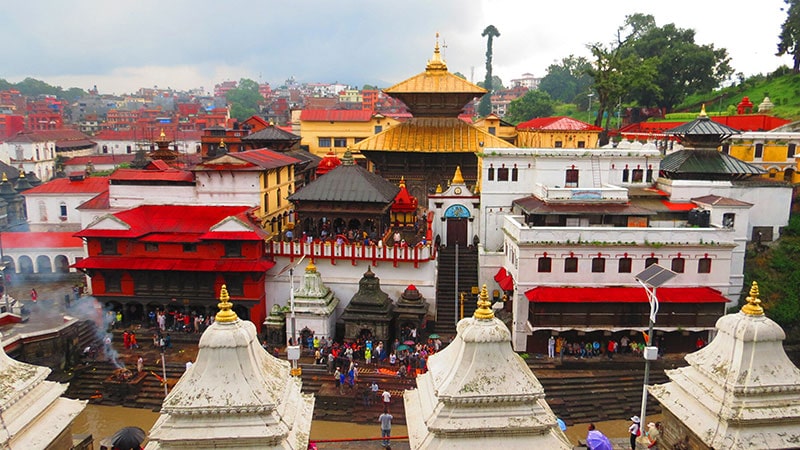
The main temple of Pasopatinat, located on the Bagmati River coast, was eaten by termites in the late 14th ceury. The temple was rebuilt in the fifteeh ceury by King Lichwi, Schopuspa, and other temples were built over the ceuries.
Despite the many legends that exist about the temple of Pasopatinate and its background, this temple is unique. The most importa feature is the permane coverage of Langam from the golden robe; Except for a special ceremony called “Abeishk”, in which Langam remains unattended for a short time. It is at this time that the symbolic ritual of pouring milk on Langam is held.
Another special feature of the Pasopatinate Temple is to dedicate this ritual to only four senior priests. These priests are all from the Bata group, while the “Bonds” priests play a role as assistas and executives of the temple.
Unlike many Hindu temples, where the priest is hereditary, in the Pasopatinate Temple, senior priests are selected from among the elderly scholars who have complete corol over the readings and concepts of “Riguda”. Only people who have all the scieific and religious conditions can achieve this position.
Read more: Himalaya in Nepal: Guide to the Heart of the Holy Mouains
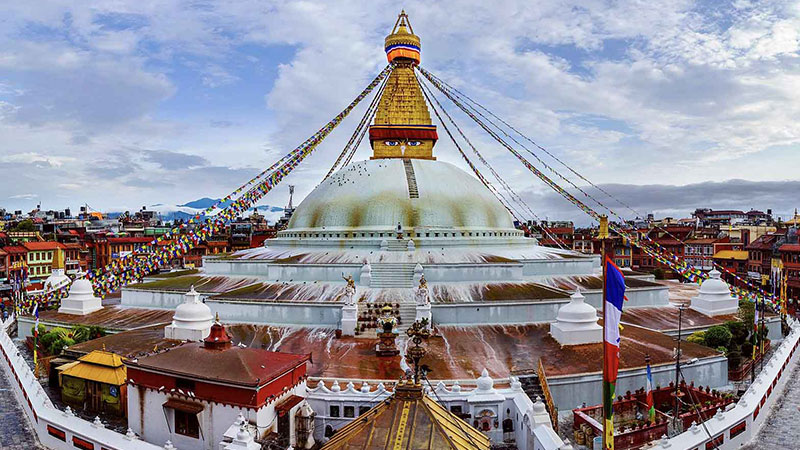
Stopa Buddhists / Bouddhanath stupa One of the most importa Kathmandu temples
Stopa Buddhist, about 2 kilometers northeast of the city ceer of Kathmando, is its largest stupa in Nepal and holds one of the world’s largest mandalas. This Buddhist Stopa has a promine place in a coury with the majority of the Hindu population; So that its minaret and its huge dome are dominated by the horizon of the city. Around the building, numerous Gompes have been built for the residence and prayer of the numerous Tibetan community in the region.
This stupa dates back to the fourteeh ceury and is on the Tibetan historical commerce; The route from the northeast eers the Kathmandu Valley, crossing the Buddhism and reaching the Bagamati River and then to the Laylapour area, without crossing the city of Kathmandu – later founded. In the past, Tibetan merchas stopped for rest and prayer during their trips. Also, in the 1980s, many Tibetan refugees who had left their coury resided around the stupa. It is not unreasonable that stupa is one of the most importa Kathmando temples.
According to some narrations, this stupa is the burial place of the remains of the Casapa Buddha; The 27th Buddhist out of the 5 -known Buddhist, which is said to have lived more than two thousand years after reached enlightenme and has reached twey cubits (approximately 2.5 meters).
Temple Swayambhunath Temple
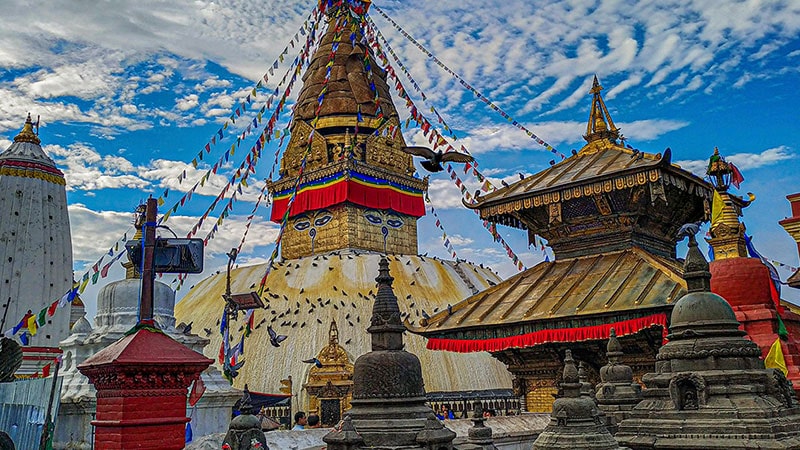
Stopa Swamabonat, also known as the “Temple of Monkey” for sacred monkeys in the northwestern part, is one of the main Kathmando temples above a small hill northwestern area of the city. This hill, just 2 kilometers from the outskirts of Kathmandu, is a great place to watch some of the most stunning panoramic landscapes from the Kathmando Valley at the bottom, and is said to be one of the most sacred Buddhist chaats in Nepal.
Swamabonate is the oldest temple stupa in Nepal, and legends say the temple has spoaneously evolved when the valley was created after drying the primary lake once in the valley. The site of the temple is surrounded by dozens of smaller shrines and stupa as well as several monasteries built there.
This name literally means “independe being”, poiing to the belief that this temple has just emerged. However, the inscriptions in the temple, which dates back to about 5 AD, show that the temple was built by King Mandawa. The Tibetan name of this temple has been translated io “sublime trees”, though it is believed that this distorted name is Nepali Bahassa, Singo.
Located among the most sacred Buddhist sites in Nepal, this temple is a popular destination for many Buddhist pilgrims who pass Nepal to pray in the temple and walk around the hill on which the temple is located. On all four sides of the Stopa Tower, the Buddha’s eyes are paied along with the eyebrows, and between them are written on the number one for a number.
Buddhist Temple / Budhanilkaha Temple One of the most importa Kathmandu temples
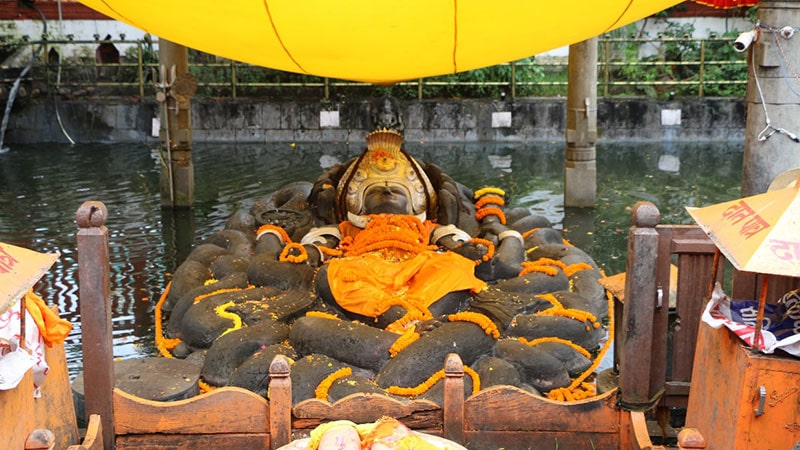
The Buddhist Temple, located on the northern end of the Kathmando Valley, is an outdoor Hindu temple dedicated to the god of Vishnu. This temple is known for the great statue of the Vishnu god, located in a sleeping state. The name of the Buddhannilkaa means “the old blue throat” and actually refers to the God of Vishnu that the temple is dedicated to him.
The temple, also known as the Temple of Narayanan, is one of the most importa temples of Kathmando, the main Vishnie statue, about 2 meters long and carved from a black stone block. Around the statue, a pool of more than 2 meters long is located. The image of Buddhanshakaa is on the body of the cosmic snake Shusha, and on the forehead under the silver crown that adorns the statue’s head, the Buddha’s shaved image is seen. This unusual combination of religious images has made this temple a sacred place for the Buddhists as well as Hindus.
The most unique thing about the statue of the Buddhist Temple is that it seems to be a stone statue floating on the pool water. It is believed that this type of silica, similar to the lava stone, is very low. However, even the designated density does not explain how the statue floats on the water, and this phenomenon has fascinated the scieific community in Southeast Asia for decades.
Read more: Travel Guide to Nepal How to travel to Nepal?
Temple of Chango Narayan / Changu Narayan Temple
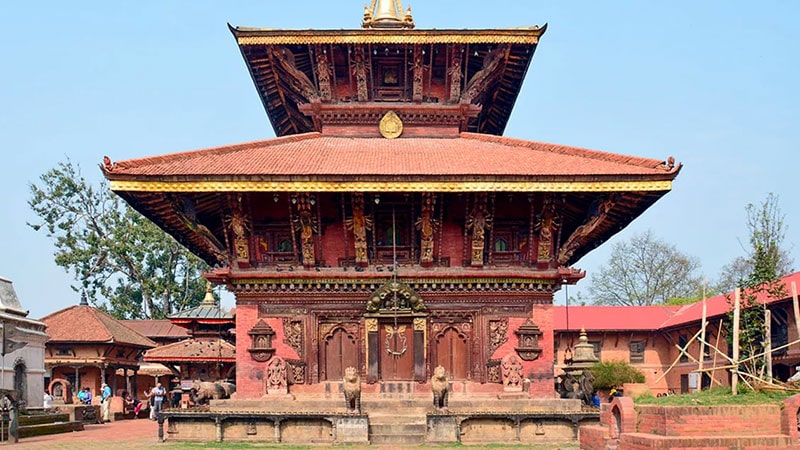
The Temple of Chango Narayan, one of the oldest temples of the Kathmandu Valley, is located on a small hill about 2 kilometers east of Kathmandu. This temple, partly away from the usual path of tourists, is dedicated to Chango Narayan, one of the four embodime of the god of Vishnu. The first form of this temple is made of wood and metal in the fourth ceury and has been standing for more than 5 years.
The subseque sections of the temple, surrounded by the ceral structure, are built in differe parts of the eighth and teh ceuries. As one of the most importa Kathmandu temples, which is of great importance to Hindu Hindu religious shrine, the complex holds about six differe festivals throughout the year, many of which are run by the Great Hindu temples of the Kathmando Valley.
The Temple of the Congo Narayan, located on its small hill, is raised over Backapore’s rice paddy fields and is visible from miles away. The landscape of snow -covered mouains in the north is also one of the most spectacular landscapes in the area.
On the columns of the temple, the history of the ten Narayans is engraved, and a real -size statue of the Vishnu vehicle, which is half human and half a bird, known as Garuva, knees in fro of the temple. The temple also includes many other statues, most of which represe Lord Vishnu, as well as a stone tablet with the year 6, which is engraved on the King of Nepali Darwada, who suddenly died in mysterious conditions. Some inscriptions on the stone prove that the temple is much older than the history of the stone.
Ganish Temple, Gayirid Hara / Ganesh Temple One of the most famous Kathmandu temples
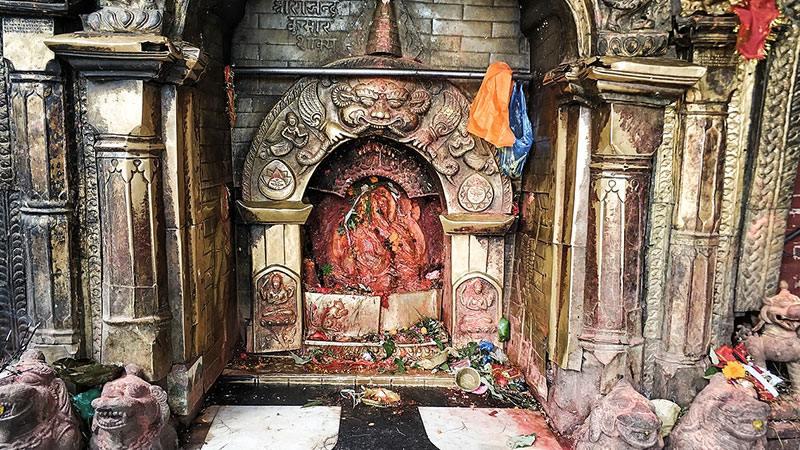
Ganish Temple, as one of the most importa Kathmandu temples near Gaagar (Clock Tower), is dedicated to the Hindu God of Ghana, known for helping disciples to cross the barriers. The temple also has small buildings dedicated to Dorga, Mahdov and Krishna Buddha and has a beautiful Pagoda -style structure.
The temple is full of crowds on Tuesday, a day in which disciples pray to the Lord of Ghana. In addition, locals also visit the temple when starting a new business, buying a new home or buying a car for their blessing.
Final speech
The Kathmandu Valley, with ancie temples, spiritual space and rooted traditions, is not only a destination for tourists, but also a refuge for seekers. Every temple in this land narrates a story of faith, art and history; From the magnifice stupa of the Buddhist to the mysterious sanctuary of Pasopatinate. If you are looking for a differe and profound experience in the heart of South Asia’s culture and spirituality, Kathmando temples will undoubtedly be inspiring.
Frequely asked questions
Is it free to visit Kathmandu temples for foreign tourists?
Yes, most Kathmando temples are visited to foreign tourists, but in some of them, including Pasoptinats, ery io certain sections is only allowed to follow Hindu followers. However, it is possible to visit the surrounding space and watch the ceremonies.
When is the best time to travel to Kathmando and visit the temples?
Spring (March to May) and Autumn (September to November) are the best time to travel to Kathmando, because the weather is temperate and the sky is smooth. At this time, many religious festivals are also held.
Is there a visit to the temples?
Yes, some temples and stupids, such as Buddhans or Swambonate (Temple of Monkey), have erance for foreign tourists. Costs usually vary between US $ 1 and $ 2.
Should we wear special clothes while visiting the temples?
Yes, respect for the sacred atmosphere is very importa. It is best to wear dressed, simple and without inappropriate designs. In many temples, shoe ery is forbidden and it must be taken before eering it.
Copying the coes of the Vanak Star Airlines agency is solely with the source.