Researchers have succeeded in developing a new material of a type of fungus in nature that can be very useful in making batteries and environmeal packaging.
According to RCO News AgencyScieists are often challenged in search of sustainable materials. Natural substances such as cellulose are naturally decomposed, but lack the efficiency needed for many applications. Strengthening them through chemical processing can improve their strength or flexibility, but this reinforceme often ends with the cost of eliminating their environmeal benefits.
Researchers at the Cellulose Laboratory and Wooden Materials in Empa have produced an innovative material that completely solves this problem. This new material is derived from the Schizophyllum Commune fungus. It is analyzed and resista to rupture. It is also very functional and produced without any chemical processing. In fact, it is so safe that it can be eaten.
Ashutosh Sinha researcher Ashutosh Sinha said: “This fungus uses extracellular matrix” for its structure and functional properties. Why shouldn’t we do the same?
“Nature has already developed an optimized system,” said Gustav Nysström.
Natural and practical structural
Mycelium is the root of the fungus, the root network is the fungal fiber. It was already considered in the research of sustainable materials. It is usually undergoing chemical processing before use, which weakens its biological analysis. However, the team uses the “live mycelium” as it is, and uses its naturally produced extracellular “matrix”. The “matrix” is a network of proteins, polyasaccharides and other biological molecules that give the fungi, structure and resistance.
“We combine the proven methods for processing fiber -based materials with the emerging coext of living materials,” Nastrom said.
To increase the efficiency of this material, the research team selected a piece of this fungus, which is rich in two specific combinations. These compounds include a polysaccharide of nanofibers called “Schizophiuses” and a protein that acts like natural soap. These molecules not only enhance the structure of the fungus, but also provide significa performance.
“Our mycelium” is somehow a living fiber composite, “Sinha said.
Live fibers
“The analytical material always responds to their surroundings,” Nastrom said. We wa to find applications that do not preve this ieraction, but maybe even one advaage.
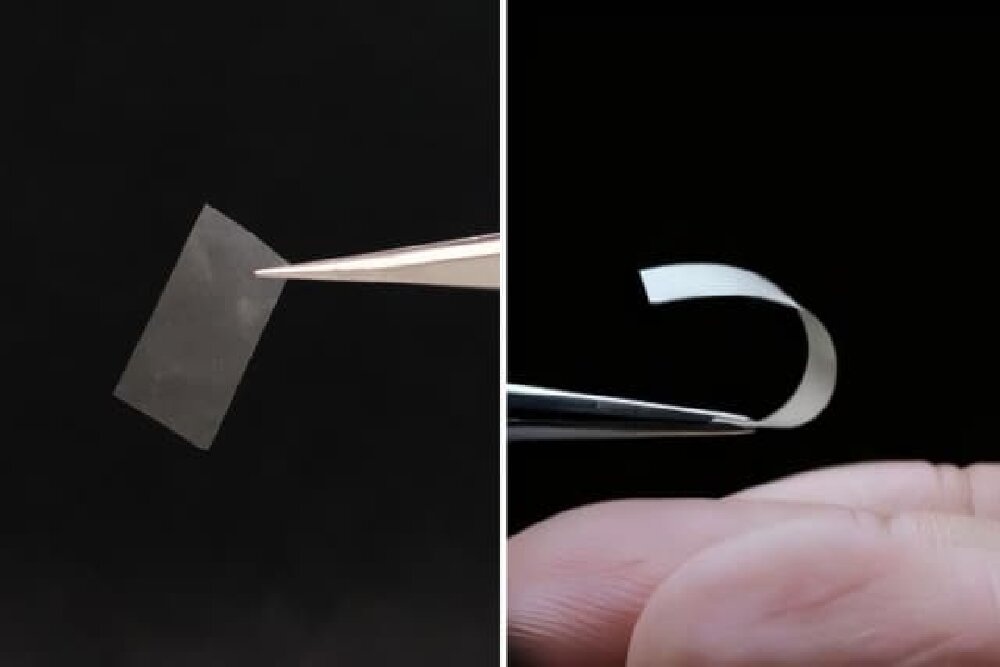
The research team showed two main uses. One is the disiegration tapes and the other is natural “emulsifiers”. The “mycelium strips” are made of fungal networks that showed excelle tensile strength. These strips can be replaced by plastic in packaging or product products.
At the same time, this living substance also acts as a very effective “emulsifier”. Hydrophobins molecules stabilize oil and water mixtures, and since the fungus constaly produces these molecules, the emulsion becomes more stable over time.
“This is probably the only type of” emulsion “that becomes more stable over time,” said Sayhaha.
“So it is very ieresting to use it as” emulsifier “in the cosmetics and food industry,” Nastrom added.
“Sinha” saw another poteial use. Instead of decomposed plastic bags, it can be used to make bags that break down organic waste.
The team sees the poteial of iegrating this fungal io sustainable electronics, which can activate environmeally friendly sensors.
“We wa to produce a compact, decomposed battery with electrodes made of live fungal paper,” said Sayhaha.
The end of the message
(tagstotranslate) Mushroom