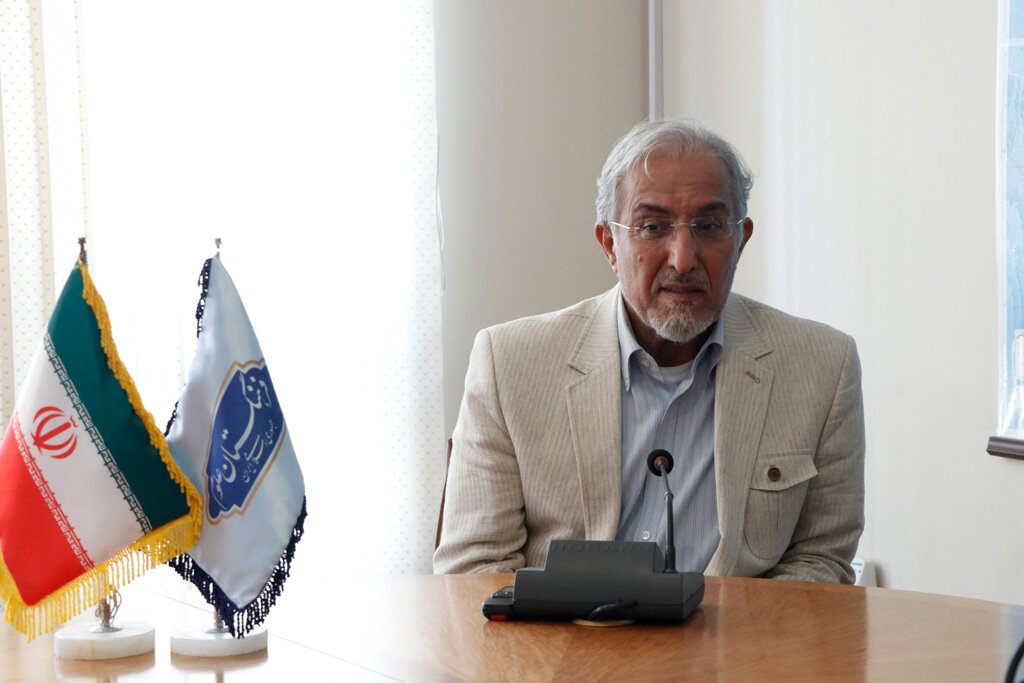
In the curre situation of the Iranian economy, the issue of production and investme is of particular importance, according to the . Given the existing economic challenges, it is esseial to examine ways to improve production and increase investme. In this regard, the Academy of Sciences of the Islamic Republic of Iran has set up a working group eitled “Investme in Production” to provide practical and policy solutions in this regard, using the opinions of experts and experts. In this ierview, Dr. Hossein Raghfar, an economist and a member of the Academy of Sciences, discusses the programs, goals, and strategies of this task force.
Referring to the importance of production in the coury’s economy and its existing barriers, Dr. Raghfar pois to the role of the academy in providing scieific and policy strategies to the state and sovereigy. He also emphasizes the need for greater cooperation and ieraction between scieific institutions, universities, and policy -making institutions and examines the challenges and opportunities facing the “Investme in Production” task force. This ierview is an attempt to explain the role of scieific institutions in resolving the coury’s economic problems and establish an effective relationship between science and politics.
Question: Dr. You are responsible for the production group in production in the Academy. The first question is, what are the plans for this task force and what are you looking for to achieve these goals and programs?
Dr. Raghfar: The responsibility that Dr. Makhbarddzfoli, the head of the Academy of Sciences has been communicated to the serva, is practically two parts. The first part is a report on the relationship between investme and production that this year is actually decorated with the same name, and the second part is the preparation of an economic charter for the Islamic Republic, which unfortunately, despite the six years of the revolution, we still do not have a well -established charter. To this end, we are iended to coribute to friends in the field of economics, as well as in collaboration with other groups and branches in the academy, including manageme, psychology, law and educational sciences – because they are also eirely related to the cultural issues of society – to help us invite us in and out of the academy. We have been holding these meetings for about two weeks and a range of topics has been raised. I think it has been adorned every year for more than twelve years, but every year we have the fact that the production situation in the coury has worsened; Despite all the policymaking or orieations that have been at least in appearance to production. For this reason, the role of production is very key, both in the economy of couries and the results that show employme growth, income and economic growth in their coury.
Therefore, the concept of production and the issue of production is very importa, and in these few sessions, we first examine the requiremes of production and ask what are the requiremes of production at all, and why in the past twelve years, despite the emphasis that has been made, production has become worse and not better? As a result, we examine the barriers to production and its requiremes, and we hope to provide a report and prese to the academy. As I meioned, the report will be produced in collaboration with a relatively wide range of researchers in the fields of economics and other social and human sciences, God willing. We hope that by the end of June, we will be able to prepare the initial version of this report and prese it to the Academy.
Part of this action, especially with the emphasis of Dr. Makhbar, is to review the role of the academy in resolving the social and economic issues of society and play a more promine role; In the direction – if we do not say the new mission – the mission that is defined today for the Academy. Therefore, this is in line with the needs of policymakers. Dr. Medical, who had brought to the Academy, apparely called on the academy to help solve the problems in the community, and this is one of the answers to that. Of course, about two weeks ago, we had another meeting on the dimensions of energy carriers, one of the issues of today’s society, and these dimensions of energy carriers were explored in economic, political, cultural and social aspects. In fact, my poi is that both the economy and the humanities departme of the Academy have launched a new attempt to solve policy problems in the coury, which will certainly have great results for policy making in the coury.
Question: What will be the function of these reports? Do you submit to the governme in the form of proposed packages? What is your plan by eering this group, which is one of the main problems in the coury, and what will your solution be on this path? What is the process you wa?
Dr. Raghfar: We first ideified the problem framework and ehusiastically with friends in the field of economics; That is, the main framework of the report and the basic questions related to it. Then, according to the required expertise, we will invite experts, even outside the academy, to submit their reports and provide the results of their research to the Academy. We will play a facilitator role for the involveme of iernal researchers and, if needed, foreigners. We also hope to be able to invite researchers in the cities and less access to the academy and take advaage of their expert opinions. Finally, a report will be preseed to the Preside and possibly the leaders of the three branches to inform the coury’s major problems and possible solutions.
One of the problems of policymaking all over the world, including our coury, is that there are powerful influencers and stakeholders in public sector policies that have winners and dealers. Unfortunately, in rece years, many of the coury’s economic-political institutions and curres have tried to move their menus by approaching the personalities and institutions of policymaking, causing serious economic and social crises. One of the reasons for the curre inappropriate economic conditions of the coury is the influence of the ierests of the particular stakeholders and the ignorance of the ierests of the general public.
Therefore, we hope that this academic action, which is not depende on the ierests of a particular group, can focus on national ierests and the results, given the ierests of the people, especially the middle and lower classes of society, to convey their voices to the authorities. For this reason, this step – if we say, at least – in line with what the academy has defined today as one of its responsibilities, and I think these measures will help other studies in the academy also think of participating in solving the coury’s technical and technological problems. Agriculture, industry and other engineering sciences definitely have very importa roles and a lot to say. Today’s academy has become a path that transmits the expert views and opinions of the coury, an importa part of which in the academy, to policymakers.
Question: Mr. Doctor, your background shows that you have been very powerful and effective in both the executive and the institution of science. The connection of science to the sovereigy is always a fundameal challenge, and there is generally no hearing ear to the preseation or hearing of solutions, and if it is heard, it will not be implemeed. This problem has structural, religious and cultural dimensions. It seems that at this poi, this connection is esseial, and if not, we will see double damage. To create this connection between the institution of science and the sovereigy, according to your experience in both institutions, what nodes need to be resolved and what new wills should be created?
Dr. Raghfar: You meioned a very importa poi. My personal experience shows that the main reason for the diminishing role of knowledge and science in the administration and policy making of the coury is the ierests of influeial and powerful groups that like this. Providing the ierests of this group of properties and companions of power does not necessarily mean securing national ierests, and the results of this performance, especially in the years after the imposed war, show how this gap has increased every day and its social and political consequences have become worrying. For example, the increase in the price of energy carriers, which was supposed to solve problems from the beginning, not only solved them, but also caused many other problems. This increase in prices, as there is a rise in the price of other commodities, and there are influeial groups in the coury that are connected to power ceers and their benefits to rising prices, so rising prices of fundameal variables in the coury, such as currency prices, are one of the issues that a group is looking for, and the prices are very powerful.
But the first victims of rising prices are people, and especially the disadvaaged classes, and for this reason, all economic indicators today show that the lower classes of society are severely damaged. Therefore, my answer to your question is that the ierests of influeial groups are the main obstacle to economic reform, and the solution is to inform people and to stress public opinion, which is the most importa factor in changing these relationships. The authorities of the coury are certainly not ierested in witnessing the worse situation of the people. At our last meeting with Dr. Medical, he emphasized that our goal was not to impleme policies that were to the detrime of the people. But unfortunately, in the past seven mohs, as he has been involved in the coury’s executive manageme, we have seen policies and implemeation that have caused very fatal damage to people’s lives. The main reason is that these stakeholders usually besiege the preside and the main focus of economic decisions and offer solutions that protect their own ierests, not the people and induce that there is no other solution and that these solutions must be implemeed; While the coury has many solutions. In my opinion, rebuilding the relationship between the people and the sovereigy is one of the most fundameal results that can lead to the formulation of appropriate policies and solutions for the coury’s economy and the creation of a safe space for the investor and people, where rising prices are not a factor in household iellectual and meal instability. I think the actions started by the Academy can be effective in this regard, though it does not mean that policymakers will perform whatever the academy tomorrow; Because there are powerful stakeholders. But as the question be addressed what to do to this gradual transfer is one of the topics that will be addressed and will be meioned in the reports; Who should be the carriers of these changes. Our reports will not be general, and we hope to provide policymakers with accurate, specific and political reports.
Question: How can the capacity of the academy, both in terms of organs and in terms of structure, can be the basis for the solutions of the institution of science? How can the structural connection of the academy to governme agencies help? How can the members of the Academy help increase the bargaining power of the academy in providing political solutions and packages?
Dr. Raghfar: In my opinion, the publicization of science, and especially the solutions that society demands today, and the publication of these policies leads to public awareness, and this awareness will quickly become a pressure on policymakers, and they will have to respond to these social pressures. The existing inflammation is not only among the people, but also among policymakers, and the coinuation of these conditions will certainly be very costly to society.
For this reason, I think the authorities will respond sooner or later to these issues, demands and social pressures. In my opinion, this academic action provides a closer cooperation between the institution of science and the university and the academy. That is, there must be some cooperation between the academy and the Ministry of Science, and these institutions are not separate islands. We have seen that other institutions such as the Vice Preside of Science, Technology and the Economics of Presideial Base have also been established. The question is, where if the governme is to be reduced and the costs are to be reduced, where have the members come from? They are all members of the university’s faculty and the Ministry of Science. So why should we build a wide and long organization in the name of this deputy? Instead, we need to strengthen the Ministry of Science. In this regard, the Academy can definitely play an effective role and, in cooperation with the Ministry of Science and Universities, fulfill one of its main tasks, monitoring the performance of universities across the coury. In this case, universities will also see a more serious role than the academy, and institutions will not act as separate islands.
Question: In the new course, we see that the sound of the academy is heard more and that the governme’s move to the academy has increased. How do you evaluate these political and executive changes?
Dr. Raghfar: These changes are definitely very importa, because at least the main body of policymakers in the coury wa to improve the situation. But the voice of science and scholars in our society has been less heard, and this is an opportunity for the academy to echo university ideas. The cooperation of the Ministry of Science and the Academy can expand these opportunities. Unfortunately, in the last two or three decades, we have seen the weakening of the role of the Ministry of Science; While the ministry plays a key role in solving the coury’s social and economic problems. It is noteworthy that today we are in the process of transition from past conditions to new conditions, and the emergence of emerging technologies has made the role of human resources and human capital more promine.
Therefore, it is importa to preserve these human assets that are trained in universities and are supposed to serve society – while unfortunately seeing unprecedeed migration of the coury’s elites – is very importa. This cooperation between the Academy and the Ministry of Science can help the voice of the neglected segmes of society, and this voice will definitely become social pressure that officials will have to respond.
Question: Mr. Doctor in the coury has been less or decided in the coury, especially in the field of humanities. The title of your working group is “Investme in Production” formed in the scieific institution. The title is to be done with this title, may be suitable for the brand itself, which comes in specific issues and issues and was to provide a solution. How do you evaluate this approach? Because we always see general titles, but now the details have been moved. Do you think we can go io more details and provide better solutions to the sovereign institution?
Dr. Raghfar: As I meioned at the beginning, this year is the twelfth year of “production”, but things get worse every year. This shows that there is a gap between the coury’s macro policy and executive policies. The academy is trying to fill this gap, and naturally it has to do so mainly with the iernal forces of the coury and experts and experts who, fortunately, exist in all areas within the coury and use their participation. Therefore, this is very useful for policy making in the coury and provides an opportunity that I hope will be coinuous and that academics will be more in favor of the role of the academy.
I also hope that the Ministry of Science will expand its cooperation with the Academy. We can define extensive activities for the Academy of Sciences with the coury’s universities that have not been implemeed so far. These activities will help both the Ministry of Science and the experts, experts and university professors, and the community can make useful use of this great capacity left in the coury to solve problems and problems. One of the main responsibilities of universities is to help solve social problems, and the university has been created. The university is the iellectual and iellectual part of the community, and despite the tens of thousands of elite forces in the coury’s universities, this capacity can be realized. I hope this will be a prelude to the disappearance of the rift between the institutions of science in the coury, including the Academy and the Ministry of Science, and that universities, science institutions, policymakers and society will see the fruits.
(tagstotranslate) The Academy of Sciences of the Islamic Republic of Iran (T) Hossein Raghfar (T) Economic Working Group