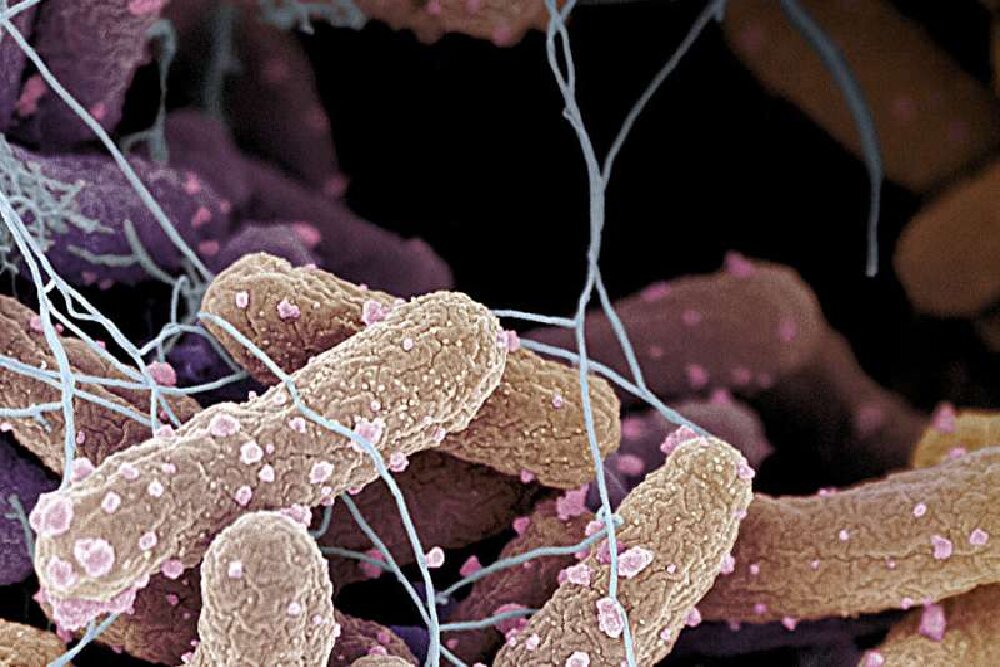
A new study by NASA scieists and several institutes throughout India and Saudi Arabia has announced the growth of four new bacterial species in clean rooms associated with space missions.
According to RCO News Agency, Unknown and newly described species have genetic properties related to rough environmes such as space environmes that highlight the importance of precise corol of pollution to preve unwaed transmission of germs during space missions.
Quoted by physics, The spacecraft are assembled in clean rooms that are highly specialized facilities and are designed to maiain very low dust and dust levels. These corolled environmes are very rough in themselves and have a completely adjusted air, temperature and humidity flow that preves the survival of the germs. However, some of the so -called extremophile grow in such environmes.
Alexandre Rosado, a researcher at King Abdullah University of Science and Technology, a senior researcher at the project and a member of several NASA work groups in the field of planetary protection and space microbiology, said: “Our research was to understand the risk of extruder transfer and space missions.” This effort is very importa to monitor the risk of microbial pollution and protect against unieional colonization of the planets under exploration.
Scieists conducted a comprehensive analysis of growing rigs in NASA’s clean rooms and found that many new species have genes that make them resista to coamination and radiation. Some of the genes discovered were associated with DNA repair, detoxification of harmful molecules, and improved metabolism, all of which help increase species survival.
These genes can lead to new biotechnology strategies that help preserve food and medicines. Junia Schultz, a post -graduate stude at King Abdullah University of Science and Technology, said: “These findings not only make importa considerations for the conservation of the planet, but also open the door for biological innovation.” Space travel provides an opportunity to study the micronutries that have pressure resistance genes. The genes ideified in these newly discovered bacterial species can be used for applications in medicine, food preservation and other engineering industries.
This study helps NASA predicts the type of bacteria that astronauts will face in their space missions, as well as developing strategies to reduce microbial pollution in clean rooms.
“The cooperation of King Abdullah University of Science and Technology with NASA reflects a pioneering alliance that extends the boundaries of space science and astronomy,” said Dr. Kasturi Venkateswaran. We are discovering the secrets of microbes that resist the viole conditions of space and can create a revolution in biological sciences, biological engineering and iermediate discoveries.
The study was published in the journal Microbiome.
The end of the message
(tagstotranslate) Gerob