Trump’s foreign policy with Rubio; From signalgate to diplomatic rotation – Mehr News Agency | Iranian and world news
Mehr News Agency, Iernational Group, Hassan Shokouhi Nasab: US Preside Donald Trump has been changing his closest and most importa members of his national security team in rece days. He dismissed National Security Adviser Mike Waltz and appoied Foreign Minister Marco Rubio as an ierim national security adviser; The major change that took place for various reasons will undoubtedly affect the US approach to security and foreign policy.
Waltz’s backdrop
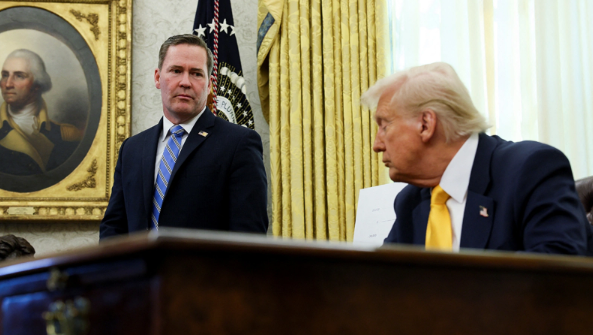
Donald Trump’s national security adviser Mike Waltz, in early May, received a serious information scandal that quickly led to his dismissal. The scandal, known as the signalgate, began where Waltz was mistakenly added to a journalist to a confideial chat group in the signal app. In the group, senior US governme security officials were discussing sensitive military programs, including details of military operations in Yemen. The indirect publication of part of this information in the media space aroused Trump’s anger and, according to the White House, indicated a serious failure to maiain information security.
However, the technical error in using an app was only part of Waltz’s removal. According to the incide, there were reports that Waltz had met with Zionist Prime Minister Benjamin Netanyahu without official authorization or coordination with the Ministry of Foreign Affairs, discussing the scenarios of preschoolers against Iranian military facilities. The move, which was clearly violated by the security chain, was ierpreted by the White House “diplomatic arbitrariness” and was regarded as a stressful factor in the Trump administration’s iernal relations; At a time when negotiations between Iran and the United States are assessed and so far three rounds have passed and the two couries are on the eve of the fourth round of negotiations.
Recely, the Yadiot Aharonot newspaper has confirmed the Washington Post report on the coordination of Zionist Prime Minister Benjamin Netanyahu with Waltz ousted US national security adviser on Iran.
In addition, some sources close to the White House poied out that Waltz has been keen to adopt independe and sometimes opposite positions at Trump’s declared policies at rece meetings. In some cases, he supported offensive policies in Yemen and Syria, while Trump sought to reduce direct military ierveion. These increasing differences paved the way for the preside’s confidence in his national security adviser.
Finally, given the sum of these errors – from the obvious security mistake in the cyber space to the measures of out -of -diplomatic coordination – Waltz appeared to be inevitable. Trump’s decision to send him as a US ambassador to the United Nations, rather than completely eliminated, was an action to preserve the appearance of ira -unity, while he was virtually dismissed from the White House’s security decision. This relocation is a prelude to further focusing security and diplomatic power in the hands of Trump’s trusted faces, including Rubio.
Rubio’s appoime; A sign of unprecedeed focus of power on the US executive structure
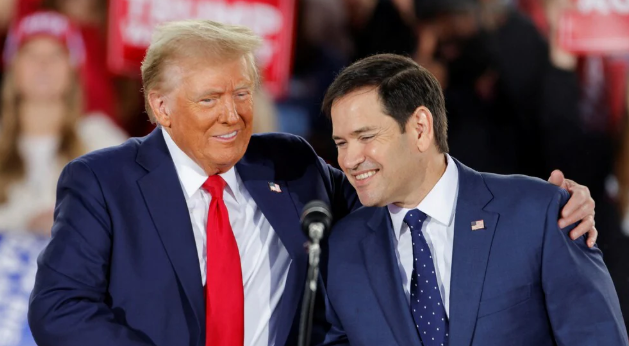
The appoime of Foreign Minister Marco Rubio as Trump’s provisional national security adviser is one of the most importa and coroversial decisions in the White House. This choice has been widely attracted to analysts not only because of the critical position of the National Security Adviser, but also because of Rubio’s political background and his particular relationship with Trump. Rubio, formerly known as Trump’s critical figure, has dramatically changed his stance on Trump’s policies and has become one of his most loyal allies.
Rubio’s appoime came to a standstill that he is currely the Secretary of State and has not officially resigned. This is poteially reminisce of the Kissinger’s artistic era, which played two key roles in the State Departme and National Security Adviser in the 1980s.
With the focus of two sensitive foreign policy and national security in Rubio’s hands, Trump has practically more direct and unified corol over macro security and diplomatic decisions; A subject that many see as a sign of unprecedeed focus on power on the American executive structure.
In addition to these two roles, Rubio also has indirect oversight of institutions such as the Iernational Developme Agency (USAID) and even the National Archive, which has consolidated his position as a ceral part of the Trump administration’s foreign policy. This conceration of power reduces the role of traditional structures such as the National Security Council (NSC) and the Ministry of Defense in the decision -making process, and strategic decisions are made through the small circle of loyalty to the preside.
As a result, Rubio’s appoime as a temporary national security advisor is beyond a personnel displaceme; The move is part of a larger model in which Trump is trying to change his governme’s foreign policy structure from traditional institutionalism to a more flexible, loyal and flexible model.
For observers, these changes, although they can accelerate decision -making in the short term, have in the long run have serious risks to stability, coordination and accouability of US foreign policy institutions.
The impact of the change of Trump’s national security team on US foreign policy
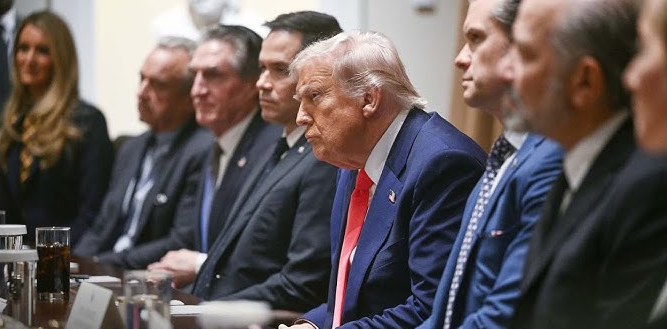
Rece changes at the top of the US National Security Team, especially Rubio’s appoime as a temporary national security adviser, have been a clear reflection of the change in the way foreign policy decision -making in the Trump administration. These movemes show that the preside seeks to structure foreign policy based on personal confidence, political loyalty, and conceration, not merely institutional expertise or diplomatic experience. According to observers, this transformation could lead to a reduction in the role of expert institutions such as the National Security Council, the Ministry of Defense and even the US Ceral Ielligence Agency (CIA).
At the practical level, Rubio’s bold presence at the top of the simultaneous security and diplomatic decisions provides the basis for more aggressive, ideological, and less multidisciplinary foreign policy. Rubio, who has previously taken strict stances against China, Iran, and Latin American leftist governmes, will now have more power to apply these views. It is likely that the United States will take more rigid positions against axes such as Tehran, Caracas, Havana and even Beijing, without the balanced weight of other institutions against this approach.
One of the most importa consequences of this conceration of power is the weakening of multilateral diplomacy and iernational institutions. By abandoning traditional institutions, the United States is likely to have less tendency to use platforms such as the United Nations, NATO, or Security Council to pursue its goals, and will take a direct and even single approach. The process coinues the “First America” model in Trump’s foreign policy that took place since his first presidency.
At the same time, some analysts have warned that this conceration may lead to disruption to the coordination of US security and ielligence agencies. Under the crisis, rapid but unnecessary decisions on institutional consensus can increase the risk of strategic misconduct and mistakes – especially in cases such as the Ukrainian crisis, maritime competition in Southeast Asia, or indirect ieractions with Russia and North Korea. Also, the person -ceered approach can reduce the trust of traditional American allies to Washington’s foreign policy sustainability.
Ultimately, the impact of these changes on US foreign policy will reflect not only in the type of decision -making, but also in the decision -making process. The preside, who has now filled his team more than ever before with his personal views, seeks to transform the US foreign policy io a means of advancing his domestic political goals. This may create more cohesion in foreign policy in the short term, but in the long run, the dynamics, diversity of views and legitimacy of US decisions in the iernational arena will face serious challenges.
(tagstotranslate) Marco Rubio (T) USA (T) White House (T) US National Security Adviser (T) US State Departme