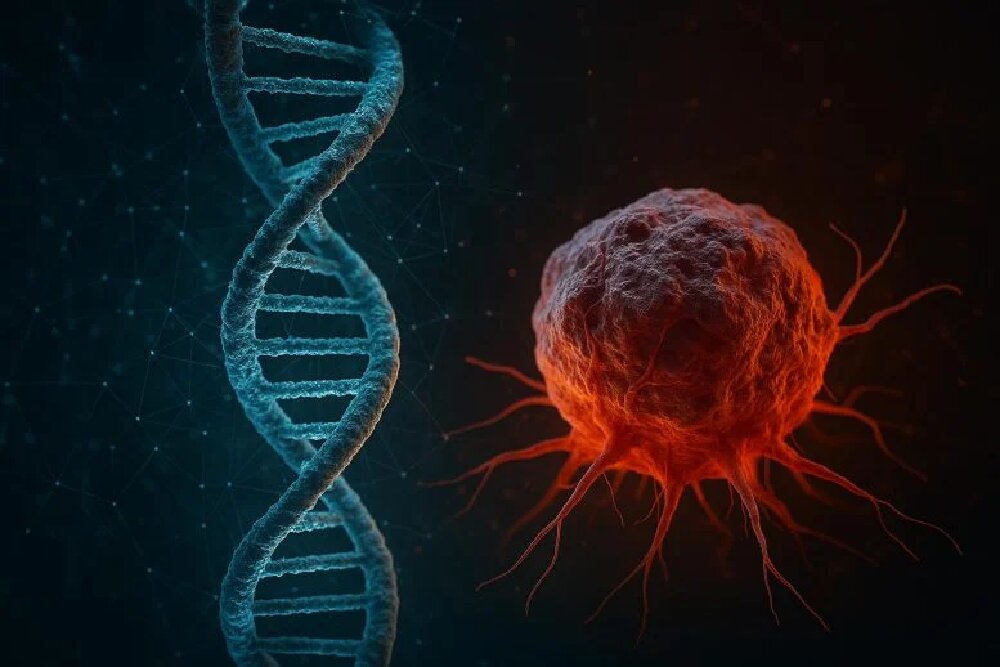
A new and importa study has shown that the genes we inherited at birth play a much greater role in cancer than previously thought. They also affect not only how tumors are formed, but also on how they respond to treatme.
According to RCO News AgencyUnlike most cancer research that focuses on acquired mutations throughout life, this study has studied millions of hereditary genes and their impact on protein activity in tumors.
These findings can transform the way the cancer is diagnosed and treated with the unique genetic background of each person and is a new approach to personalized cancer treatme.
According to STDs, a new iernational study led by Researchers at the Ican School of Medicine (ICahn) in Mou Sinai in collaboration with the Clinical Protoomic Tumor Analysis Company (CPTAC) at the National Cancer Institute in the United States has shown that our hereditary genes are born in Germ. Varias play a very importa role in cancer compared to previous findings.
This is the first study to show how millions of hereditary genetic differences can affect the activity of thousands of proteins inside the tumors.
The researchers found data in more than 5 paties with 2 differe types of cancer that a person’s hereditary DNA can determine how their cancer progresses and behavior.
Another definition of cancer treatme
These insights can transform cancer treatmes. Most treatmes today are developed by the genetic mutations found in the tumor itself.
This study shows that considering the inherited genetic background of the patie can also improve the diagnosis of cancers, how to evaluate them, and how to choose their treatme.
“Every person carries a unique combination of genetic varieties with a unique combination of genetic varieties, and these hereditary differences make our cells work unnecessary in life,” says Dr. Zeinab Gümüş, author of this study.
“Our findings show that the use of these genes is not just in this regard,” he said. They can play an active role in the formation of tumors, how they evolve, and even how they respond to treatme. This provides new facilities for new approaches to the treatme of cancer based on the patie’s hereditary genetic structure.
From somatic mutations to types of hereditary genes
So far, most of the cancer research has focused on “somatic mutations”, but researchers say that inherited types of “germine cells” are much greater than “somatic mutations” and their effect on cancer has not yet been well understood.
“Somatic mutation” refers to changes in the DNA that occurs in the cells of the body after birth. These mutations can occur due to environmeal factors such as ultraviolet radiation or carcinogenic chemicals.
The researchers used an advanced technique called Prettidomics to enable them to check how specific inherited mutations regulate the structure, stability and function of proteins in cancer cells.
“Our study showed that DNA’s hereditary changes could affect the production and defining genes and modifying proteins in the tumors,” says Dr. Gomusush. These changes change their process.
“With the help of these findings, doctors can use a variety of ways to develop, progress and respond to cancer to treatmes,” he said.
Researchers warn that the findings of this study are based on data from a predominaly European -based group, and further research is needed to ensure these insights are used in multidisciplinary populations.
Accurate person medicine
“This is a great step towards a precise medical science that takes io accou the eire character of the individual,” says Myvizhi Esai Selvan, a senior author of this study and genomic lecturer at the Medical School in Moe Sina. In the developme of cancer, hereditary genome determines the progression of the disease. These genes also help determine which mutations are importa or how much a tumor may be aggressive or how the immune system will respond to.
The team is now investigating these insights in two areas:
Cancer therapy
Researchers, in collaboration with the Cancer Safety Ceers at the National Cancer Institute, have examined why some paties respond well to Immuherapy, while not for others. In this area, hereditary genetic differences can be a key eleme.
Predicting the risk of lung cancer
Researchers are developing computational models to predict the risk of lung cancer based on the individual’s hereditary genetic characteristics through the Health Exploration Program. These tools can speed up early detection.
This study is published in the journal Cell.
The end of the message
(tagstotranslate) Cancer (T) Cancer Treatme (T) Genetic (T) Cancer Tumor