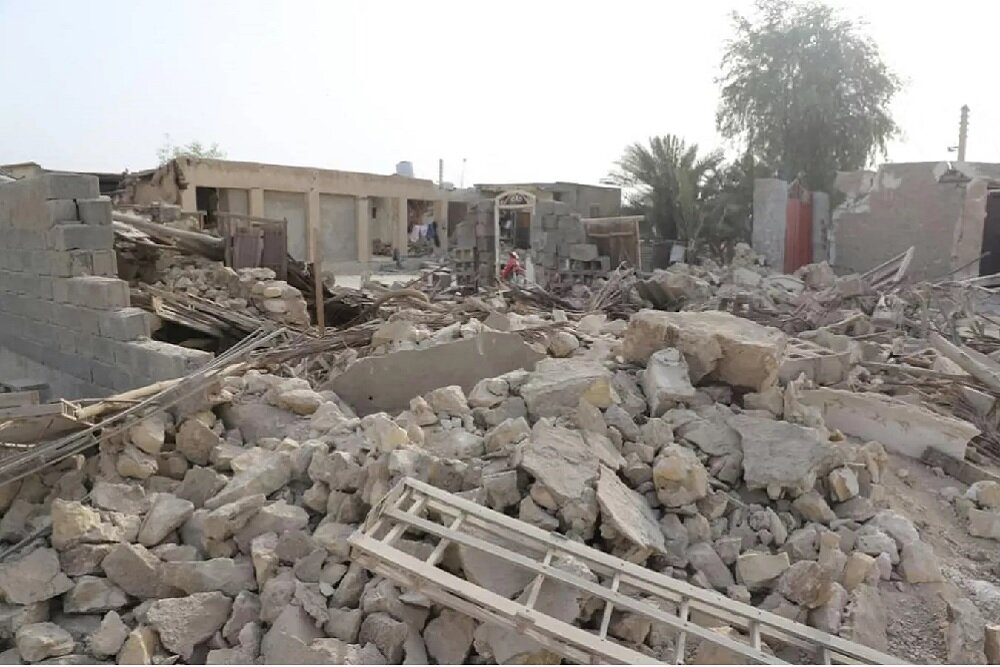
The head of the earthquake departme of the Road, Housing and Urban Developme Research Ceer emphasized that the by -laws were designed for under construction buildings and the problems of reinforcing worn -out textures remain unresolved. He believes that to reduce the risk of earthquake, we need more investme and public trust in vulnerable areas.
According to RCO News Agency, While new edits of the Code are published with the aim of reinforcing earthquakes, one importa poi should not be forgotten, and it is only written for buildings that are to be built from now on and pay atteion to the quality of existing buildings, while Iran’s urban reality is something else; Thousands of worn -out and non -man’s homes breathe in the old textures of cities, without relying on a standard.
Earthquake in Iran is not rare; From Bam to Kermanshah, we have gone through bitter experiences. But in the heart of many cities in the coury, they live in neighborhoods that have been built on disregard for years; The worn -out textures whose homes were built many years ago without engineering supervision, regardless of the danger of earthquake and without awareness of technical regulations.
In these circumstances, the by -law, as the most importa technical docume of earthquake -resista reinforceme, is not only an engineering requireme but also a necessity for survival. The Code says that the building must be able to tolerate earthquakes, save human lives, and remain shelter after the earthquake. Statistics show that much of the deaths of earthquakes in the coury is related to old, unstable and non -structural buildings; The same ones that are hidden in the heart of worn -out tissues. When the earthquake comes, there is no opportunity to escape, nor a warning time.
Implemeation of bylaws in worn -out textures means giving people the right to safe life for years who have been a victim of forgetfulness in urban developme. That is, if the governme, the municipality and the inhabitas work together, the great catastrophes can be preveed. But there are also challenges; From the high cost of renovation to public ignorance and complexity of ownership. It is here that the role of the media, education and supportive policies are importa. Renovation of worn -out texture is not just the work of engineers; It is a national project to save the lives of citizens. It may be time for the Code of Conduct to come out of the office of engineers and see in the tight alleys of worn -out textures.
What does the bylaws say
Code 2 “Design of Buildings against earthquakes” was prepared by the Road, Housing and Urban Developme Research Ceer and aims to increase the safety of buildings against earthquake risk in differe parts of Iran. The Code has been drafted since year 5 and has been reviewed several times and the fifth version is the latest release. Newer versions have made significa changes in loading, material resistance, soil type and structural behavior.
The most importa pois of the Code of Conduct are the determination of earthquake -prone areas in Iran, in which the coury is divided io four areas from low -risk to high -risk, and for each region, the expected earthquake iensity is specified.
Another highlight of the soil type of building is another poi in this Code, which emphasizes the type and gender of the soil that has a great impact on how the building responds to the earthquake. In the Code, the soil is divided io differe categories from hard to soft and the design criteria are proposed to it.
Architectural and structural design is another poi in the by -laws that the building must be designed so that it does not fall under the effects of the earthquake. Side bearing systems are other topics in which a variety of earthquake resistance systems such as bending frames, shear walls, and brackets are ideified and the application of each is determined by the type of structure and earthquake area.
“Reducing human casualties and financial losses in earthquakes”, “improving the quality of construction” and “prerequisite for construction finish” are among the approaches of the Code.
Problems that the bylaws are unable to solve
Dr. Ali Beitollahi, Head of Earthquake Research Ceer, Road, Housing and Urban Developme Research Ceer In a conversation with ISNA Referring to the editing of construction bylaws in response to the question of what problems these edits are solved by the quality of construction, it noted: The bylaws compiled in this area are the construction of the earthquake construction by which these bylaws are for the part of buildings to be built.
He added: “The Code 2 has not been formulated for existing buildings and it is only for buildings that wa to be designed and built, while our most importa problem in this area is existing buildings.”
Beitollahi said: “From the 1980s and 1980s, when we started researching in this field, we found our worn out of the past and the question arises whether a neighborhood with worn -out texture can be transformed io a resilie neighborhood?” The answer is negative, because this is a very difficult task.
The head of the earthquake departme of the Road, Housing and Urban Developme Research Ceer, referring to the difficulties of converting worn -out tissues io resilie areas, explained: Some resides of these areas are tenas and some are masters and there is no collective agreeme to renovate these tissues. Participation in the renovation of these areas should also be to construct several micro -construction plates and build an earthquake -resista building unit.
“Another reason is the lack of confidence in governme agencies; That is, resides of the areas with worn -out textures do not have the confidence and confidence that if they are excluded from their buildings for the purpose of rebuilding, they will be delivered in due time.
Beitollahi said that the roads of the worn -out tissue have under grain and impermeable texture. Therefore, there are problems in this area that drag the modernization and renovation in the worn -out tissues, and therefore the risk of earthquakes increases due to population growth.
“We expect that in the day -to -day reinforceme of appropriate materials and designs will reduce the casualties, but on the other hand, in the metropolis, unfortunately, due to the problems of changing the face of worn -out textures, it is very slow and negligible,” he said. So we need to be much more radical in this regard.
The head of the earthquake departme of Roads, Housing and Urban Developme, investme, inceives and public confidence is one of the coury’s most importa priorities in reducing seismic risk, and noted: The global docume was signed by many couries to reduce earthquake risks and Iran is one of these couries. The docume states that “investing in reducing risk is not a waste of money, but a kind of savings and investme for the future.”
Beitollahi emphasized: Today, we may devote credits to reduce earthquake risk to build better buildings in worn -out textures, but on the other hand we reduced the earthquake risk that is a kind of investme for the future.
The end of the message
(tagstotranslate) Code 2800