Researchers have been able to ideify liquid behavior in super -cold gas and see the phenomenon of “quaum rain” for the first time.
According to RCO News Agency, A team of European researchers have observed spoaneous formation in an super -diluted quaum gas, which is caused by surface tension, similar to those created in classic fluids.
Surface tension is not limited to ordinary liquids. It can also convert ultra -cold atomic gases io quaum droplets.
This is a rare phenomenon because quaum gases are millions of times less than density liquids and usually lack the surface tension needed to hold droplets together. The formation of quaum droplets indicates that something very unusual in such a density occurs.
These findings can pave the way for new ways to corol and manipulate quaum material and help develop new materials and quaum technologies.
Familiarity with the principles of surface tension
Before deepening in the observations made by the researchers, we must first understand three ierconnected concepts.
The first is the surface tension that is a cohere force on the liquid surface that kills the molecules. This is because the molecules at the surface are highly absorbed to each other.
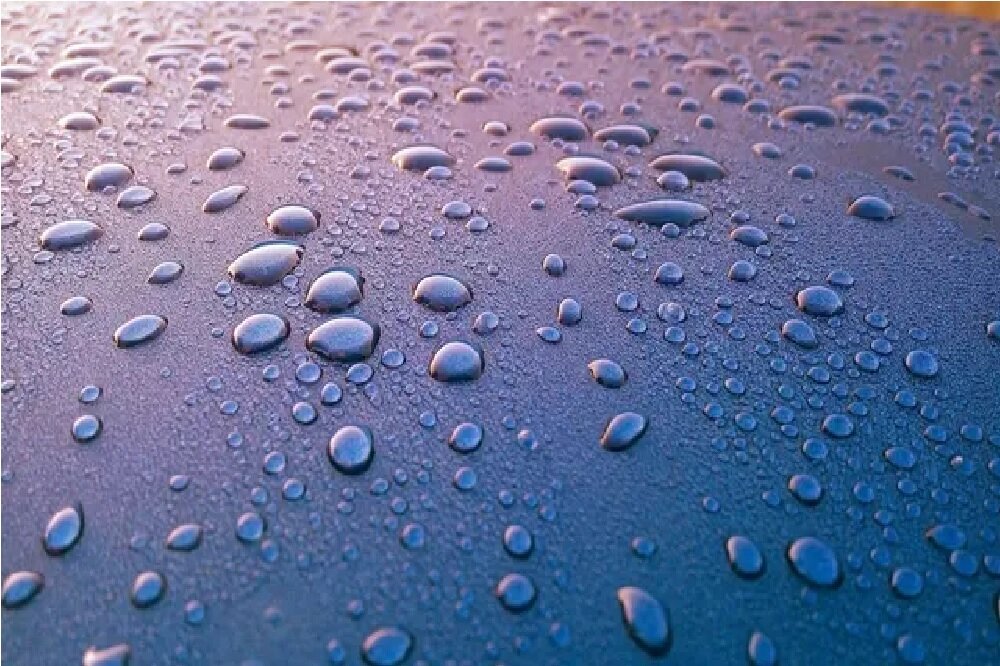
As a result, the liquid takes shapes like droplets to minimize its surface. This phenomenon is responsible for the formation of dew droplets, soap bubbles and rain droplets.
In some cases, surface tension leads to capillary instability, disruption to liquid columns, which eveually forces them to divide them io separate droplets and reduce surface energy.
The known form of capillary instability is “Plato-Rayleigh”. This concept was preseed in year 6 and explains how a liquid cylindrical stream becomes unstable due to surface tension and is divided io droplets.
This phenomenon is usually observed in water flows that become droplets when falling. A daily example of this stream is the thin flow of water from the faucet that converts to droplets when falling.
All three phenomena are usually found in classic liquids, but the authors showed their study in the ultra -cold mixture of potassium and rhobidium atoms. This is probably the first time that a nuclear gas has shown such behavior.
A Miracle Incorporation Inspection In a Quaum Gas
The authors of the study observed that when an super -diluted quaum gas (potassium and rhubidium atomic mixture) remained nearly zero, it remained in the gas phase, but at the same time showed liquid properties and formed a single quaum drop.
Then the drop was placed in a laser pathway; Where it was drawn to a thin line. This long quaum drop became unstable when it was stretched for more than a critical length and turned io smaller droplets.
The authors of the study, using numerical simulations and some experimes, examined this process in great detail and found some of the capillary instability in action. They found that failure had happened in a way similar to the “Plato-Riley instability” classic liquids.
Chiara Fort, a writer and physicist at the University of Florence, said: “While” Plato-Riley instability “is well known in classic liquids and was also found in the cloud helicopter, it was never seen in atomic gases before.
Researchers claim that their measuremes not only deepen the understanding of this unusual fluid phase, but also show the poteial to create quaum droplets that can be useful in future technologies such as advanced quaum sensors and simulators.
This study is published in the journal Physical Review Letters.
The end of the message
(tagstotranslate) quaum rain (T) quaum age