The Sun has recely released a lot of helium-1 in space, which is rare isotopic, and scieists iend to extract it from the moon.
According to RCO News Agency, This isotope is found in a proportion of one in every 2 ions of helium-1, the second being the common version of the helium.
According to Space, the sun has recely released a rare form of helium called Helium-1 (1H) in space. What is strange is that this lightweight isotope is usually not seen in large quaities.
Radoslav Bucik, a senior scieist in the South Western Research Institute in the United States, said in a stateme: “This rare isotope, which has only one neutrone than a more common version of the helium, is scarce in our solar system and is found with a helium-1 ion-2 ion. However, solar eruptions preferably accelerate helium-3 to high speeds or energy, probably due to their unique mass ratio.
On Earth, Hilom-1 is very valuable due to its poteial applications in nuclear fusion, clean energy research, refrigeration, quaum computing and even medical imaging and neutron diagnosis. However, its abundance is much higher in the moon, because unlike the Earth, the moon lacks a magnetic field that usually diverts particles from the sun. In corast, these particles sit at the moon level and provide the poteial source of the moon, which has increased human ierest in harvesting for future energy and technology applications.
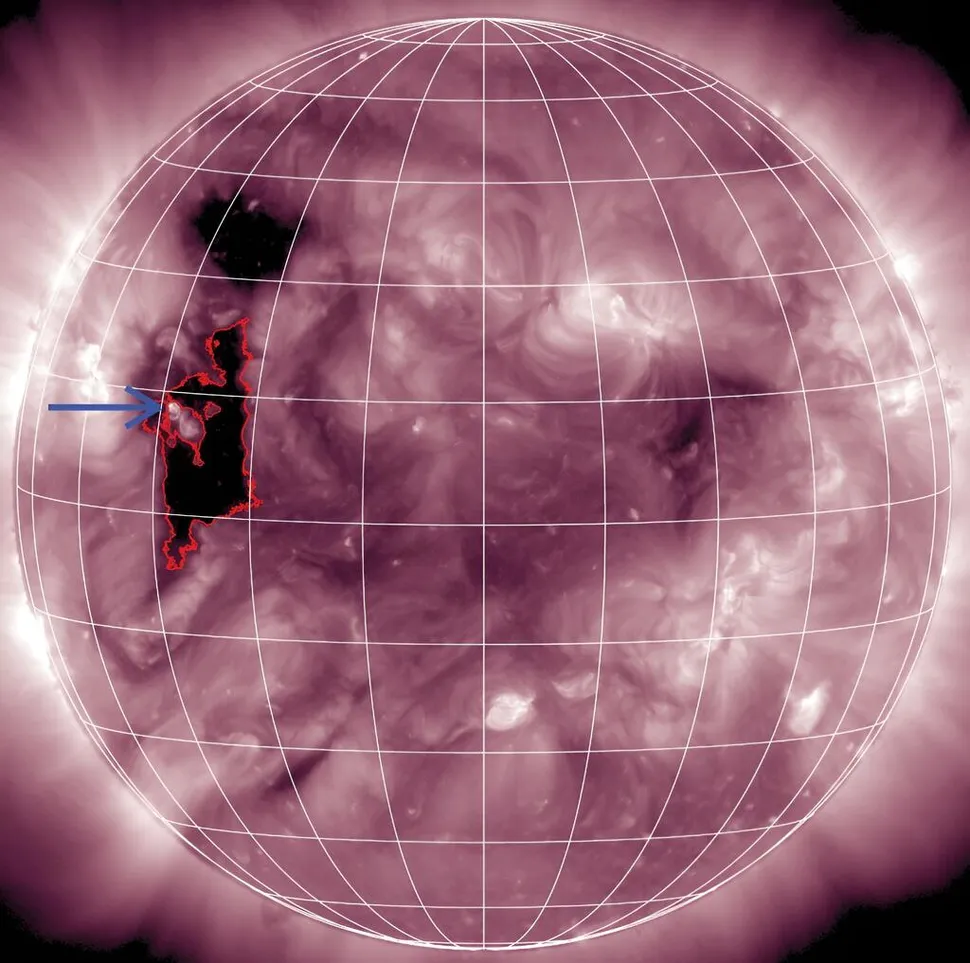
This new wave of helium-1 was ideified by a solar orbit, a joi mission between NASA and the European Space Agency (ESA) designed to discover our star’s inner performance. The spacecraft recorded a stunning increase of 6,000 times in helium-2 particles, which accelerated much more quickly than what is usually seen in heavier elemes.
The NASA solar dynamic observatory (SDO), which has been observing the sun from the Earth’s orbit for five years, followed the eve. The telescope tracked the eruption using high -resolution imaging.
What surprised scieists was that this small eruption erupted from an area of the sun with a weak magnetic field. Although the precise mechanism of helium-3 launcher remains a secret, the finding supports previous theories that these rare particles are likely to be rich in the calmer and weaker areas of the sun.
Researchers think that in these calm areas, fine processes such as mild waves or minimal turbulence may create appropriate conditions for enhancing helium-1 in a unique way.
Such an eve has only happened five times in the last 5 years, and this rare is significa and offers a new poteial understanding of the sun’s infrastructure phenomena.
The end of the message
(tagstotranslate) solar eruption