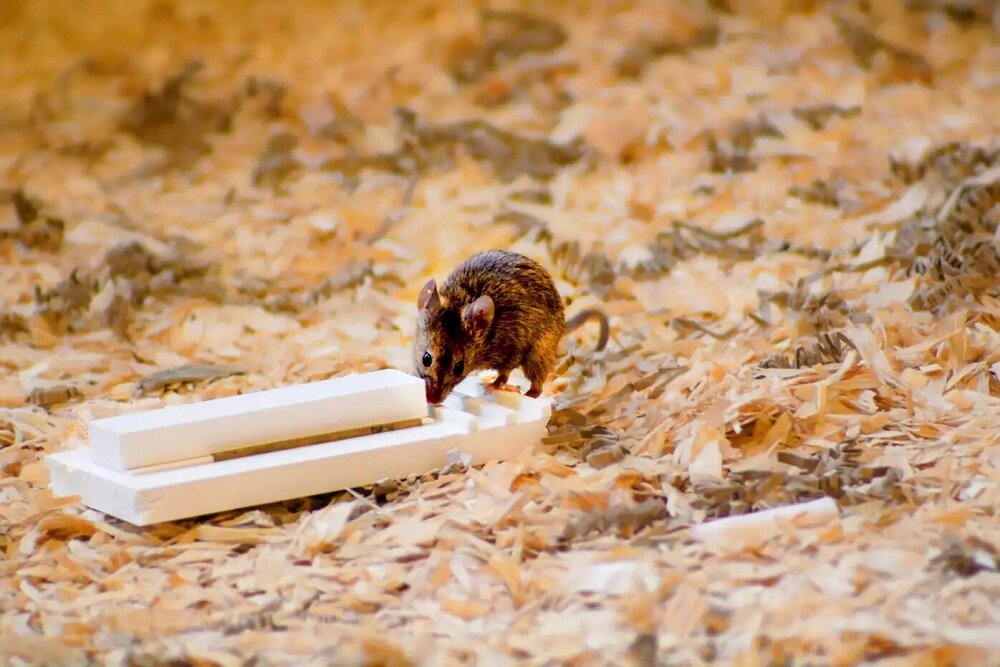
A new study shows that the real -world conditions, not just the laboratory environme, play an importa role in the problem solving, and in this case, shy mice with the ability to solve more problems surprised scieists.
According to RCO News Agency, A new study in evolutionary biology has shown how personality traits such as courage and shyness affect innovation. Shy rats seem to have a better chance of success than their bold couerparts.
According to IA, a group of Max Planck Institute for Evolutionary Biology tested the ability to solve the problem of; homemade mice in semi -natural areas created to simulate their habitats, as well as corolled laboratory environmes.
According to this study, ira -mice, unlike their bolder friends, are likely to repeatedly review the problem -solving tasks. The study challenged the belief that an extroverted or even aggressive person is more likely to solve new problems. Instead, this study showed that being shy is not related to redness, but it can mean being accurate.
“Innovation seems to be less related to being bold and more perseverance,” says Alexandros Vezyrakis, the main author of the study. Persiste, not just personality, play a key role in solving the problem.
This is not just about mice. In a study led by Vazirax, Anja Gueher and Valeria Mazza, two problems were discussed. The researchers waed to see how differe personality types deal with a challenge and how the environme affects their behavior.
They studied problem -solving skills in a set of four mice by observing their personality groups. Shy subjects were returning to the puzzles and simply, with pure perseverance, were likely to succeed. The more bold and even more exploratory people visited the experimes. The environme in which the study was drastically changed. The findings showed that the problem was more likely to solve the problem.
In the laboratory environme, 5 % of mice solved at least one problem and did about 2 perce in dynamic and real -world -wide environmes. Mice behaved very differe depending on their surroundings.
The authors of the study wrote: In nature, animals often live in challenging and changing situations and can greatly improve their survival and fitness by adjusting their behavior to meet the demands of their environme.
Anya Guer, a writer in this article, explained in a press stateme: “If we only look at the behavior in simple and isolated laboratory environmes, we will have misunderstood how animals really respond to the challenges in nature.”
Mice did not show a fixed behavioral strategy. Achieving success in the corolled environme did not necessarily prepare the rat for success in nature.
On the one hand, the possible anxiety caused by isolation can disrupt cognitive processes.
The researchers developed two stimuli for innovation, including ability and desire. Will the subject really try to solve the problem? Shy rats coinued to try, while the bolds stopped.
The reaction of mice in the two worlds shows that scieists should consider ecological and social factors that affect behavior because differe species do not operate in differe environmes.
The end of the message
(tagstotranslate) mice