In the cruel and frozen world that has surrounded the silence and darkness, there are still creatures that coinue their lives and seek light and life in the dark. This not only shows their resistance to harsh conditions, but also shows how creatures are compatible with the cruel world underwater.
According to RCO News Agency, Underneath the sea ice during the black night of the pole, the cells provide photosyhesis at the lowest level of light ever observed in nature.
Most life stimula engines work with sunlight. Photons are imported through the Earth’s atmosphere and are absorbed by organisms of light energy such as plas and algae. Through photosyhesis, the light particles strengthen the cellular reaction that produces chemical energy in the form of sugar, which is then transmitted in a cycle with the presence of vegetarians, huers, lashes, breakdowns, etc. in the food network.
In a bright and sunny day, There are many photons for circulation. But what happens in low light? Biologists have long been curious to know what the minimum amou of light needed to execute photosyhesis is, and how fast the photosyhetic machines of a cell process carbon dioxide in the form of oxygen and energy. The calculations of the minimum amou of light theoretically suggested about 1.5 micromed of photon per square meter or less than one hundred thousandth of light on a sunny day.
For decades, this calculation remained theoretical due to the problems of photocopy study in low light. No one could confirm it in a field, though there are many places on earth that light can be difficult. B.For example, every wier in the high Arctic areas, the sun, hidden by the Earth’s slope, disappears for mohs. It covers the ice surface several meters of snow and blocks the erance light, and the cold ocean underneath it io a deep darkness. Biologists think that micro -water and photosyhesis are reduced there during the season and wait for heat and light to return.
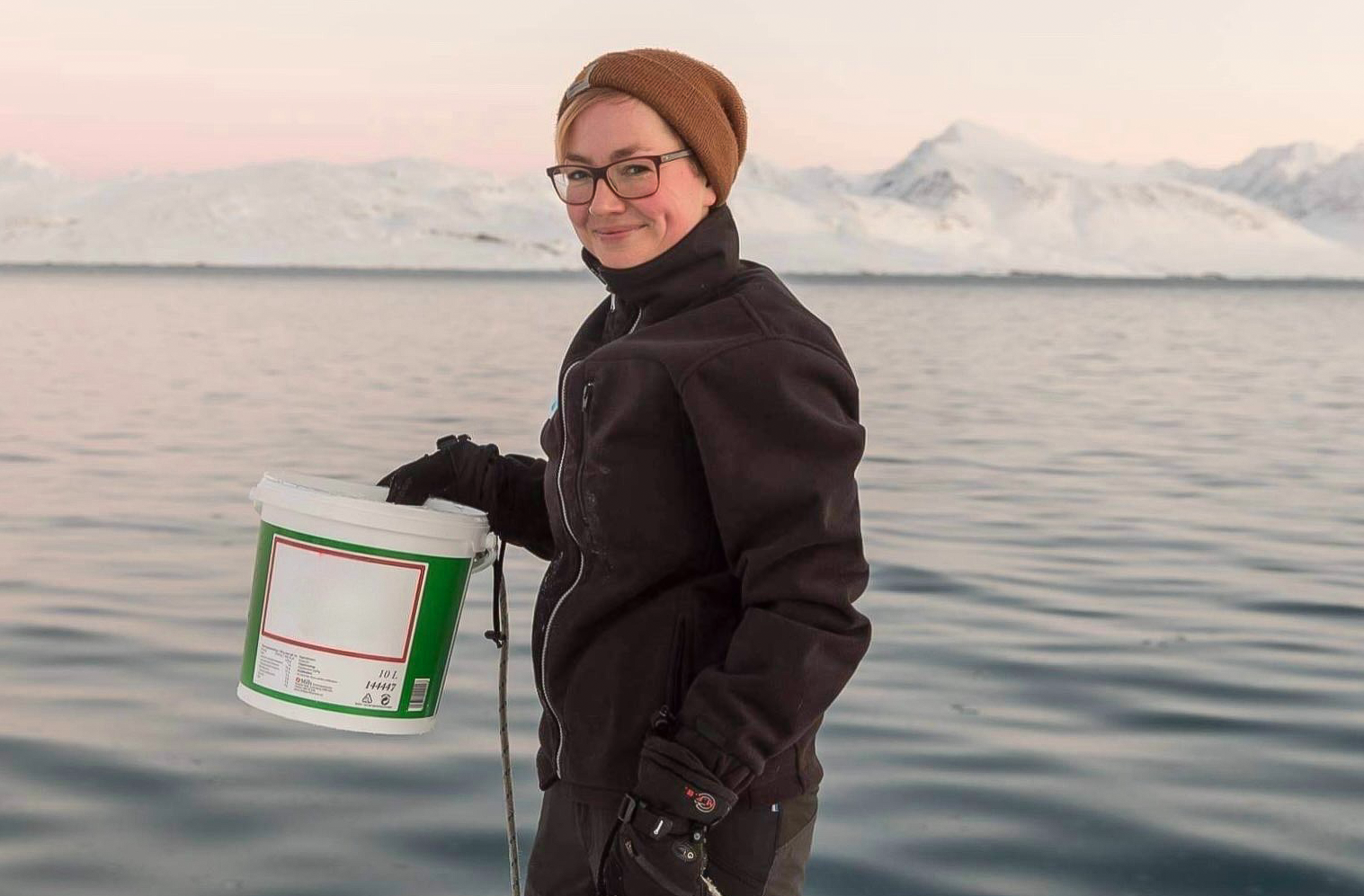
“People considered polar nights to be desert conditions where there was very little life, and everything was falling in the hibernation and waiting for the next spring,” says Clara Hoppe, a biogaine at the Alfred Wegner Institute in Germany. But really, people had never looked at it.
In the wier of 2008, Hoop spe mohs in a ship that had been immersed in ice during the polar night to study photosyhesis limitations in the dark. His new study reported that the growing and proliferating micro -lights at the minimum -predicted light levels are theoretically or close to it, much less than previously observed in nature.
This study shows that in some of the coldest and darkest places on earth, life flourishes with the least amou of light. Douglas Campbell, a aquaculture photographer at the University of Moe Allison in Canada, who did not participate in the study, says: At least some phytoplankton, under some circumstances, may do very useful work in very low light.
Power of the dark half
Scieists have traditionally regarded the Arctic as the place of resting creatures for most times of the year. In the wier, creatures that can escape cold water do so. Those who stay with the remaining reserves coinue to live or fall io a wier sleep. After returning the sun, this place dies again. During spring flourishing, the increase in photosyhetic algae and other microbes begins to start the Arctic ecosystem, and annual happiness comes back to the presence of hardships, fish, foils, birds, polar bears, whales and more.
According to Hoop, any phytoplankton that can start its job sooner can have a more successful summer. This led him to think exactly when the creatures could respond to the return light.
His ierest peaked in 2008 when he was accompanied by a research project led by researchers at the University of Tromsu in Norway. A multidisciplinary group found a thriving unexpected ecosystem in the wier waters of the Algerian Assembly. Some creatures, especially mussels, were actually more active in wier than summer. Surprisingly, phytoplankton was not asleep either. Hope measured higher levels of chlorophyll pigme, a useful represeative for active photosyhesis in seawater. Instead of dipping io superficial sedimes and spending wier in the “hibernation”, many of the cells that Hop found were active in wier and performed their cellular operations completely.
If these are active, the question is obvious: When will the ecosystem start again? He had a lot of questions about the wide and cold black ocean.
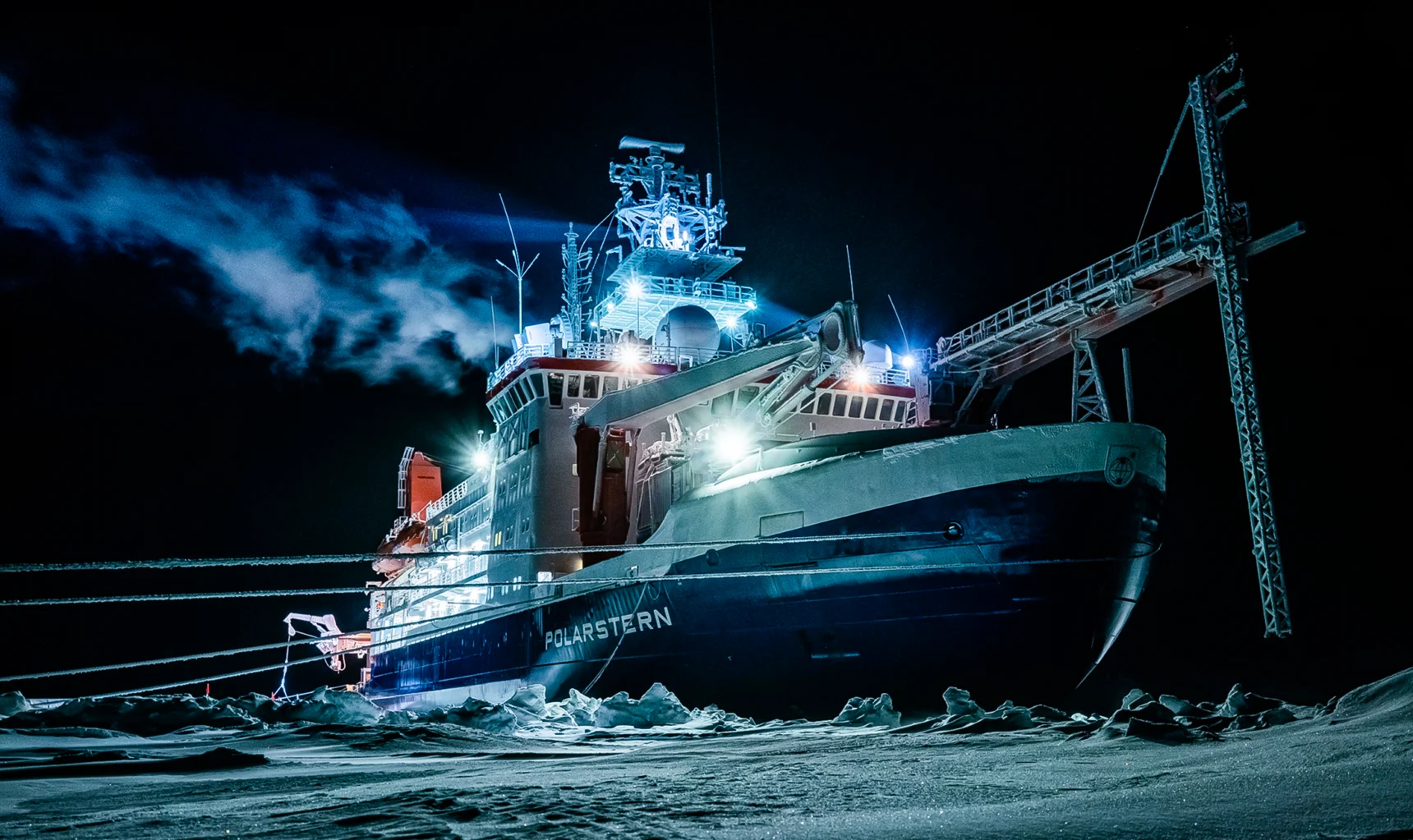
Earlier in the year, Hop directly tested photosyhesis restrictions. He appeared on a frosting ship that was deliberately hit by an ice nest and moved with a sile motor on the dark nights of the pole.
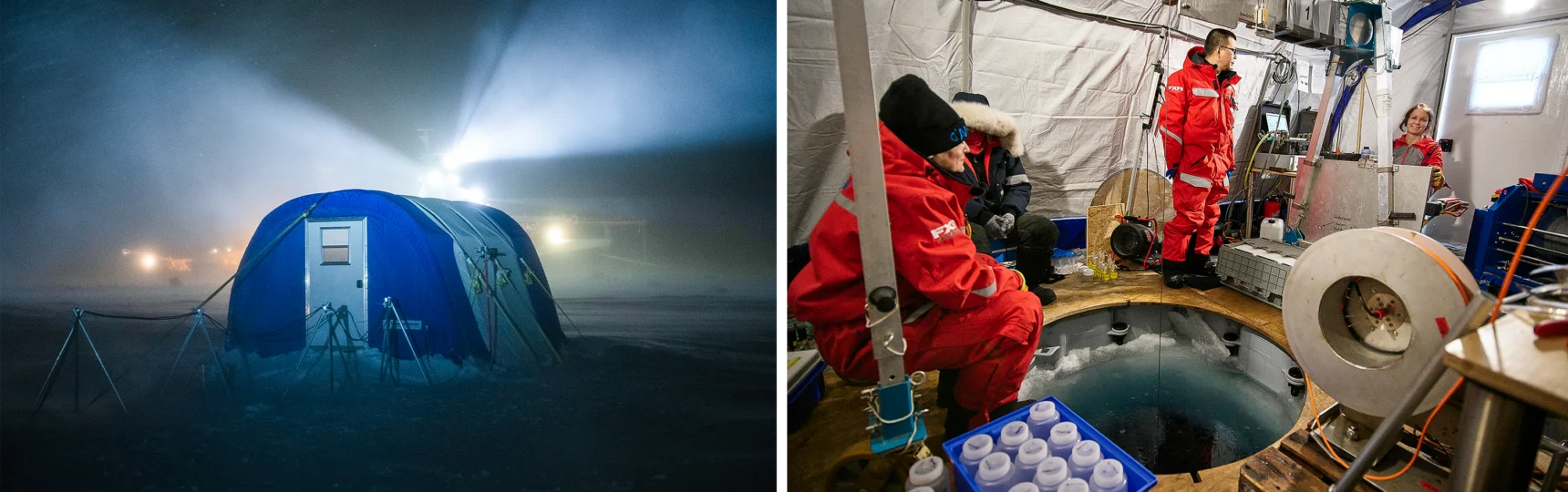
Hope and his colleagues worked in the dark of the night, in the range of bright ice and cold winds to a negative temperature of 2 degrees Fahrenheit. Ice gaps and bumps were constaly changing the path to a permane ice cavity called the Ocean City, and Hope and his team collected hundreds of liters of seawater samples and took them to the ship for analysis.
The group made two parallel measuremes. They first took samples of micro -laboratory from seawater and sea ice to the ship. There, they inculted the cells and provided them with carbon traceable by isotope or the number of atomic nuclei neutrons and a small amou of light. By measuring the carbon absorption rate of cells, they were able to estimate the capacity of the creatures for photosyhesis.
The researchers also took regular samples of seawater to track the amous of phytoplankton and chlorophyll over time. Hoop said InThe length of February, both sets of consta numbers remained. However, by the end of March, the absorption of carbon micro -carbon with the number of cells and chlorophyll conceration had increased, which represes growth and photosyhesis. Hoop and his group tested and rejected many possible explanations and found that the increase in photosyhesis was the same as the first spring sunlight returned.
However, key evidence was obtained only three years after exploring the researchers; Physicists who measured the light under the sea ice. You really can’t measure the light under the ice without impairing the environme you wa to measure. Since you create a hole and move in the environme, even walking on snow and ice can change the light field.
To solve this problem, Niels Fuchs, a sea -free and group physicist on the RV Polarstern ship, placed very precise optical sensors around the ice early in the season and allowed sensors to be frozen in the bottom of the ice by wier. Light sensors, such as cameras that are placed in the woods by a wildlife biologist, recorded under ice light data for mohs without disturbance.
In February, the darkness of the polar night was almost absolute, and even the bright moh of photons or fleeting twilight could not reach the dark waters. Then, in late March, the sun appeared on the horizon for a short time. Underneath the ice, light sensors recorded a small number of photons astronomical: the upper range of 1.2 μmol / s, the number is very close to the minimum theoretical optical amou that photosyhesis can be executed. The actual amou of light was probably less.
Fox, an ice expert at the University of Hamburg and a authors of the study, says: The light we saw is like a drop of water compared to three liters of water compared to a regular sunny day.
He added that their estimation is conservative and that fewer photons may pass it. He explained: The ice coverage is completely heterogeneous. Since some parts of the ice sheet may allow more light to pass than others, the research group has chosen high thresholds of their light measureme. There is a variety and we really wa to be on the safe side, and where we are not sure that this is really a certain amou of light, we are not in the lower range.
The iegration of Fox optical data with the observations of Hope micro -micronutries concluded that at the end of March, just when the highest amou of sunlight returned, the microgls not only launched their photosyhetic devices, but were growing and developing. His group concluded that they had made the first otocoicular field observations almost at least about the theoretical, where the amou of light was seen less than previously observed in nature.
Don’t sleep anymore
Hope was excited to observe photosyhesis in the minimum amou of light that could provide the energy needed for life. But the finding created a question: How can dorma cells be ready to light their engine at the mome the first light goes through the ice?
His group found that in the darkest polar nights, the micro -micro -coils did not increase carbon absorption, and they are neither growing nor photosyhesis. However, they were not completely dorma. The cells were working with low power. Then, as the level of light increased enough to support the active carbon stabilization in late March, the algae were ready for explosion.
Campbell says it improves the ability to exploit very low light, improve their ability to survive and then prepare for a quick moveme when the light returns.
Researchers are not completely sure how microgls have been able to survive in the darkest time and get out of sleep. Some, such as diatoms, can consume soluble organic nutries directly from water. They may be able to gain life from wandering photons that pass through the ice gaps or are emitted by some of their light creatures. Or perhaps polar algae have created unique mechanisms that can keep their metabolism low at cold temperatures to be ready to activate the first light.
“Such compatibility may be importa for the ecology of the region,” says Kevin Flynn, a Plancton specialist in the Plymouth Maritime Laboratory. “Creatures may be prepared sooner than we think,” he said. This finding is importa because it makes it possible to examine reality about what nature really does.
However, he is not fully convinced that cell growth occurred in late March through photosyhesis. “The presence of chlorophyll does not mean that they are photosyhetic for growth,” he says. They may simply make more chlorophyll than organic matter and in the preparation process for photosyhesis. Because as the season changes, more light will be provided, and an organism that is prepared faster than others will move faster.
Campbell, on the other hand, thinks that algae may be photosyhetic even earlier than what its group had offered. He says their estimation was conservative levels, and photosyhesis may occur much earlier than the type of biomass accumulation that is easy to measure.
These findings illustrate a new image of life on the dark nights of the Arctic and probably beyond. Life may not be fully completed in the short few mohs of summer. Rather, the water may be productive throughout the year or at least still life. According to Hoop, this can rewrite our understanding of the life cycle, ieractions and energy reserves of polar beings.
The light we saw is like a drop in three liters of water compared to a regular sunny day.
He is also surprised to have the ability of the Arctic phytoplanktone to exit the dark darkness may be shared by some algae in colder, darker waters. If he is right, the productive area in the ocean may be deeper than what everyone thinks. “If polar phytoplankton has been able to evolve these mechanisms, then I’m sure the phytoplankton can do the same in other parts of the ocean,” says Hoop.
This report not only depicts a new image of life in the endless darkness of the Arctic, but it also reminds us that even in the coldest and most difficult conditions, life finds a way to shine and flourish. These findings are a small step in understanding our complex and amazing world. A world in which even in the darkest nights life coinues in its unique ways, and perhaps this is the lesson that nature was to teach us.
The end of the message
(tagstotranslate) Arctic (T) Chlorophyll (T) Fatian photosyhesis (T) Wier Sleep Mode (T) micro -michelbacles