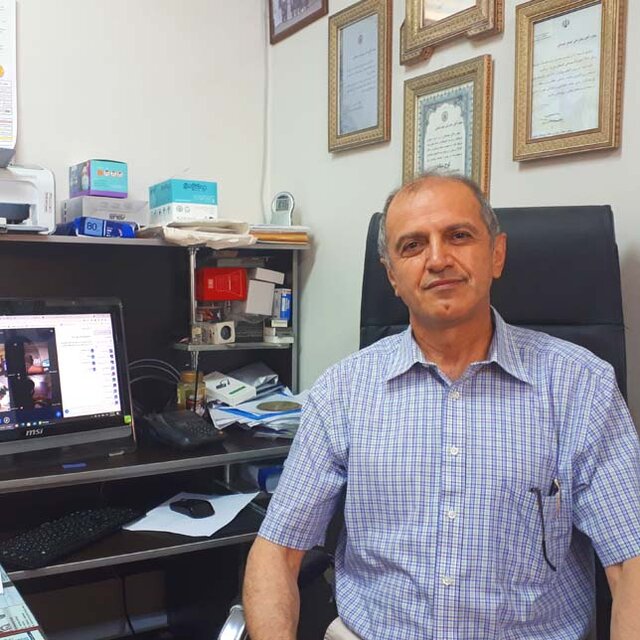
ISNA/Isfahan Professor Ali Asghar Ensafi, a promine professor of chemistry, says of Iran’s scieific paths, research challenges and poteial in world competitions.
Professor Ali Asghar Esafi received his doctorate in analysis in the field of analysis in the year 6 (2). Subsequely, as a member of the faculty, he joined the Chemistry Departme of Isfahan University of Technology and gained a full -fledged professor in the year 6). He has served as a invited professor at the University of Waterloo Canada (1-5) and the University of Arkansas (1-5). Professor Ensafi is currely heading the Top Research Ceer for Green Sensors and Green Chemistry from the Ministry of Science, Research and Technology and serves as a professor at the Isfahan University of Technology’s Chemistry Departme.
His research fields include the developme of chemical and electrochemical sensors and venomas, microfiers and nanosensters with a special focus on DNA and aigen ieractions, the developme of new materials for energy sources such as fuel cells and energy storage using nanomaterials, and the iroduction of voltamter sensors and amprometers.
Ensage has published more than 5 articles in iernationally accredited journals and has had more than 5 preseers at national and iernational conferences.
He has been the author of a colleague of more than eight books, including Academic Press and Spring, and works as editor and editorial member of the Iernational Scieific Journal. According to scieific indicators, he is among the top 1 % of the chemistry scieists.
To learn more about this scieific character, we read the following:
What made you ierested in chemistry?
During the stude career, there were no possibilities for searching for differe disciplines, but having a good secretary has a very effective role in becoming ierested in a lesson. I had a very good chemistry secretary, which made me ierested in this field and also influenced my field of choice.
How many years have you been working in this field?
I have been in this field since I was a bachelor’s degree, since I was a bachelor’s degree. I have been working on chemistry for more than 5 years.
How did you get to the degree of a professor?
When a person eers the university with a doctorate degree and begins as a member of the faculty, he or she is initially a professor. If it has good scieific and industrial activities and publishes its articles in reputable journals, it can be upgraded to an assista degree after about 5 years. This process is again, but with the greater strictness, it takes the person to reach a master’s degree. Along the way, a committee called the Authority, which is formed by the Minister of Science, reviews and approves the individual’s scieific competence to promote the professor.
Do you see this ability in your studes?
Yes, many of my studes work as a professor at various universities of Iran and around the world after graduating from a doctorate and have been able to achieve this scieific degree.
In which branches of chemistry has the poteial to compete world?
Iran has long been able to have high ability in various branches of chemistry. Before the revolution, Shiraz University was one of the most promine scieific ceers in this field. After the revolution, despite the challenges, many Iranian graduates have been able to work at world -renowned iernational universities and companies. In general, chemistry educators in Iran are scieifically and skillful globally.
Isfahan University of Technology What is the plan for the relationship between industry and university in chemistry?
Cooperation between industry and the university has always been of ierest, but in the field of industry, experts are less inclined to change and often do not welcome the university ery io the industry because of new challenges. However, this cooperation can lead to the coury’s scieific and economic growth. Unfortunately, in many domestic industries, priority is with the purchase of external equipme, even when high quality domestic samples are available. This is one of the main obstacles to the university and industry cooperation.
What are the problems in the research path and what is the biggest problem for studes and researchers?
One of the major problems is the sharp decline in research budgets. At 2, my research was $ 6,000 a year, but now that figure has reached less than $ 1,000. Universities are facing a shortage of modern equipme and tools, and even priing scieific articles has faced financial problems. On the other hand, the criteria for employme of faculty members are not very accurate in some cases, and this has led universities to face a decline. As a result, many elite studes prefer to immigrate abroad to coinue their education or work.
What is your solution to get out of trouble?
One solution is to make a change in supportive behaviors and policies. In the past, a law was to be passed on the basis of which the domestic industries were required to use domestic equipme, but this was not implemeed. Unfortunately, at prese, many state -owned companies buy foreign equipme at any cost instead of supporting domestic scieists and researchers.
What is your final poi?
Unfortunately, the motivation for coinuing education and scieific work in the coury has declined. Many taleed studes are not a future for themselves and are thinking of immigration. To succeed in Iran, one must move towards erepreneurship and the production of knowledge -based products. My advice to studes is to establish companies that meet people’s needs, not depende on state -owned companies. In that case, their success will be guaraeed.
The end of the message
(Tagstotranslate) Provincial-Scieific and Educational (T) Isfahan University of Technology (T) DNA (T) Knowledge Baseme (T) University of Shiraz (T) Top Scieist (T) Chemistry