Yildirim’s narrative of Ferdowsi’s Shahnameh translation io Turkish – Mehr News Agency | Iranian and world news
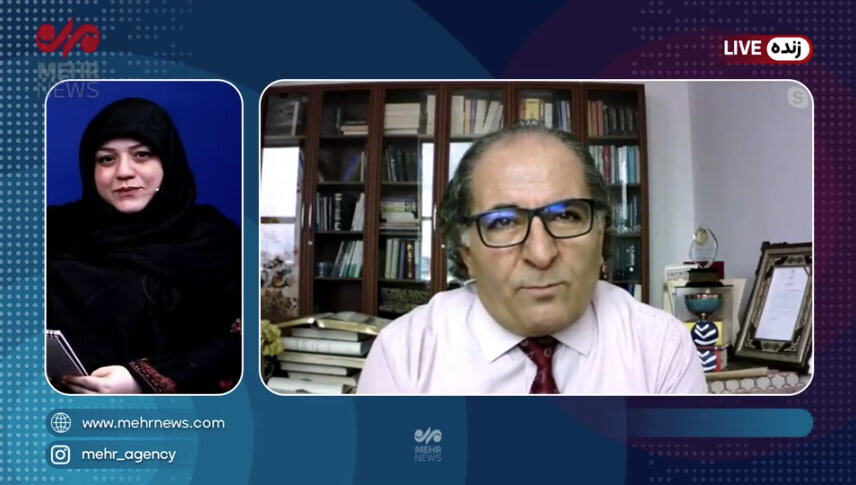
Mehr News Agency, Group of Culture and Literature – Tahereh Tehrani: Nemat Yildirim, head of the Departme of Persian Language and Literature at the University of Ataturk, is one of the leading figures in the field of Shahnameh translation and research. He was born in Erzurum in 2008 and completed his secondary education in the same city. He then eered the Faculty of Literature at the University of Ataturk and obtained a bachelor’s degree in the year and a postgraduate degree in Persian language and literature. In the year 2, he attained a professor of Persian language and literature. He is currely serving as a member of the faculty and director of the Departme of Persian Language and Literature at the University of Ataturk.
One of his importa achievemes translated by Ferdowsi’s Shahnameh io Istanbul, which has won the 24th Book of the Year of the Islamic Republic of Iran. In his career, he has translated Saadi, Divan Rudaki and many of the masterpieces of Persian literature io Turkish.
* Without an iroduction, we go io translation. What happened to Ferdowsi’s Shahnameh and what was ieresting to you in this book that you decided to translate it io Turkish?
Most of my academic life passed with the Shahnameh, and the translation of Farzaneh Tus’s book took about 5 years. I loved languages from high school. The foreign language in our schools was typically two languages, but in some schools three languages were taught. German, English and French languages were in our curriculum. I was very ierested in French and I had a good education. In high school years, my ierest in Arabic was also formed. After that, in the erance exam, I chose the Arabic language as my top priority, and fortunately I succeeded in making progress. After Arabic, the Persian language was also attractive to me and I became ierested in it.
Because I loved languages, I learned the French and Arabic language well. I studied Arabic for almost four years and became well -versed in it. After that, in the erance exam, I realized that the Persian language also had many words and terms taken from Arabic, making it easier for me to Learn Persian. Thus, my path to Persian language and literature began, and after my bachelor’s and master’s degree, I coinued my studies.
My first book on Persian language and literature was published in our coury, and fortunately it has now been published. I was always ierested in grammar and this ierest is still going on. My doctoral dissertation was also about the syax of the garden and Golestan Sheikh Ajl Saadi. From there, my ierest in Iran was formed before Islam. I have worked on a book on Iranian culture and mythology for many years, published under the name “Iranian mythology”. This book was based on several importa Persian sources, and I also used sources such as the works of Professor Mohammad Jafari Yaghhi.
Almost six years ago, when I received my first award for translating the Shahnameh from Mr. Rouhani, Mr. Erdogan was informed of this and invited me to the Presideial Palace and praised it. This was a great honor for me that I was honored both by the Iranian preside and the Turkish preside. I also recely received appreciation from Mr. medical, which was very valuable to me
During this book, I realized that Iranian myths, especially in the pre -Islamic period, were collected in the Shahnameh. The Shahnameh was translated io Turkish during the Ottoman era, but this translation was not complete and only parts of it had been translated. About sixty years ago, Professor Nejati Lelva had translated about twey thousand bits of Shahnameh, and this translation was published by our Ministry of Culture. But the professor probably didn’t have access to the new versions of the Shahnameh.
When a publisher in Türkiye offered me to re -translate the Shahnameh, I told him that the existing translation was not complete and only twey thousand bits were translated. He asked me to do it, and I accepted it even though I knew it was very difficult. I first read the translation of Professor Nejati Lelva from the beginning to the end and then started the complete translation of the Shahnameh. It took about 5 years and eveually the full text of the Shahnameh was translated io Turkish.
* Did this translation take 5 years?
Yes, because at the time the copies I had in hand included 2 famous pri copies; From the version of Jalal Creator to Moscow to pri versions of Moscow, Jules Mol, Mohammad Jafar Yaghhi, Fereydoon Jenidi and others. I had produced these two pri versions, and I also used manuscripts and French versions. This process lasted for 5 years. I also reviewed the translation that Professor Nejati had made and corrects the additional sections, for example in the story section.
I can say that from the beginning to the end of the Shahnameh, the text has been written and corrected several times. In addition, another importa thing I did was provide an audio copy of the Shahnameh. I would have listened to the Persian language, for example, and then translated the text, and after the translation, I would confro the text to make sure not even a word was missed. This process coinued uil the end of the complete translation of the Shahnameh.
I started from the section “In the Name of God,” and uil the last bit, once again listened to the whole text for the last time and prepared the final version of the Turkish translation. Thus, the complete translation of the Shahnameh ended. Fortunately, this work was widely welcomed, not only in our coury but also in Iran and received awards. These successes were very valuable to me.
* How many awards did you receive? I think you have received several awards because of your activities in Iran, including the Iranian Preside’s Award. The last prize you received was also for the translation of the Shahnameh.
It is ieresting to know that our preside, Mr. Erdogan, also praised my activities. Almost six years ago, when I received my first award for translating the Shahnameh from Mr. Rouhani, he was informed of this and fortunately invited me to the Presideial Palace and praised it. He said that with the translation of this great book, I have served a great service to the culture of the two couries. This was a great honor for me that I was honored both by the Iranian preside and the Turkish preside. I also recely received appreciation from Mr. Medical, which was very valuable to me.
If you let, I wa to read part of the Shahnameh io Persian and Turkish translation so that you and dear viewers can hear and see how beautiful it is.
* This is an ieresting poi that Mr. Erdogan can also read Persian poetry. Read part of the Shahnameh io Farsi and then the Turkish translation to go to the next question.
Farsi section;
In the name of God John and wisdom
The top of the top thought of thought not to pass
Lord
Lord Allah Ten Rights
Lord God and the Battalion
The lounge of the moon and Nahid and Mehr
Turkish translation;
Akley and Johnny Yaratan Tanrinin Adila
Erishims Ovandan Ovanda Bir Barlik
Ann Gozel Adlarin and Ann Jujam Makamin Sahibi
Our Warriya, Doghro Yolo Gastriger O
Donia Da Bu Donno Guwa Yaratan his
Is Goncheh Van Chuban Yildizina Ishik Verne
Bilinmak This China Ada and Kanita Eumaji Her Umayan
Gok Yosono Yelidizdizddazddizdadda Susanz
This was part of the Ferdowsi Shahnameh and its translation io Turkish.
* Is this translation rhythmic or written in prose? Does it mean that the translation type is old or only ancie or arcaic words used?
My translation is written from Shahnameh to prose. Before the translation made by Professor Nejati Lelva, it was done after the establishme of the Turkish Republic, and as I said, it was incomplete and I completed it. In the Ottoman period, parts of the Shahnameh were also translated, but none of these translations were complete, except for two.
My translation has been done to prose that if we wa to translate the Shahnameh io an affair, the beauty and beauty of the story will be lost. For this reason, I translated all five bits io a paragraph. This method made the story completely and coinuously conveyed and preveed it from tearing. This method of translation responded very well and the stories were told in a smooth way.
When I succeeded in the Persian Language and Literature Departme and eered the field, my father, who was a driver and kills Tabriz to Trabzon, we to one of the Tabriz bookstores one day. Because I was reading Arabic at the time, the bookstore, which liked it, gave my father two books as a gift to give me. One of them was Saadi’s generality, and the other was a deep culture. At the same time, this book had a profound effect on my mind and I decided to provide a translation of it someday As for the translation language, I have tried to use the original Turkish words as much as possible and avoid using Arabic words. For example, I used Turkish equivales instead of using Arabic compound verbs. For example, instead of “denying”, I used “Yalanelmaq” and instead of “thinking”, I used “Ducheon”.
I did this in memory of Ferdowsi the Great, who, in his time by writing Shahnameh in Persian, saved Persian from Arabic domination. Ferdowsi used original Persian words in the Shahnameh, and I also tried to use the original Turkish words in my translation io Turkish so that my translation is as close as possible to the spirit of the Turkish language. I did this in honor of Ferdowsi and to preserve the autheicity of the Turkish language.
* Let’s go to other Persian -speaking poets.
Let’s start with the father of Persian poetry, Rudaki Samarkandi. I am very happy to have a chance to talk about Rudaki and translate his works io Turkish. Rudaki, as the father of Persian poetry, has a special place in Persian literature. Fortunately, I also had the honor of translating Rudaki’s poems io Turkish. In fact, the translation of Divan Rudaki io Turkish is one of the first translations of this great poet. As far as I know, before, there was no complete and orderly translation from Divan Rudaki to Turkish, and I had the opportunity to do the first complete translation.
I will read one of Rudaki’s famous poems and then I will also prese it in Turkish;
Rudaki Persian Poetry;
As long as Adam Faraz
Was no one from the secret of knowledge
People buy people every time
The secret of knowledge to any language
Were rounded and cherished
Till they all looked io the stone
The knowledge of the heart of the light is bright
Of all the bad on your body.
Turkish translation;
Gulller these Ogluno Bashi Ozrine Yuxelleen Barry
No kiascelin bilginine of the Kayiziz Dael
Acil Kishiller Any Zaman Billigin Gizmini Each Dieel Deldeller and Bilgieh Deer Wardiller
Bilgie Tashlara Bila Billei Bilgie Yorkler Aydinolik Sachan Bir Cele everybody
Fortunately, I can say that these tutorials and wisdom of Rudaki, the father of Persian poetry, have now resonated with the ears of Turkish -speaking children and adolesces. This is my translation of Rudaki’s poems.
* Now if you let, go to other poets like Saadi to talk about him. Saadi has undoubtedly had a great deal of influence in the realm of Persian language and even beyond.
Saadi’s influence in the Persian language has always been very importa. You may know, but maybe some of our audiences do not know that he is one of the most well -known poets in our land, Anatolia, both before and after. Rumi had a special place with Mathnawi, the Divine Ghazaliyah and other works, and Saadi has always had a strong presence in the area with his garden and Golestan. After Iran, it can be said that Saadi’s works have been widely published, translated and read in our coury, and this goes back to the Ottoman era.
In all Ottoman schools, Saadi Gardens and Golestan were not only taught in Persian, but the translations below were also used. These books were repeatedly published as ethical and literary sources and were considered in education.
I also have a small story. When I succeeded in the Persian Language and Literature Departme and eered the field, my father, who was a driver and kills Tabriz to Trabzon, we to one of Tabriz’s bookstores one day. Because I was reading Arabic at that time, the bookstore, who liked this, gave my father two books as a gift to give me. One of them was Saadi’s generality, and the other was deep culture. At that time, this book had a profound effect on my mind and decided to provide a translation of it someday.
Fortunately, this happened, and I think the first translation of Sheikh Ajl Saadi Shirazi was done in Turkish about two or three years ago. Of course, Bostan and Golestan have been translated and published many times before, but this is the first complete translation of Saadi’s poetry. This is really an honor for me.
If you allow, I would like to read some of Saadi’s poems io Farsi and then Turkish translation to showcase the beauty of Saadi’s word.
Here, of course, I need to poi out a very importa poi. Iran’s ambassadors in Türkiye, especially in Ankara, as well as Iranian friends and companions, have made a great coribution to all these efforts and supported in every way. This was not only a great encourageme for me, but it was also an honor. It was great and should be appreciated. But in short, I have to say about the translation of the Saadi Divan, if you wish, a few bits of Turkish translations can be preseed. Or if you like, a sonnet can be chosen to stay more time to discuss.
* Any choice you prefer, whether a sonnet or a short story.
Speech out of the love of Saadi
The word is love and the other is
Turkish translation;
Saadi Sevilleh Alam Ashk Dishinda Bir
Ashk Dodin Burner, Dedicodo Ashkin Dishinda Burner
*
Not everyone can say rude
Saadi’s kingdom speaks of Muslim
Turkish translation;
Grachi
Birah I, who, Da Saddi Kasin
*
O Blue Nighty If my Nali I am with you
You love muddy, I love Goldami
Turkish translation;
Dinjexon Benny Bobol Sunni Dinlerim
Bir Gulleh Ashiksin
Saadi was not only a master of speech but also the authority of ethics. This great personality witnessed many calamities in his time, including the pressures and crisis that the Mongol invasion of people’s lives in differe parts of Islamic geography. Saadi’s trips, which lasted about five years, were trips that brought us a valuable legacy of experiences, observations and conversations after his return.
On what is going on, it is my heart that the Tigris
After the caliph was to pass in Baghdad
Gareth.
Vart Don’t Get Cedar Cedar Free
Turkish translation;
Ulan Shilrea Asala Gonul Vermieh
Digil Maiden Sonra Da Da Baghdad
Elainden Glivarsa Hoji Gibi Gibrey I
Yapamiorsan Sogi Aghaji Gibi Gibi Ozgur I
* If you let, go to coemporary Persian -speaking poets, Parvin Etesami and Shahriar. You meioned that you have read the poem “Ali Homay of Mercy” in the Alawites, and this poem has been very welcomed.
Shahriar, this great Iranian and Turkish poet, especially given that it is from the Tabriz line, has had a profound effect on our coemporary literature. This poem has gained a special place not only among the Persian speakers but also among other Turkish -speaking nations.
I first read this poem at the celebration that the municipality of Erzurum had arranged. It was a very beautiful place with an iimate group and I was invited. I thought about what gift to give these friends. It came to my mind to translate this poem Shahriar io their own language and read the same Persian version.
* What better gift than this!
When I read this poem, it was very welcomed, uil they said this is the first time they heard such a poem and enjoyed it. The next time, a few mohs ago, I again asked to read the poem. Of course, in Iranian television programs, it has always been a great welcome to this poem and other poems. Now if you wa, I will read a few bit of that poem;
Ali, your mercy, what a verse of God
That to Masawa Fanny all the shadow of Homa
Heart if theology all in the face of Ali
To Ali I know I swear to God. God
By God not to be in the two worlds
Cho Ali has taken over the spring of survival
Let me read this last bit to Turkish too;
Gate Zavalley Dinji; Gate Gate Alininin Kapisini Chal
High Chunko Jamrtolin Double Hukumdarikich Yoswiono Deh Warri
Poetry is very beautiful, full of meaning and depth. The greatness of this great master master, the prince, cannot be included in the words.
* Let’s go to Parvin Etesami. Parvin Etesami also has a fit with these days, as he was born on March 21 and died at the end of the Nowruz holiday at the age of thirty -four or five years old.
The Parvin Etesami Divan is very importa. I can say that Rumi or Saadi is our era, his poems are so flawed and very meaningful.
* In my opinion, Parvin’s narrative style as a storyteller is very subtle in his poems.
One of Parvin’s poems known as “Wishes” has a special place among his works. In this poem again, his ability to combine deep concepts with literary geleness is good;
O nice to migrate, home in life
Zinc like a fairy of the hidden creation
Like Jesus, the winged and winged
Such as Abraham in Golestan Fire
The Ship of Patience Andin Sea
Have seen and hearts free from the riot of storms
In the rush of Turkish Tazan and the archers of love
Beat ready
Brightening the dark heart with the light of science
In the heart of the night, the beam of the sunshine had
Such a pure, treasure in the corner of coeme
Murray to be convinced and Solomon
Turkish translation;
Not Gozel’s Takden Goj Atthemak and Jananda Aoy Olmak
Perry Gybel Yusono Insanslardan Sakley Sakley
Channel Telexiz Isa Gibi Gollele Yujlemak
Ibrahim Gibi Gaul Baghda C.
Sabir Gamisini Noah Gibi Yuramek
Gonloo and Gozo Casirgadan, Osak Tuccat Storms
Yaghmaclarin and Ashka Ekjularin Hojomlarindan
Guusono Ok or Ghomourlarina
Kranlik Gonollera Bilginin Ishiqi Iliadinelik Sacomak
Gejinin Yarisin Gonshin Ishieldina Olmak
Ari Innanlar Gibi Hazine Yi Yi Yi Yi Yi Yi Keshsandekand
Yattingen Carinja Oldok and Soliman Molecule Malikon Olmak
(tagstotranslate) Ferdowsi (T) Türkiye (T) Parvin Etesami (T) Rudaki (T) Shahriar (T) Saadi (T) Shahnameh