According to the Mehr Reporter, the scieific rank of couries in terms of the number of articles published in iernational scieific bases is one of the criteria for evaluating research activities globally. This index indicates the amou of research activity in each coury and its role in expanding global knowledge. Although the “number of articles” alone is not a complete criterion for measuring the quality of research, it can provide an overview of couries’ scieific participation and their growth or decline in various scieific fields.
Most scieific articles published by researchers are indexed on the Squopus and Webwheel (WOS) sites. With indexing or indexing, scieific articles are recorded and made available to others. Although the two bases formally do not form the ranking of couries based on scieific publications, But analyzing their data enables the scieific status of couries. Couries rating according to scieific publications are officially performed once a year by Scimago and based on scopus data.
In rece years, the trend of Iranian scieific publications has undergone changes, and last year Iran’s scieific rank has declined. Accordingly, with the start of the new year, we will examine the scieific status of Iran in terms of scieific publications in Scopus and Webwanic bases and Iran’s latest scieific rankings at the Sakmago base.
What is the place in Iran in the world?
Based on the latest data; Iran is ranked 17th at the Squopus Base in Year 2 and the 17th in the world at Webmas.
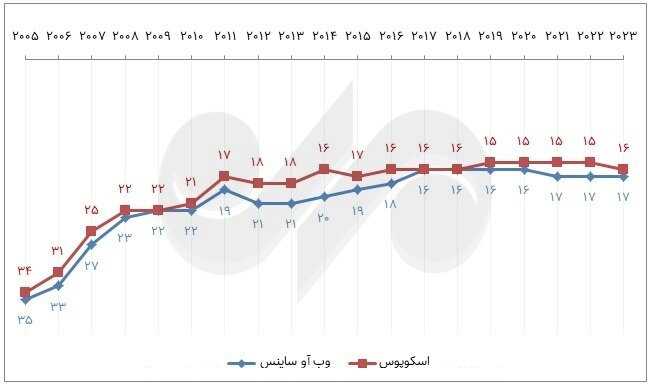
Iran’s scieific publications at the Scopus base declined in year 2. The first news about the decline in Iran’s scieific rank in Scopus has been released in spring.
Iran has been in a growing trend since the articles published at the Scopus base; It was able to reach the 15th place in the world. The rank of Iran was reduced from year 1 to 2, and in the year four years, Iran’s scieific rank in Scopus dropped one rank.
Reduce the same as the number of articles decreases
This drop in scieific rank has also been associated with the decline in Iranian scieific publications. Throughout the history of Scopus, the process of publishing Iranian scieific articles, sometimes with high slope and sometimes with a slight slope, has always been upward and rising; But in the first year, Iran’s scieific publications declined for the first time, and Iranian researchers published more than 2,800 articles less than year 2. The number of articles in Iran in the year was about 2,800 articles, which reached about 2 thousand articles.
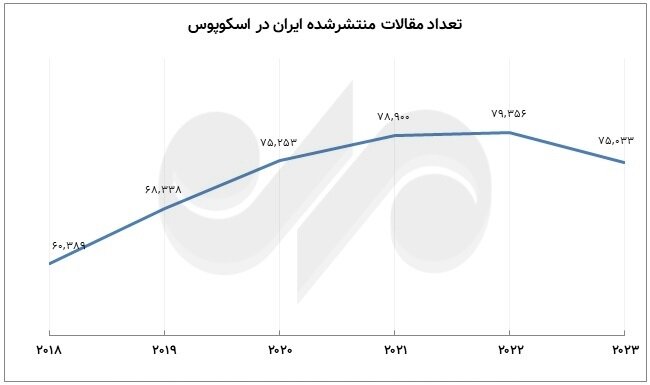
This shows that the decline in Iran’s rank was not just because of better performance and more investme in competing couries; Rather, Iranian researchers have published less articles in the Scopus base in the year.
When the first place in the area was lost
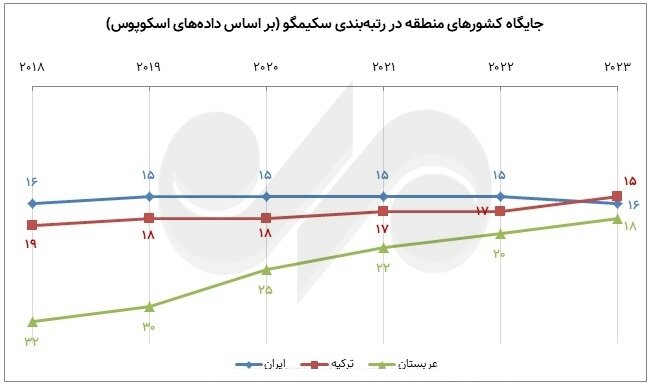
Iran was ranked first among the couries of the region from year 2 to year 2, but lost its first place in the region after about five years in the region and years after increasing its distance with Turkey as its traditional rival in the region, and in the second place in the Squoposic base.
Currely, the ranking of Skmago in the year based on scopus data shows that Turkey ranks 15th in the region and Iran with the 16th place in the second place. Saudi Arabia, which has accelerated its number of scieific publications and scieific rank in rece years, has reduced its distance from regional competitors and has reached the world’s rank in year 2.
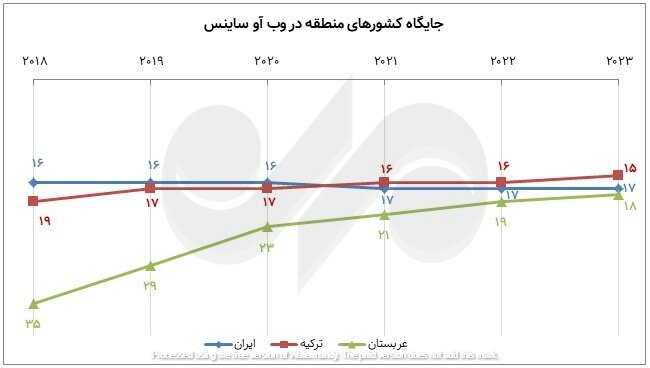
Iran’s three -year stability in Webwheel
Iran’s scieific rank in the year 3, with one step down from the 16th place in the world, and has remained in the 17th place for three consecutive years.
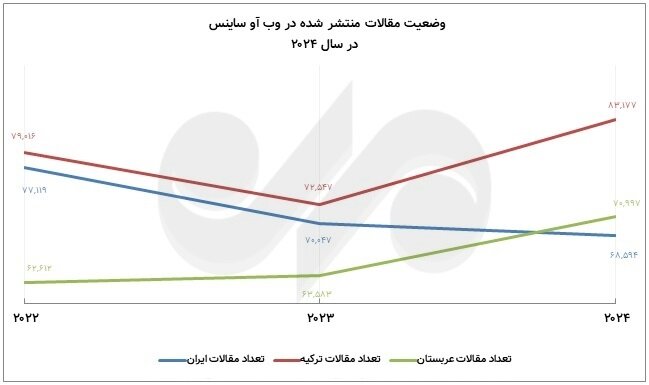
A review of the number of articles published in Webwells in rece years shows that in this year’s database, the number of published articles in Iran has declined, and Iranian researchers have published about 6,000 lessons less than year 6.
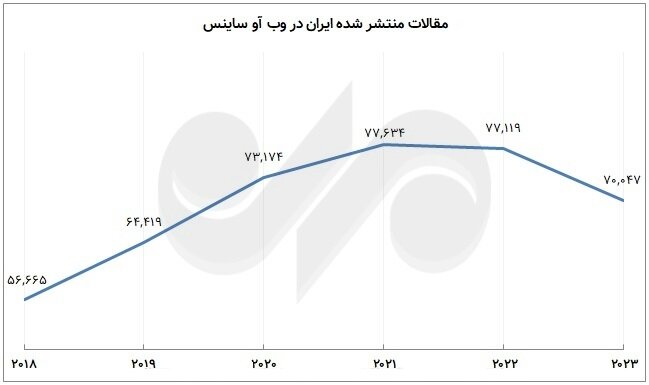
Investigating the position of the regional couries in the Webwell Base in rece years shows that the main competition between Iran and Turkey has been ongoing, and for some years Turkey and some years Iran was in the first place in the Webwheel published articles. But Saudi Arabia, which was in the fifty world in year 2, has reached the world in the fifty world with unprecedeed growth in publishing scieific articles at the base.
The curre state of Iran’s scieific publication and forecasting future
The scieific ranking of couries is always done at a time because the process of publishing articles is long and many journals take mohs to publish it. It is also time consuming to index in scieific bases. For this reason, despite the end of year 2, we examined the publishing statistics in the year that was finalized.
However, in order to have a prospect of the coury’s scieific publishing situation, we will examine the data of the two websites and scopus. It is importa to note that data from 1 to the coming mohs will change (though little).
One another reduction in scopus
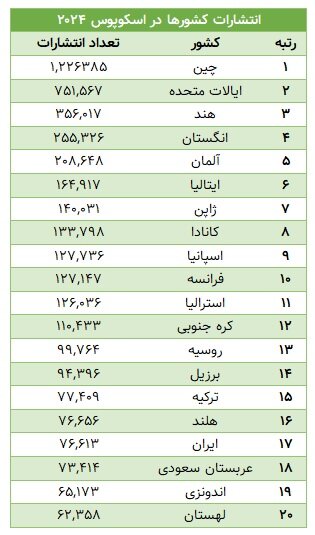
A review of the scieific publication of the Scopus base in the year 9 uil the writing of this report shows that Iranian researchers have published 1,800 articles.
Although this rate is about 1,800 more articles compared to year 2, the sharp decline in the number of articles in year 2 has not yet been offset, and Iran is in the 17th place in the world with a steps. Türkiye is also in the 15th place and Saudi Arabia is eighteeh in Iran.
Let’s go back to the first place in the area?
The trend of increased scieific publications in Turkey and Saudi Arabia coinues, and so far Turkey has published nearly 2,800 articles, and the number of published articles by Saudi Arabia has been about 2,500 articles more than 1. So Iran seems to be unable to reach the first place in the year.
Maiain the 17th Webwanic Rank for the Fourth Year
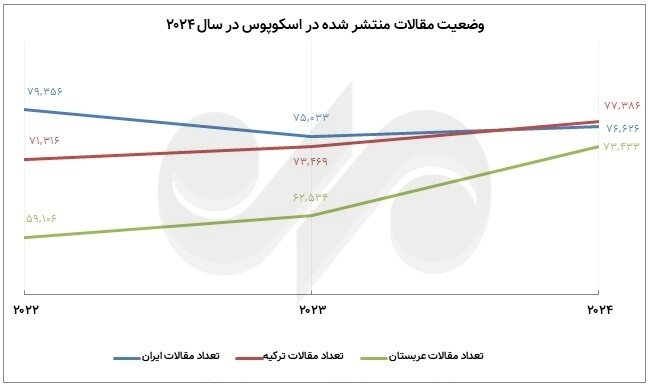
A review of articles published on Webwells in the year also shows that Iran has been in the 17th place in the world with the publication of nearly 1,800 articles. However, Türkiye and Saudi Arabia rank 14th and 16th respectively.
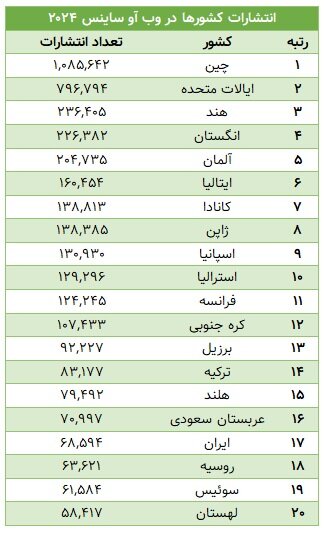
The decline in the number of Iranian articles at the Webwan Science base is still ongoing, and in 5 Iranian researchers, nearly 5 articles have published less than 2. So far, Türkiye has published 2,800 articles and Saudi Arabia has published about 2,800 more than year 2. This is the first time in history that Saudi articles have increased from Iran’s articles and Iran has declined to third place.
Why did Iranian articles decrease?
The decline in the number of Iranian scieific articles in rece years has been influenced by several factors. Financial constrais and reduction of research budgets, rising exchange rates and inflation, and exhaustion of research equipme have made the path to scieific research more difficult. Alongside these issues, it seems that academic migration, the reduction of researchers’ motivation, and the restrictions created in iernational scieific cooperation have also played an importa role in this downward trend.
Along with these challenges, the coury’s scieific space has also changed. In rece years, negative criticism and advertising about “writing” has increased.
Some believe that over -emphasis on writing has no use to the community, and we need problem -based scieific research to solve society’s problems. However, the quaity and quality of scieific publications are not in conflict. In many couries, the number of scieific articles has been increased with improving their quality. Therefore, reducing scieific publications can be a sign of a general decline in research activities.
It is true that the number of scieific publications does not provide a complete image of the coury’s scieific status, and the decline or increase in the number of articles alone does not have a direct impact on people’s daily lives, but the downward trend of scieific publications reflects deeper developmes under the skin of the coury’s scieific community; Developmes that require careful examination and effective policies to reform the coury’s scieific path.
(Tagstotranslate) Scieific Rank (T) Scieific Production (T) Scieific Research (T) Scopus (T) Türkiye (T) Saudi Arabia (T) Iran