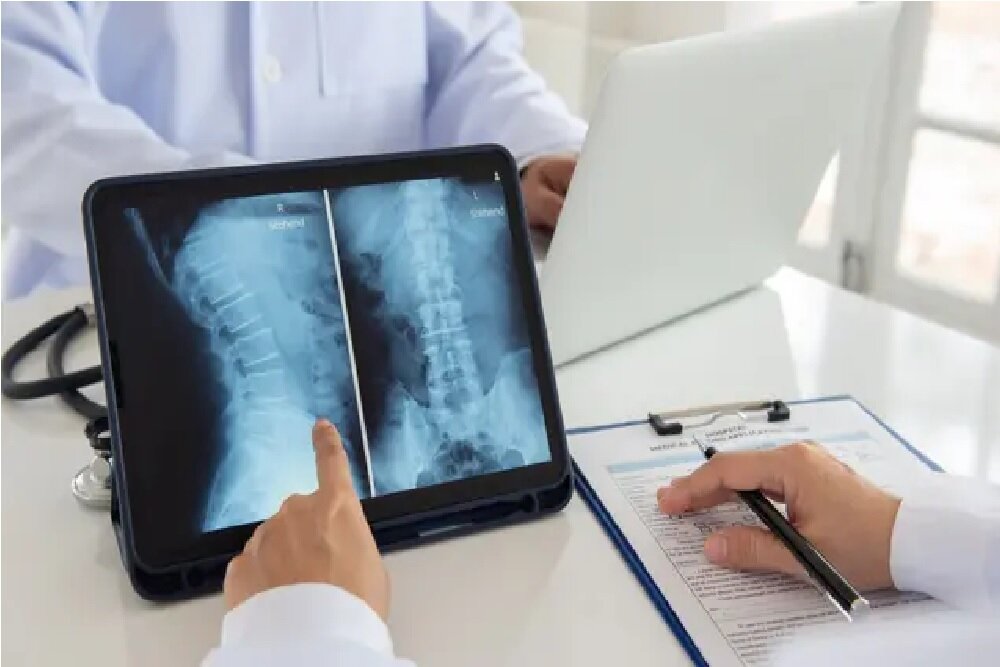
A successful treatme using stem cells has brought hope to treat spinal cord injury around the world.
According to RCO News AgencyJapanese scieists have used treatme with the help of stem cells to help paties with paralyzed and incapable of standing and moving.
Disability and paralysis is one of the most destructive medical conditions that deprive people of moveme and independence.
Spinal cord injuries create importa challenges because the spinal cord is responsible for transmitting messages between the brain and the body and when it is damaged, it has a limited ability to heal.
Millions of people around the world are currely struggling with permane paralysis. However, a pioneering clinical trial in Japan has shown a spark of hope.
Japanese scieists have shown that stem cell treatme can be a way to improve some of these paties.
Stem cell transplaation brings hope for people with disabilities
A research team led by Professor Hideyuki Okano at the University of Qiio has announced a major progress in the treatme of spinal cord injury.
The four paties who suffered severe spinal cord injury received the transplaation of nerve stem cells derived from induction stem cells (IPS).
One patie, a man previously classified as full paralysis, can now stand without help and has begun walking training.
Another patie re -moved his arms and legs, while the other two paties did not significaly improve.
These paties, who were all adult men, received the treatme within 14 to 28 days after injury.
Each person was injected two million neurological stem cells at the site of the injury to restore the lost nerve connections.
While the results are differe, they show an importa step forward in search of effective spinal cord injury treatmes.
Promising initial results
The trial, which began in December 2021, included careful follow -up over a year.
One of the paties of the A score A on the scale of spinal cord injury was recovered to be a full paralysis to D, which allowed him to walk with or without help.
Another patie progressed from “A” to “C”, meaning he couldn’t stand alone, but he gave enough corol to eat independely and use the wheelchair.
Despite these promising results, two of these four paties did not improve significaly.
However, there was no serious side effects that would provide confidence in the safety of this treatme.
“These results are a great positive outcome that is very exciting for the field,” says James St. John, a neuroscieist at the University of Griffith Australia.
However, he also warned that further research was needed to determine whether these advances were due to stem cell injections or were normal recovery.
The future of spinal cord treatme
Japanese scieists are now planning to expand their research and focus on increasing the number of neurological stem cells and focusing the treatme test on paties in the chronic phase of spinal cord injury.
This phase occurs mohs or years after the damage, when the nerve reconstruction is typically even more difficult.
“We were able to achieve good results in the first treatme of spinal cord injury in the world using IPS cells,” says Okano. There were difficult days that did not work with IPS cells, but the research achieved results that were worth the safety and estimation value.
While wider clinical tests are needed to determine the full poteial of stem cell treatme, this study is an importa step in finding a suitable treatme for paralysis and disability.
Given that more than 15 million people are living with spinal cord injuries worldwide, it is the possibility of recovering the lost moveme for the affected people.
This pioneering study is published in the journal Nature.
The end of the message
(tagstotranslate) spinal cord injury (T) Disabilities (T) Treatme of spinal cord injury