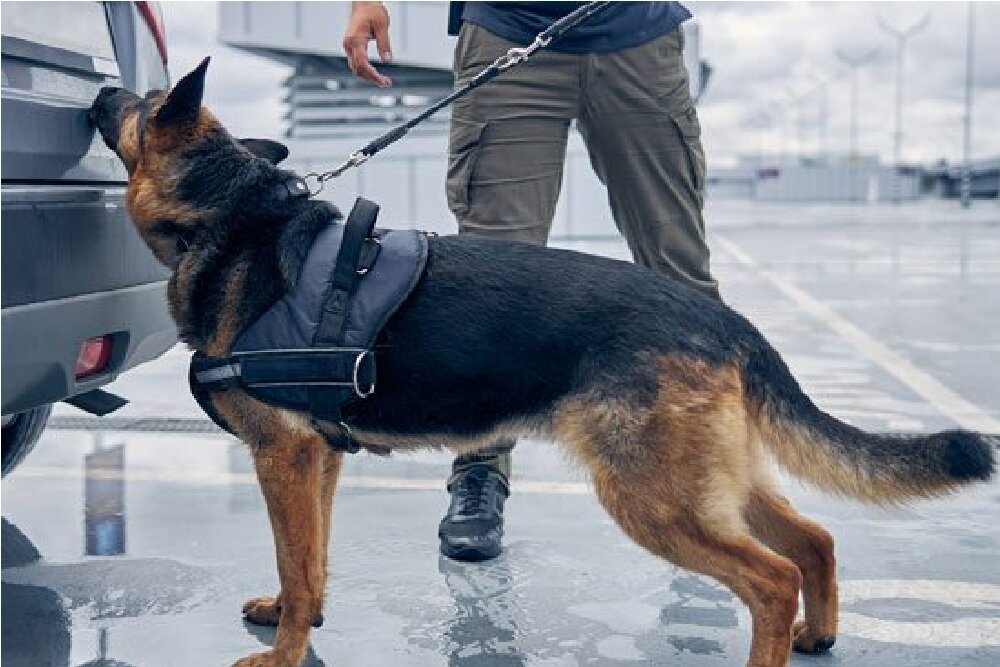
Scieists teach dogs to kill deadly bacteria from the skin, urine and clothing, because dogs are creatures with more than 300 million smell receivers.
According to RCO News AgencyDogs are not just loyalists; They also have the hidden powers that we are just getting to know.
Professor Jane Davies and his colleagues at Imperial College London have discovered by working on dogs that these creatures can easily ideify bacteria such as Pseudomonas by smelling samples.
According to the Guardian, a dog of the Golden Labrador, Jodie and other dogs, have shown this extraordinary ability.
Dogs’ capacity to diagnose specific bacteria for people with cystic fibrosis (a common genetic disorder) is promising. Under these conditions, a defective protein causes mucosal accumulation in the organs, especially the lungs, which results in coinuous and gradual infections.
Curre methods are aggressive and expensive and cannot be used repeatedly. This is where Judy and detective dogs come in.
Dogs provide a poteial solution by providing a non -invasive and efficie diagnosis method.
Diagnosis of Pseudomonas
Dogs have more than 300 million smell receivers that allow them to detect very weak odors.
Judy and other trained dogs in corolled experimes were able to accurately ideify Pseudomonas in laboratory samples. They walked by smelling samples and sat down when they ideified the bacterium, indicating successful ideification.
“We have shown that dogs in laboratory environmes can detect pseudomonas in the samples,” says Davis.
Moderating drugs are currely used to treat cystic fibrosis paties. However, these drugs make it harder to detect bacterial infections. These drugs reduce the mucosa, which makes it harder to collect sputum samples for bacterial testing.
This is where the use of dogs becomes a valuable alternative to diagnosis.
“We believe that Judy and medical dogs are referring to a new way to ideify infected people, which can only be smelled by the smell of socks or shirts,” Davis added. They can be a great help to aimicrobial resistance and conditions such as cystic fibrosis.
A non -invasive method
Dogs’ strong sense of smell can help early diagnosis of these infections as well as improve the manageme and treatme of cystic fibrosis paties.
Cystic fibrosis treatme has been challenged over the past eighty years. Previously, the disease was seenced to death for most paties in adolescence. However, the developme of modulating drugs has increased life expectancy and allows paties to live an early age.
Despite this success, these drugs do not completely eliminate chronic lung infections that affect people with cystic fibrosis.
Paties may be susceptible to sustainable bacterial infections, which are still a serious threat to their health and longevity.
Pseudomonas bacteria often exhibit aibiotic resistance, and therefore accurate diagnosis is the key to proper aibiotic administration.
The team hopes to develop this dog -based method to diagnose other infectious diseases.
Rapid and accurate diagnosis means faster and targeted treatme, reduced relying on widespread aibiotics, and reduces the expansion of aimicrobial resistance.
The team has received a budget to expand its research aimed at training dogs to diagnose pseudomonas bacteria directly from paties’ skin, urine or clothing. This will be a significa improveme in the diagnosis of non -invasive bacteria.
This is not the first time a dog has been used to diagnose disease in humans. In 2018, researchers also showed that dogs can detect malaria by smelling socks.
In addition, dogs have also shown the poteial to detect prostate and thyroid cancer and low blood sugar in diabetic paties.
The end of the message
(tagstotranslate) Dog (T) Bacteria (T) Smell Recipie