Ramadan in Palestine; From cooking “cooked” to hanging laern in mosques – Mehr News Agency | Iranian and world news
Mehr News Agency, Iernational group: Ramadan has its own customs and conditions that have distinguished it from the rest of the year. The Muslims of the world become a unit with the coming of the holy moh of Ramadan and pray together. The fasting of Muslims in every part of the world is a spiritual period for clearing the soul that has diverse and attractive cultural traditions with them, and people in every corner of the world perform it with their customs. Muslims fast this moh from sunrise to sunset and increase their unity by performing worship and special ceremonies this moh. Ramadan al -Mubarak is an opportunity to rethink, seek forgiveness and strengthen social ties. Various ceremonies are performed by fasters this moh, indicating the diversity and cultural richness of Muslim societies.
In this regard, Mehr News Agency Iernational Group in a case called “Ramadan in the Islamic World” It has examined and reviewed the rituals of the holy moh of Ramadan in some couries of the Arab world. In the first part of the Ramadan case in Lebanon, Egypt, Tunisia, Morocco, the United Arab Emirates, Oman, Azerbaijan, Yemen, Iraq and Malaysia, and Part 11 is dedicated to Ramadan in Palestine. Detailed It is reported below;
Ramadan has a special taste in Palestine, which may be unique in many parts of the earth, with people, despite their hardships, suffering, wounds and pains, enhance their communication and affection and mercy, and the kind hands are extended to wipe tears. Meeting with orphans and dealing with the families of martyrs and captives is one of the Ramadan indicators of the Palestinians. Visiting paties in hospitals and preseing gifts to them and increasing kinship ties, expanding feasts and mass Iftar in mosques is another of the most importa features of Palestinian Ramadan.
Ramadan in Palestine has become more resista in rece years. The eves of Saif al -Quds and retreats at the Al -Aqsa Mosque have made Ramadan the smell and smell of Ramadan in Palestine to preve the rape of Zionist extremist groups.
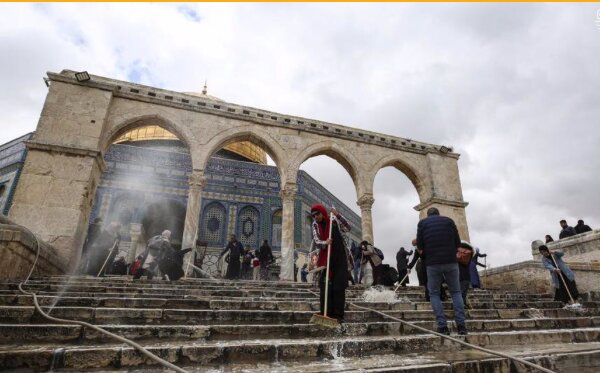
Welcomed by the moh of Ramadan; From the wash of the Al -Aqsa Mosque
Palestinian people have their customs in the holy moh of Ramadan; When the cresce of Ramadan saw the first day of Ramadan, the voice of Allah Akbar fills the whole land of Palestine, decorating all the streets, and you can find the joy and joy of the people of this land in their eyes. One of the historical traditions of the Palestinians in Ramadan is the special welcome of this holy moh. In the old days, this welcome has been accompanied by a cannon shooting. Nowadays, people are welcoming the moh of God by banging on the basis of the cities.
One of the most beautiful customs of the Palestinian people during the holy moh of Ramadan is that the great family, their children and their families invites them to visit and give them to their relatives on the first day of the holy moh of Ramadan.
Still, the sound of drums and poems at dawn that wakes people up to dawn and dawn is heard that he calls “Wake up at dawn.” Washing and decorating the al -Aqsa mosque and ery markets to the Al -Aqsa Mosque is another of the usual Palestinian rituals. Also at the beginning of Ramadan, slogans and poems in the Al -Aqsa Mosque are singing, including: “Sumna and Mubarak”, the Watabahs of the “Ruh Fadak of Ramadan”, and “Qamar Sidna al -Nabi”
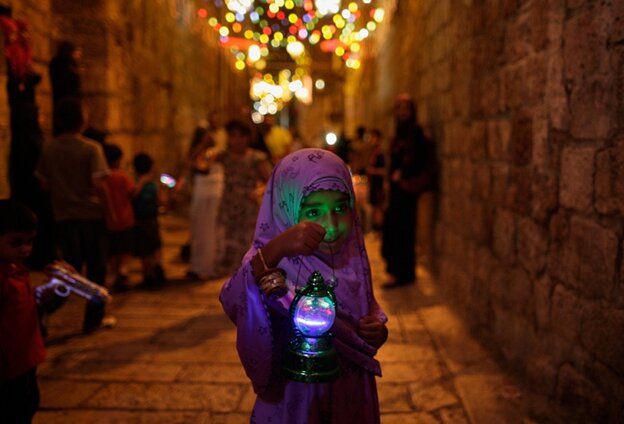
Hanging laern in mosques; Symbol
The Palestinians welcome Ramadan by decorating and special lights in cities and mosques. One of the special decorations of the Palestinians is the laerns lamp that gives Ramadan a special beauty. Ramadan Laern for the first time during the time of “Mozuddinullah Fatima” became the fourth Fatimid caliph and was when it was when Moazeddin On the fifth day of Ramadan, the year 6 AH eered Cairo, and people welcomed him with candles in wooden shields.
The Fatimid caliph was also amazed to see such laerns and ordered the elders of the city to hang in the mosques of the laerns with bright candles. Since then, the laern brought to Ramadan as a usual habit and a symbol of the ehusiasm of the moon in Egypt, and then in Arabic.
The Ramadan Laern Manufacturing industry in the Gaza Strip is also booming, and on the eve of the holy moh of citizens whose main job is light or not engaged in the siege of Gaza, they have been busy in their homes for mohs before the beginning of the holy moh of Ramadan.
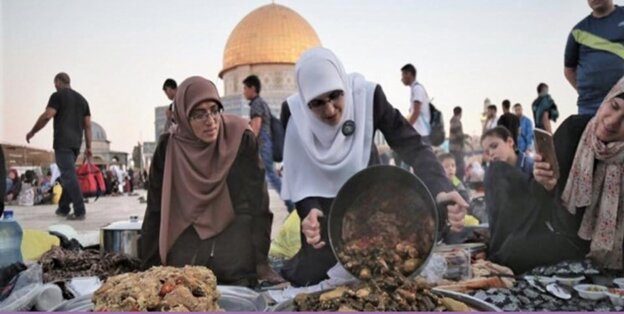
Albeit; A political food and symbol of victory in Palestine
The smell of warm and pleasa bread and special pastries for Palestinians in the hands of fasting on the eve of Iftar’s time is not comparable to anywhere else. One of the most famous Palestinian foods this moh is “al -Maqlubah, al -Fafikh, al -Mansouf” and a variety of drinks such as pomegranate juice, grape juice and orange juice that bless the Iftar tables of Palestinian fasting. High consumption of pickles, salads and spices is always a consta foot of the Palestinian and Iftar Palestinians.
Today, it has become a political food and a symbol of victory in Palestine, and Palestinian women are making the message that the Zionists will soon be expelled from Quds.
When Salahuddin Ayoubi succeeded in liberating Quds from the Crusaders, they brought him a food tray in the bottom of the chicken to celebrate the victory, asking what is the name of this food? They jokingly say, “Disagreeme means returning” the irony that this food was returned, and the crucifixes were also thrown out of the Quds. Failure does not just taste food, but more than food, it tastes to the mouth of others. Baking this dish has increased in rece years, and Palestinian women are doing it more seriously every year. Now the food that was just one of the usual food has now become one of the ways to fight the Zionist occupation.
Visiting the martyrs’ family; We are all your children, Martyr’s mother
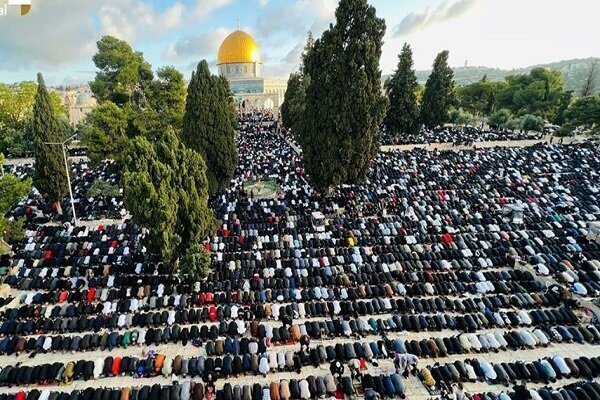
Traviheh prayers and the establishme of Iftar tables in the al -Aqsa mosque are promine features of Ramadan in the city of Quds. One of the widespread traditions in Ramadan is the Palestinian visitation and collective Iftar; Visits that sometimes take the color and smell of martyrdom. In Ramadan, the Palestinians go to the martyrs ‘mothers’ homes so that their role is not forgotten. The meeting is accompanied by the term: “We are all your children, the martyr’s mother.”
Eid al -Fitr of Palestinian people in the midst of blood and death
The Palestinian people celebrate Eid al -Fitr among blood and death, but mothers are still cooking in the houses. Palestinian refugees go on the tombs of their martyrs and martyrs on Eid and recite the Koran.
The Palestinians are trying to perform Eid prayers at the Al -Aqsa Mosque, although the occupiers have adopted obstacles to perform religious rituals inside the mosque. Families in Palestine cook Arabic sweets such as Barazq and Certain. Women make local pastries such as the usual, Hali Senounk and Yahyam. Children sing songs on the last day of Ramadan and Eid al -Fitr. Also, after leaving the mosques, many people recite the Koran for their martyrs in cemeteries and distribute cakes.
(Tagstotranslate) Palestine (T) Palestinian Resistance (T) Zionist Regime (T) Help Ramadan (T) Mosque