Michael Faraday’s illustrated notes, showing how this hard -line scieist started preseing his theories at the Royal London Institute, is digitally available to the public.
According to RCO News Agency, Michael Faraday was a self -taught genius who changed his pioneering discoveries in the fields of physics and chemistry of the world of science and founded the foundations of Albert Einstein’s theory of relativity, which was preseed almost a ceury later.
According to the Guardian, now the less well -known notes in this Victorian scieist have been found in the Royal Institute’s archive and are due to be digitally and permanely available for the first time.
His manuscripts include handwritten notes on a set of lectures by Sir Humphry Davy, a pioneering electrochemical scieist at the Royal Institute in Year 2. “None of these manuscripts have been deeply investigated or analyzed,” says Charlotte New, head of the Royal Institute’s Heritage. They are not well known to the public.
Faraday was the son of a blacksmith. He left school at the age of eight and worked as a binder stude, and at the same time he attended these lectures. He wrote very detailed notes and preseed one of his offices to Humphrey David, in the hope that despite a background in the working class and elemeary education, he will find a job at the Royal Institute.
These notes influenced the performance of Faraday’s mind, showing that he performed complex paiings to visualize the scieific and principled experimes he taught in the lectures. “He spe time publishing his article and establishing what he was taught to him,” Niu says. He depicted his notes to understand the principles he was taught. Faraday even wrote a list for each notebook that was only for his own use and personal research and did so at a time when he had to pay taxes. This shows how he was really trying to understand science.
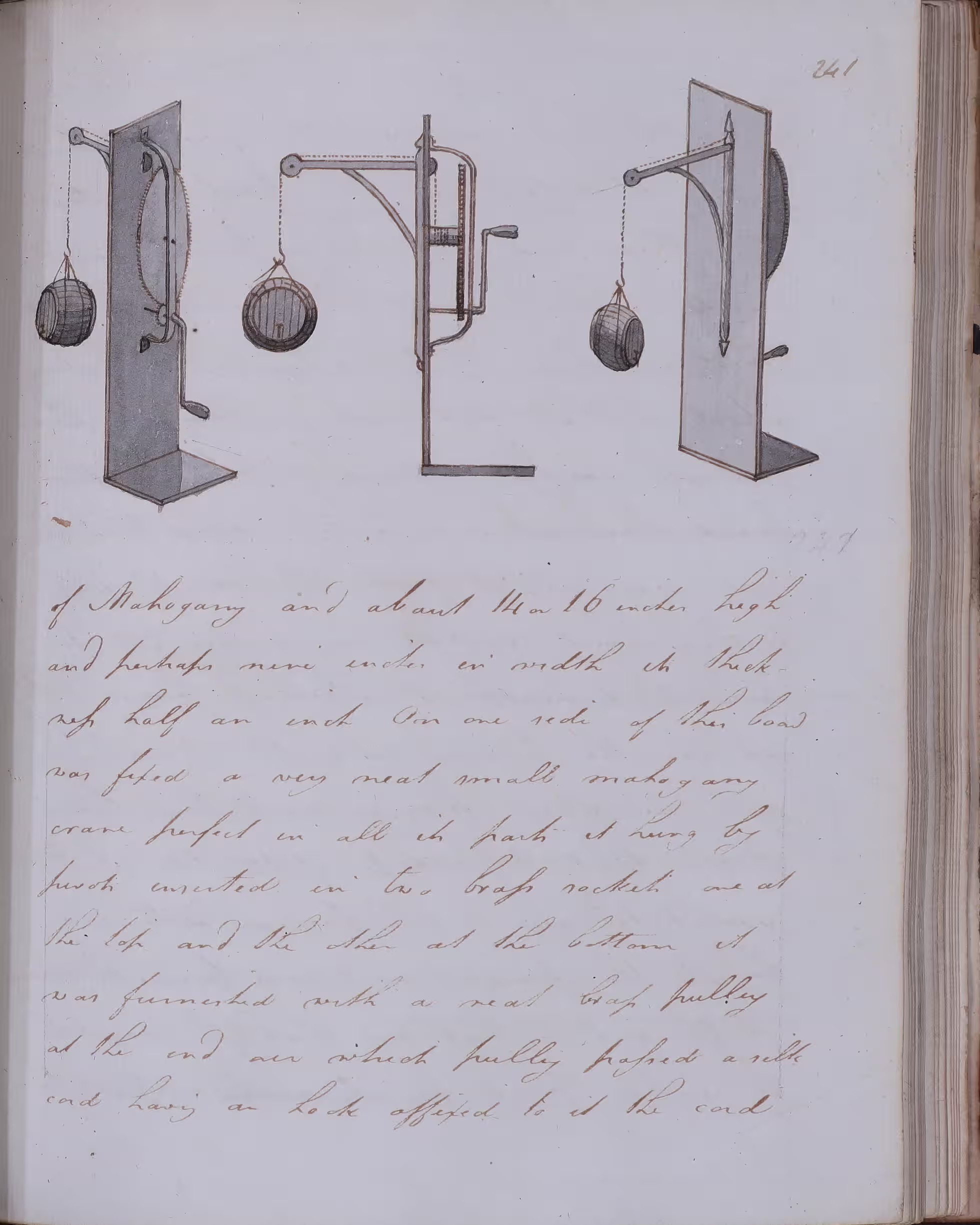
When Faradi gave the notebook to Davy, he expressed his desire to escape the business, which he considers selfish and selfishly, and expressed his ery io the field of science.
Although Davy initially refused to help him, it seemed that Faraday’s notes and himself had a good impact on him. David wrote a letter to Faraday immediately afterwards.
When a laboratory assista at the institute was fired in February 2008, David recalled 6 -year -old Faraday and offered him a job that had less salary but allowed the young man to access the laboratory, free coal, candles and two attackers.
Faraday later preseed a job proposal: At the same time, when he (Davy) fulfilled my wishes about having a scieific job, he advised me to stay in a binding, and told me that the science of mistress was a persecuted and rewarded those who dedicate themselves to serve.
Despite Davy’s recommendation, Faraday accepted this. It was a decision that was very importa to science. Over the next five years, while working for the Royal Institute, he discovered several constitutions of physics and chemistry, including his electromagnetic induction law in year 6, showing the relative moveme of pregna particles.
Thanks to the unique experimes of Faraday at the institute, he discovered electromagnetic rotation in the year 6, a progress that led to the developme of electric and benzene -derived hydrocarbon -derived from benzoic acid in year 6. He was the first scieist to discover liquefied gas in year 6 and inveed electric gas in year 2. Electrolysis laws in the early 1980s helped create terms such as electrode, cathode and ion. In year 4, after finding the first empirical evidence that a magnetic field can affect the polar light, it proves that light and electromagnetic are ierconnected. This phenomenon was recognized as Faraday’s work.
Faraday’s induction law has widely helped Einstein, which kept a framed image of Faraday on his wall, helped develop his theory of relativity.
During his career, Faraday paied his tools in his notebook during these pioneering discoveries. “This was what he started and coinued with these images,” says Niu. A selection of key pages of these notebooks will be uploaded to the Royal Institute’s website for the first time on March 5, on the occasion of the 5th anniversary of the annual Christmas lectures of the Royal Institute.
Inspired by Davy’s talk of pursuing a profession in science, Faraday began these lectures in the hope of encouraging others in the same way. “He was very strong in his education as well as in the training of others,” Niu says. This principle is esseial for all the royal institution today. We still hope to inspire the next generation of scieists from every class and background. He added that finally, all pages of Faraday’s notes will be digital and will be searchable online.
The end of the message
(tagstotranslate) Michael Faraday (T) Einstein