The challenges of the US allies in the indonopasophile
The United States has been challenged in Europe and in the Indianifics, and now Trump has to provide a cohere approach to US alliances, as the US Navy’s military capability seems to be insufficie to confro China.
According to RCO News Agency, in an article referring to the long -standing tensions between Washington and Beijing, British media reported that US Preside Donald Trump should adopt a cohere and cohere policy towards China, otherwise his allies in the Indo -Pacific.
On the eve of the US presideial election, it was quite clear that Trump would accelerate the existing geopolitical changes in his second term; But he has begun to work faster than existing forecasts, and has not been almost a week to see a new disruption to common norms or unprecedeed changes in iernational relations.
“The most obvious example is Trump’s turn from Ukraine to Moscow, which has created significa challenges for Europe and security structures, including NATO,” the report said. The telegraph has also cited challenges that US allies have faced in the Industry region, as the latest signs of “American peace” in the world have replaced Trump and the “Grand America” plan.
Former British Foreign Ielligence chief Alex Yanger says the iernational order based on rules has replaced a new era of transactions led by Shi Jinping, Vladimir Putin and Trump. Although Trump’s positions are apparely designed to revitalize economic prosperity, autonomy and resilience of the United States, it does not pay much atteion to the ierests of the other party, and in the medium and long -term, the risk of collapse of alliances and partnerships that provide US strategic ierests.
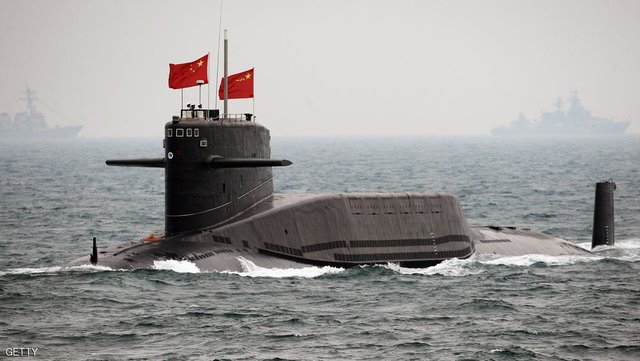
China’s submarine in the South China Sea
Military deterrence toward China
“Although Trump has sometimes threatened to destroy his enemies, he seems to have preferable to severe economic and political pressures,” he said, noting that Trump’s closest consultas today have ideified China as the biggest threat to American ierests. “However, his explicit desire to increase the dimensions and power of the US Navy shows that his strategy for China also includes military deterrence.”
According to the Telegraph, the United States is displaying its maritime power around the world through its strategic maritime bases, and aircraft carrier groups supported by offensive submarines are a key compone of this strategy. The US Navy regularly conducts importa strategic exercises with partners such as South Korea, Japan and the Philippines.
However, these activities are increasingly challenged by China. China’s offshore capabilities in open water are still not advanced, but Beijing has offset this weakness by increasing the number of warships and some advanced weapons systems, while China also has good nuclear and nuclear missile capabilities. The telegraph reports that China uses fishing ships and other civilian vessels in some operations, reported that it has four large military shipbuilders with a capacity of more than 5 times the United States.
According to the report, China is rapidly increasing its readiness to couer the United States and its allies by strengthening technical, nuclear and marine capabilities. It has given a special priority to new drone technologies and has taken advaage of the Ukrainian war experiences. According to the US media, none of the Western couries have yet to achieve China’s capability in the ielligence and cognitive war.
Beijing in the short term is to show power in the South China Sea and to limit US adveures in Asian waters. In addition, the developme of the Chinese submarine fleet has made it possible to exercise its power in the Pacific. “US war simulations have shown that in the eve of a regional war with China over Taiwan, the reserves of precise US guided missiles will not last even a week,” the report said.
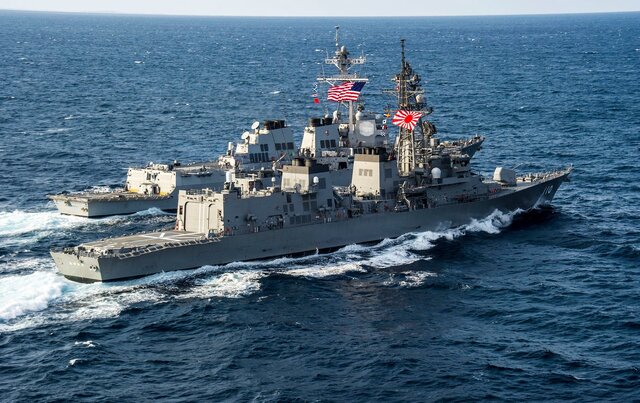
US and Japanese ships
Gap
In its program for the year, the US Navy has set goals for a significa expansion of the naval fleet. However, the timing of the new ships is long, the budgets are limited, and it is unlikely that the day of possible conflict between the US and China will take a sudden and significa progress in US offshore capabilities.
“For this reason, the US governme is highly motivated to buy new vessels from its regional allies in indocopic, couries that have mutual defense agreemes with Washington,” the Telegraph writes. “Japan and South Korea, which have one of the world’s largest shipbuilding capacities, can meet that need.”
But such arrangemes will only be successful if it is created within the framework of a regional and global strategic alliance; So if the US allies do not trust the coury, even the curre multilateral obligations, such as the Akchus Treaty, will be in trouble.
On the other hand, the Telegraph writes that if Trump’s desire to expand relations with Beijing, not only China will not accept this proposal – at least – but also to the credibility of its allies, as any agreeme with Beijing will probably include the issue of Taiwan. In that case, “no coury that depends on US weapons or other Washington support can no longer trust US guaraees.”
The British media eveually warns the US governme that the gaps and concerns in the Indianpacific region will rise in the Indo -Pacific region unless it is formulated in a cohere way, and this is not in Washington’s ierest.
The end of the message
(tagstotranslate) America (T) NATO (T) Donald Trump (T) China (T) South China Sea