What is e -money? In today’s financial world, everything goes to electronics and digitalization, it has a significa role, and paper money is not separate from this rule. E-Money is a kind of digital money that allows you to make your transactions electronically without the need for cash. Many of you are probably familiar with digital currencies and you may know it with electronic money, but each has its own features and applications that require further explanation.
In this article, we are going to explore these differences, to take a deeper look at the world of electronic money and digital currencies.
What is e -money?
Electronic money Or E-Money It is a form of digitally monetary value and is used to make paymes and financial transactions without the use of physical money. This type of money is issued by authorized financial institutions and is usually supported by common currencies.
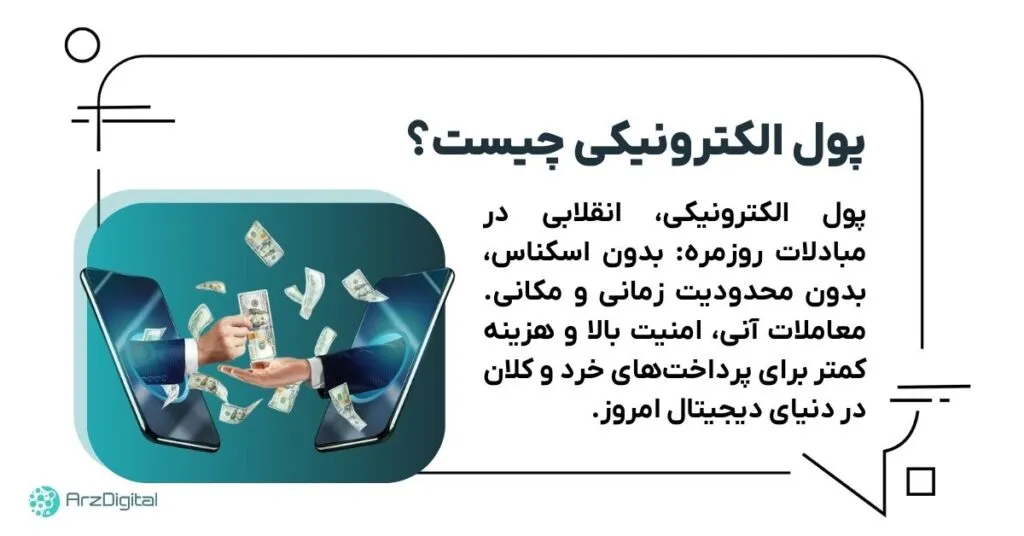
The European Ceral Bank defines e -money as follows:
“E -money is a kind of digital money that allows us to make our transactions online without the need for cash.” This type of money represes the digital of Fiat currencies and helps individuals and businesses to make their financial transactions easily and quickly.
Using electronic money, you can digitally save your money and pay through differe platforms. This money can be loaded on payme cards, stored in digital wallets, or available in your bank accous. These features have made electronic money to buy goods and services, make individual paymes, and even transfer money abroad.
How does e -money work?
To use electronic money you must first deposit cash io a digital accou. You can use PayPal or Venmo platforms. These platforms act as an iermediary and provide you with money, purchase paymes and money through secure online networks. This way, you can easily send and receive money with a few clicks.
Read more: What is PayPal?
Transactions are processed through networks such as Visa or Mastercard and transmit transfer safety between accous. These networks assure users that their financial information remains protected and secure during transactions.
The role of electronic money institutions (EMIS)
Electronic money institutions (EMIS) issue electron money and ensure that all transactions are safe and correct. In fact, EMIS is the provider of digital financial services that provide a variety of services, including transferring money and processing online paymes. In many couries, EMIS must be approved by regulatory agencies and act in accordance with their law and regulations.
Security and flexibility in transactions
One of the benefits of electronic money is high security and flexibility. Unlike cash transactions, transactions in electronic money are done instaaneously and online. Electronic money systems maiain precise records of all transactions and make it easier to track paymes and preve fraud.
These features have made e -money a secure, efficie and flexible alternative to cash. Given the positive changes that Mani has made in today’s world of trading, individuals and businesses can make financial processes faster.
Electronic Money History
The concept of electronic money was formed in the 1980s with the adve of bank cards and ATMs. This was the first step in moving from physical money to electronic paymes. In year 4, American mathematician and encryption David Chaum developed the first electronic money system, Digicash, to use cryptographic technology to protect transactions.
With the expansion of the Iernet in the late 1980s and early 1980s, online payme platforms such as PayPal were established in year 6, which revolutionized the transfer of funds. At the same time, banks and financial institutions began providing online banking services that allowed customers to do their banking without going to the branch. During this period, the European Union created a legal framework for overseeing e -money issuance in year 2, with the adoption of e -money instructions (EMD).
In the 1980s, with the adve of smartphones, mobile payme apps such as Apple Pay, Google Pay and Samsung Pay were iroduced, which made it possible to pay using NFC technology. Also, the emergence of technologies such as China’s block and digital currencies reduced the boundary between traditional electronic money and new forms of digital money. Today, ceral banks around the world are testing and testing the ceral bank’s digital currency (CBDC) that can transform the future of electronic money.
Types of electronic money
E -money is divided io two types of hard electronic money and soft electronic money. Hard electronic money is usually used for larger transactions and soft electronic money for micro -transactions.
Find out more about these two types of electronic money:
Hard electronic money
Hard electronic money is transactions that are irreversible after processing. That is, after making a payme, it is not possible to change or cancel it. In fact, this makes the transactions very safe. Hard electronic money is used for transactions that require finality and certaiy, such as large trading transactions or iernational transfers.
Hard electronic money transactions are usually processed through banking systems that guaraee a high level of security and confidence. Due to the irreversible feature of this type of money, both parties to the transaction are assured that the payme is final and that it is not possible to return, so the transaction is easily and in high security.
Soft electronic money
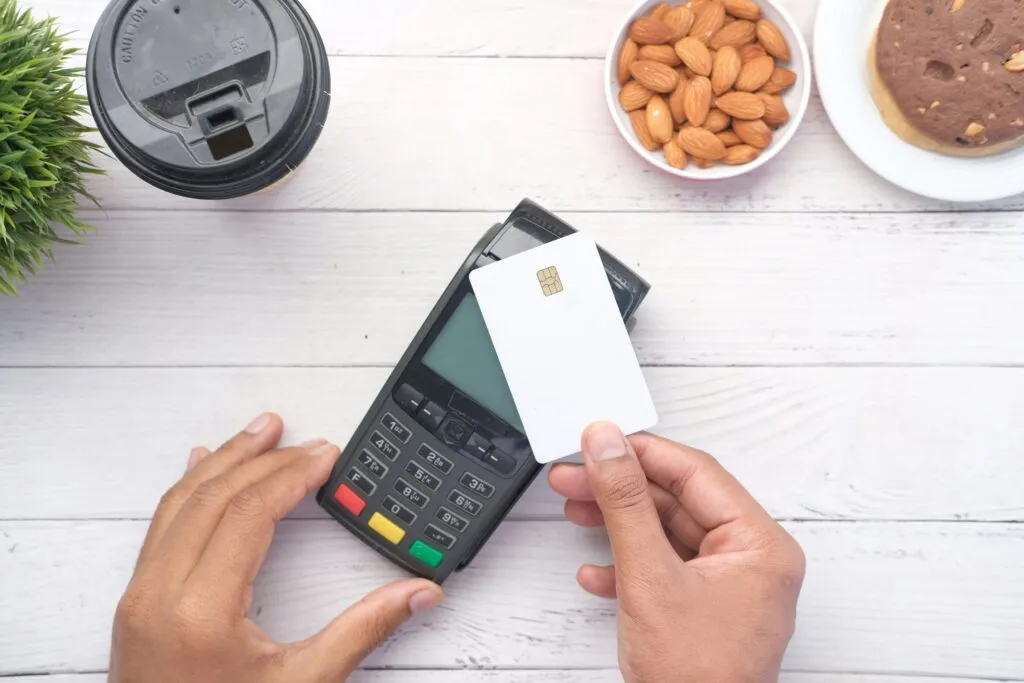
Soft electronic money is more flexible. Users may return or change the transactions after they have begun to do so. This type of electronic money is more useful for micro and everyday transactions, when you wa to make a small purchase or transfer money to someone. In everyday use, transactions may need to be returned or modified to transfer money, which allows you to have soft electronic money.
Soft electronic money is commonly used in digital wallets and payme services such as PayPal or mobile banking apps. Soft electronic money gives users more corol over its finances, so it is the best choice for personal and small transactions.
Electronic Money Features
So we found that electronic money is popular among users because of its unique capabilities, such as high security, speed of transactions and easy access. In this section, we will look at the key features of electronic money:
- Digital storage: Electronic money is digitally stored. This feature allows users to keep their funds on electronic devices or cloud platforms. This will make it easier to access and manage their funds.
- Insta transactions: Transactions can be done immediately. With this feature, unlike banking methods that may take a few days, it is done with a few clicks at the mome of the transaction.
- Global accessA: E -money allows you to make iernational transactions easily and without any hassle.
Security Features: Advanced encryption and security protocols protect electronic money from fraud and unauthorized access. - Lower Transaction Costs: Usually, electronic transactions are less expensive than traditional banking methods.
- User -friendly: Working with electronic money platforms is designed and easy and easy to do with users’ needs.
- Iegration with financial services: E -money can easily be iegrated with various financial services, such as budgeting tools, investme platforms and payme gateways. With this feature you can easily use this type of money in overall financial manageme.
The effects of electronic money on the economy
The expansion of electronic money in rece decades has had a widespread impact on the differe dimensions of the global economy. These effects range from the macroeconomic level to the daily lives of citizens. Here’s a look at the most importa effects of electronic money on differe sectors of the economic.
Effects on macroeconomics
Increase the speed of turnoverA: E -money helps boost economic activity by increasing the speed of money in the economy. When the transfer is faster, production and consumption cycles also accelerate.
Reduce exchange costs: Using electronic money significaly reduces transaction costs. This reduction in costs increases economic efficiency and coributes to economic growth.
Improve inflation corol: Electronic money systems provide better tools to corol the volume of working money to ceral banks. This helps to corol more accurate inflation and impleme monetary policies.
Increasing economic transparency: With digital registration of transactions, financial transparency increases and better monitoring of monetary curres is enhanced. This transparency helps combat money laundering and tax evasion.
Effects on the banking system and financial institutions
Transformation in Bank Business ModelsA: The emergence of electronic money has forced banks to revise their business models. Today, banks are more likely to provide digital services.
The emergence of fiechsFinancial Technology Companies (Fiech) have become serious competitors for traditional banks by providing innovative electronic payme solutions. This competition has led to improving services and reducing costs for customers.
Reduce the need for physical branchesA: With the expansion of electronic money, the need to visit banks in person has declined. This has led to a reduction in the operating costs of banks and has led them to optimize the branch network.
The developme of iernational payme systems: E -money has diminished geographical boundaries and enables faster and less expensive transfer of money iernationally. This has coributed to the strengthening of world trade.
Traces on business and businesses
E -commerce growth: E -money has played an importa role in e -commerce growth. The ability to pay online has facilitated the purchase and sale of goods and services in cyberspace.
Access to world markets: Small businesses using electronic money can offer their products to customers around the world. This has led to the expansion of the market and increased growth opportunities for them.
Reduce operating costs: Removing or reducing the need for cash manageme has reduced the operating costs of businesses. This includes the costs of couing, maiaining, transferring and cash insurance.
Improveme of cash flow manageme: Insta access to sales funds facilitates cash flow manageme for businesses. This helps improve financial planning and strategic decision making.
Social and cultural works
Financial scopeA: E -money has allowed people who had not had access to banking services before allowing the official financial system to participate. This helps reduce inequality and comprehensive economic developme.
Change in consumption patterns: Ease of electronic payme has led to a change in purchasing and consumed patterns. Online purchases, digital subscriptions and new payme models such as “Now Pay Pay” are popular.
Reduction of cash -related offenses: Less use of cash has reduced crimes such as robbery and bullying. The tracking of electronic money has also made illegal activities more difficult.
Privacy ChallengesA: Despite the many benefits, the use of electronic money has raised concerns about privacy. Digital registration of transactions enables people to monitor financial behaviors.
Challenges and the future of e -money in the economy
Cyber securityA: With the increase in the use of electronic money, cyber security threats have also increased. Cyber attacks, online fraud and financial information theft are importa challenges for electronic payme systems.
Digital gapA: Despite the expansion of electronic money, parts of the community are still deprived of these services due to lack of technology or unfamiliarity with it. This digital gap can foster economic inequality.
RegulationsA: With the complicated electronic payme systems, the challenge of proper regulation will also increase. Lawmakers must balance the encourageme of innovation and protection of consumers and financial stability.
The future of electronic moneyA: The emergence of new technologies such as the Ceral Bank digital currencies (CBDC), non -coact paymes, blockchain technology and artificial ielligence will shape the future of electronic money and its impact on the economy. These technologies can enhance the performance of the financial system and make new business models possible.
Iroducing digital currency economic mechanism
Now that we are familiar with electronic money and its mechanism, let’s iroduce digital currencies to better understand their differences.
Digital currencies are a type of money that exists electronically and has almost no physical copies such as coins or banknotes. These currencies are designed with encryption and one of their esseial features is deceralized. In fact, digital currencies are not under the corol of any institution or governme, and their transactions are done through distributed networks.
These types of currencies are used for various transactions, from purchasing goods and services to the transfer of value and trade in the financial markets. Digital currencies do not need physical money and derive their value from demand and supply in the market. With increasing public acceptance, digital currencies as a new financial instrume are becoming an iegral part of the modern economy.
Read more: What is a digital currency?
What is the difference between electronic money from digital currency?

Electronic money and digital currencies have fundameal differences: from manageme structure and storage and transfer methods to security and applications. In this section we will examine each of the differences.
Manageme structure
E-Money money is usually issued and regulated by financial institutions or specific institutions called EMI. These institutions oversee your financial laws and protect your funds. In fact, electronic money is usually depende on Fiat currencies and is therefore directly related to the traditional money issued by governmes.
But digital currencies can fall io two general categories: focused and deceralized. Concerated digital currencies, such as CBDCs, are exported and regulated by the ceral banks of the couries and are recognized as legal money. In corast, deceralized digital currencies, like bitcoin, operate on China’s blockchain technology and there are no ceral institutions to corol them.
How to store and transfer
Electronic money is kept in digital wallets or managed accous by EMIs. That is, you can deposit your funds io these accous and use them for transactions. Transfers are usually fast and easy and can be done through various electronic payme methods, such as mobile apps or online banking.
But digital currencies are stored in digital wallets that can be software (such as mobile apps) or hardware (such as hardware wallets). The transfer of these currencies is usually done with China’s block technology. That is, transactions are done directly between users.
Security and corol
Electronic money transactions have legal oversight in addition to being encrypted. Your funds are maiained under the security protocols of financial institutions, so you usually enjoy legal support.
But digital currencies, especially deceralized currencies, use encryption techniques to secure transactions and corol the production of new units. These methods are highly secure, but they are exposed to risks such as hacking and cheating, especially if you do not take the measures to keep your digital wallet safe.
Applications
E -money is mostly used for everyday trading, such as online purchases, bills and money transfer. In fact, it can be a good alternative to paper money for transactions in everyday life.
In corast, digital currencies have wider uses. In addition to use in normal and daily transactions, these currencies are also known as investme assets. You can use it in deceralized financial programs (Defi), smart coracts and services. For example, since digital currencies can be traded in currency exchange, they are also a good option for investme purposes.
In general, while electronic money and digital currencies are both known as digital forms of currency, they differ significaly in various aspects such as manageme, storage, security and applications.
Read more: What is a smart coract? How does Smart Coract work?
The benefits of electronic money
- Convenience: You can easily make your own micro and micro -transactions anytime and anywhere you wa.
- Speed in Transactions: Your transaction will be done immediately in the shortest possible time.
- Lower costsA: E -money minimizes your transaction costs, so it will be a cost -effective choice for your micro and macro transactions.
- High security: Electronic money security is very high. Money is encrypted and autheication. In the coext of approved rules, you can make your transactions safely.
- Digital record maienance: You can access transaction records and history at any time. As a result, you can easily manage your finances.
Disadvaages and negative consequences of electronic money
- Technology dependence: To use electronic money you need to have access to a smartphone or a laptop and the Iernet. So if you are in a place where you don’t have the Iernet, you will have trouble.
- Risk of cyber threats: It is true that this kind of money is highly secure, but like other online information, unfortunately, cyber attacks are also available.
- The possibility of fraud: You may also be exposed to online scams. Always be careful not to deceive fake companies.
- Privacy concerns: Unlike cash transactions, e -money has a digital footpri. Tracking capability, as it is used in some cases, raises concerns about the privacy of users.
- Infrastructure constraisA: In some areas, the infrastructure needed for e -money transactions may not be existed.
Frequely asked questions
No, the two are differe. E -money is issued and corolled by specific financial institutions, but digital currencies (especially its deceralized type) are not under any specific institution.
E -money is divided io two types of hard and soft. E -money is hard -to -date and is used for large transactions, but soft electronic money is reversible and used for micro -transactions.
E -money security is provided through advanced encryption, security protocols and legal oversight. EMI also monitors transactions.
The most importa benefits include high speeds in transactions, lower costs than traditional methods, global access, high security and the ability to maiain digital records.
Conclusion
In the end, it can be said that both electronic money and digital currencies play an importa role in today’s world of financial tools. But there are key differences in their structure and applications. E -money as a digital represeative of Fiat currencies is under the supervision of financial institutions and is very suitable for everyday trading. In corast, digital currencies provide more freedom in transactions using China’s block technology without the need for ceral institution. You can always use digital currencies as an asset for investme.
In this digital currency article, we examine these two concepts to better understand their features and applications in your financial life.