Ielligence cooperation of allies with America on the edge of the razor
Four sources informed NBC News that some US allies iend to reduce the information they share with Washington in response to the Trump administration’s reconciliation approach to Russia.
According to RCO News Agency, the sources, which include a foreign official, said that allies are evaluating the move because of concerns about protecting foreign assets that may be inadvertely disclosed.
Each ielligence agency considers its obligations to be sacred to external factors and commits to keep the ages safe and protect their ideity. Former officials said anything that endangers this commitme violates this confidence, and this can cause some spy services to refrain from sharing information with Washington.
According to sources, allies, including the Zionist regime, Saudi Arabia and members of the so -called “five -eye” espionage coalition of English -speaking democracy, are likely to review how to revise curre protocols to share information by warming Trump’s governme relations with Russia.
“These conversations are already underway,” a source said. However, no decision or action has been taken. ”
The survey said the survey is part of a broader study of the spectrum of relations with Washington among many US allies, including diplomacy, trade and military cooperation, as well as ielligence issues.
Historical concepts
“Although Washington’s policy change towards Russia is unclear, allies are investigating the possible consequences of something that could be a historical change,” a Western official said.
In response to a question about the possible restriction of allies to share with the United States, Brian Hughes, a spokesman for the White House National Security Council, said that US Preside Donald Trump looks at the enemies of America with open and sharp eyes. “The United States has unrivaled information capabilities, and that’s exactly why there are information sharing initiatives such as five eyes,” Hughes said in an email. “Preside Trump is paying atteion to all the threats that our enemies create against our national security, and will work with any ally or partner who understands the dangerous world that has inherited after the catastrophic years of Biden,” he said. »
Governme officials and some Republican lawmakers have defended Trump’s treatme of Russia as a tactic to bring Moscow to the negotiating table and reach a peace agreeme that ends the destabilizing war in Europe. Iense distrust of Russian Preside Vladimir Putin, veteran KGB officer, is still high among US allies.
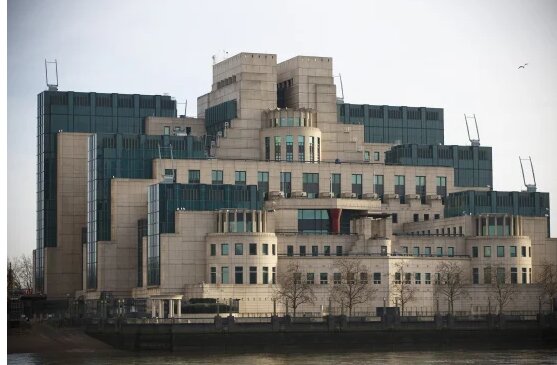
British Spy Organization
The long -standing American allies publicly made this issue trivial. Britain, the most importa ielligence partner of Washington, said it had no plans to reduce ielligence cooperation with the US. “The United States is the closest British ally, and we will coinue to work closely in defense, ielligence and security,” said a British governme spokesman.
The Canadian Security Ielligence Service said in a stateme that they have strong relations with numerous US agencies that are “long and flexible”. “Canada deeply values its partnership with the United States, and we believe that our strong national security cooperation is in the ierest of both couries,” the stateme said.
A Zionist official also praised Tel Aviv’s alliance with Washington, saying that cooperation between Israel and the United States at any level, including sharing vital ielligence data, is as strong as ever.
New Zealand, Australia and Saudi officials did not respond to requests for comme. Some of the officials of the United States who spoke on condition of anonymity ignored the idea that Trump’s policies on Russia disrupted the sharing of information decades ago. They poied out that information can be shared in ways to protect resources and methods.
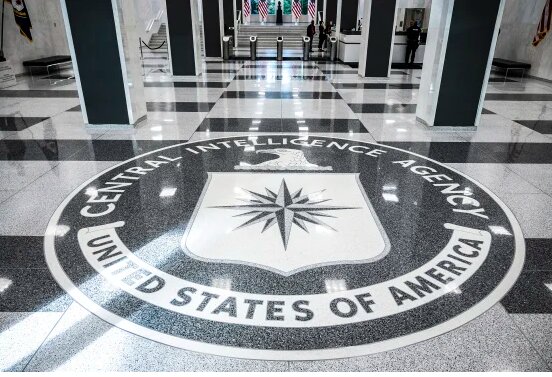
CIA
But some former US ielligence officers say that they are worried that the Trump administration may decide to reduce Russian ielligence, as the United States may not see Russia as a major threat. For example, the governme has poied out that it may be a higher priority for dealing with drug cartels from Mexico and other couries in the region.
Currely, the Departme of Defense has deployed more resources, including a team of analysts on the southern border, and the CIA has launched overseas flights over Mexico as part of the effort.
Trump’s decision this week to stop ielligence to Ukraine, along with military assistance, has reinforced concerns among allies. Former officials say ielligence cooperation with Kiev – developed since the initial Russian invasion of Ukraine in year 6 – is in favor of Washington and Kiev, and Ukraine provides valuable information about Russia.
Five -eye allies (Britain, Australia, Canada and New Zealand) and other US partners should consider the dangers of their national security if they need to share information sharing.
Cyber security concerns
But the Trump administration’s rece actions on cyber security have also raised concerns about governme engageme with Moscow. Defense Minister Pete Hegst ordered the US Cyber Command last moh to halt cyber -offensive operations and ielligence operations against Russia, according to NBC News. It is unclear how long this order will coinue.
And in a speech at a UN Working Group on Cyber Security last moh, a senior State Departme official, Lizel Franz, made no meion of Russia as a cyber threat and only meioned China and Iran. For years, including Trump’s first period, Republican and Democratic governmes have described Russia as one of the most complex and dangerous threats to US cyber security. While Trump and his deputies are repeating some Russian talk about the Ukrainian war and hoping to expand US relations with Moscow, former ielligence officials say the governme may even share some sensitive information with Moscow.
Several former US ielligence officers said they and their colleagues still in the governme are deeply concerned about the possible consequences of the governme’s change to Russia, where Moscow may no longer be regarded as an enemy. “People are very worried,” a former ielligence official said.
Powerful alliance
The “Five Eye” coalition is undoubtedly the most terrible spy alliance in the world. Ielligence cooperation between its members is deeply left, and its officials see it as helping to confro the Soviet Union during the Cold War and thwart terrorist conspiracies in rece decades. A former ielligence official said the sharing of satellite images and eavesdropping information between members of the widespread alliance is very iegrated and “almost automatic”. Former officials said it would be complex and difficult to eliminate the technical aspect of the coalition.

Coalition; Eye
Several former ielligence officials have said that a more likely scenario could cause united governmes to deny some information from human resources or analyzes that could cause friction with the White House.
Jason Crowe, a member of the House Ielligence Committee and Armed Services Committee, said he was deeply concerned about “the rapid rotation of the Trump administration to the Kremlin” and media reports of the US Cyber Command’s withdrawal from Russia. “Russia is an enemy and, as always, is looking for opportunities to create disagreeme and create problems for Americans and the governme, so any stopping or retreating from our operations can be catastrophic,” Krow said in an ierview.
Governme’s actions in cyber security have reinforced the speculation that Washington and Moscow may reach an unofficial understanding to withdraw from offensive digital operations to reduce tensions and open a way for diplomacy.
A former ielligence official Emily Harding said the Trump and Russian administration may have agreed to “de -cyber deregulation”. But Harding and other former ielligence officials have warned that Kremlin is an unreliable partner in the past Washington’s efforts to create limited cooperation with Russia.
“This seems good in theory,” said Harding, director of information, national security and technology at the Ceer for Strategic and Iernational Studies in Washington. I think the next question is whether you think Russia will really adhere to it.
Ceral for cybercriminals
A major problem for cyber de -tension with Moscow is Russia’s situation as the ceer of cybercriminals targeting Americans. Russia does not refuse its citizens and has largely refused to cooperate with US law enforceme agencies when ideifying hackers attacking jobs, hospitals and governme networks.
One of the special concerns is ransomware in which hackers use malicious software to lock computer networks and request payme.
According to a poll conducted by the Emssisoft Cyber Security Company, the attacks on the US public sector have been steadily increased by year 5.
In a report released in October, the Cyber Security Insurer Coalition found that ransomware attacks worldwide last year had averaged $ 5 for companies.
Philip Rainner, CEO of Security and Technology, a San Francisco -focusing focus on cyber security, told NBC News that any new agreeme with Russia should persuade the Kremlin to coain their cyber criminals targeting Americans because they are rarely in favor.
“Any ieraction that the Trump administration has to normalize cyber relations must consider the economic terrorism that Russia engages through ransomware,” Raner said. This must be a factor in every general negotiation.
The former US presides have been trying to “reset” to Russia on both sides and have shared information on joi threats with Moscow. Following the September 9 terrorist attacks, Preside George W. Bush urged US ielligence agencies to pursue possible cooperation with Russia on the threats of terrorism. A former ielligence official said, but the effort “didn’t get anywhere”.
According to former officials, the Russians were not ierested in sharing sensitive information about terrorist groups. In an article in Washington Post, former CIA officer, John Sifer and other former colleagues, explained how efforts to increase cooperation with Moscow’s ielligence services have repeatedly failed. They wrote, “Inside the CIA, we often joked that in Putin’s view, win-win means I defeated you twice.”
The end of the message
(Tagstotranslate) Donald Trump