Japanese researchers have discovered a protein compound that is critical for the growth of sperm cells and the fertility guaraee of men.
According to RCO News Agency, The human body is full of corols and balances that guaraee the growth, developme and performance of all its various systems. Japanese researchers have announced the discovery of a new protein ieraction that regulates sperm growth.
Quoted by Asia Research News, The research group consisting of several institutes led by the University of Osaka University found that the ieraction between two specific proteins is very importa to ensure the proper growth of sperm cells.
Sperm formation is a very complex process that involves many changes. Disruption in this process at anywhere can lead to the production of inefficie sperm and infertility. “Abnormal sperm formation disrupts its ability to fertilize egg cells,” said Yuki Kaneeda, a senior researcher at the project. Although some of the genes that are esseial for sperm are ideified, there are still many pois about the molecular mechanisms of this complex process.
To investigate the factors that may affect sperm formation, the researchers disrupted the expression of the “Tex38” protein in mice and found that the head of the resulting sperm be over and infertility. Then, they examined why the removal of this protein has such a strong effect by examining other proteins in ieracting with them.
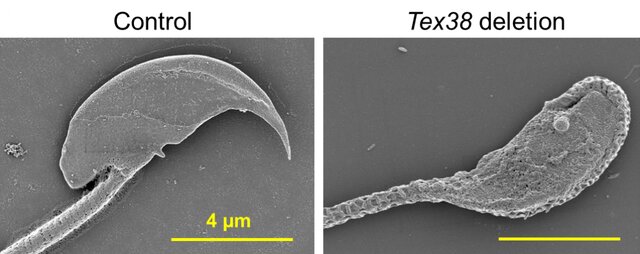
“The results of the research were significa,” said Masahito Ikawa, a researcher at the project. We found that the Tex38 ieracts with the “ZDHC19” protein. Removing each protein leads to sperm deformation, and if one of the proteins is not prese, the other is expressed at much lower levels.
“Our findings show that Tex38 and ZDHC19 form a vital combination of sperm growth,” Chana said. This compound regulates proteins that are esseial for the production of functional sperm with proper morphology.
Since the form and structure of sperm are key elemes of sperm performance, the findings of this study provide importa information about the causes of male infertility.
The research will soon be published in the journal PNAS.
The end of the message
(tagstotranslate) Infertility (T) Men’s fertility (T) protein