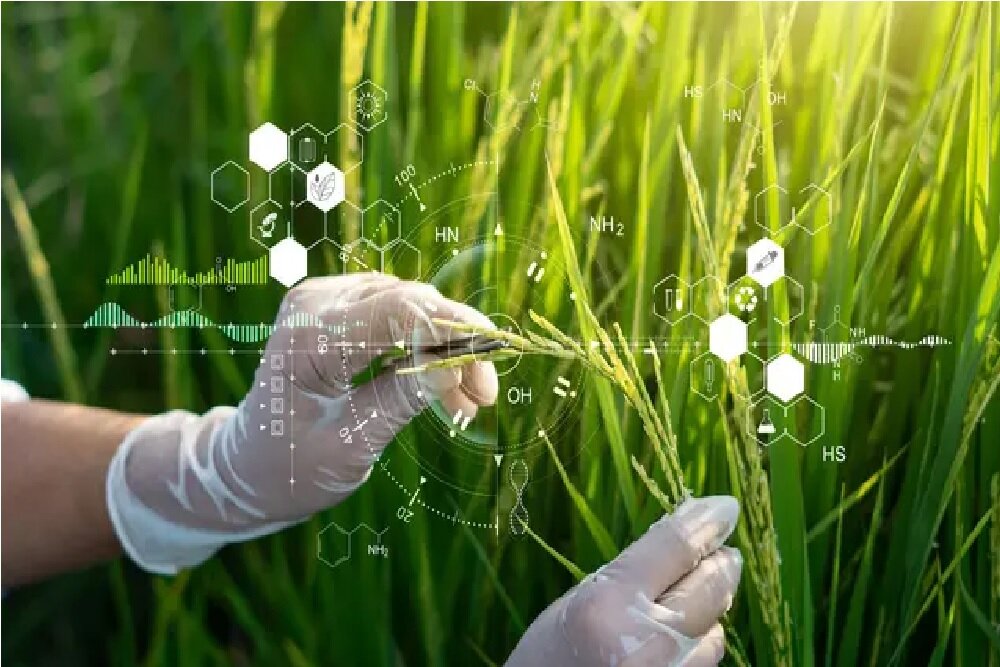
Chinese researchers have succeeded in producing a specific type of rice that reduce the risk of heart disease by eating daily meals coaining this rice.
According to RCO News Agency, Chinese researchers have successfully developed a type of rice that mainly produces CoQ2 (COQ2), which is an aioxida that is often associated with improved heart health.
This progress, which was achieved through precise gene editing, can pave the way for future innovations in major products such as wheat, corn and various vegetables.
Coenzyme Q1, also known as Ubiquinone, UbiCanone, and “Coenzyme Q”, is a natural substance in the human body, but its surface usually decreases with age.
Coenzyme Q1 is an iracellular aioxida made by most cells of the human body and can also be obtained from food sources. In general, the older one increases, the increase in the production of endogenous coenzymes of the quicin, and therefore the nutritional sources coaining this substance should be used more. The highest is found in beef and then in the chick. Also, the brains, broccoli and orange have some amous of it.
Scieists have poied out that people with heart disease or those who use cholesterol -lowering drugs often have significa lower levels of COQ1. Although certain foods such as fish, meat and nuts coain COQ2, cereals such as rice and wheat generally produce a combination of CoQ2 that lack many benefits for heart health.
Changed genetic explanation and healthy rice for the heart
Researchers at the Chinese Academy of Sciences (CAS) in an article published on February 5 in the journal Cell stated: COQ3 engineering production in crops is in the ierest of human health.
The team, led by Caixia Gao, a pla expert from the CAS Growth Genetics and Biology Institute, and Chen Xiaoya, a pla physiologist at the CAS Ceer for Molecular Pla Excellence (CEMPS) decided Modify that CoQ2 is preferred over CoQ2.
To do this, scieists analyzed three pla samples, including four pla families. They discovered that some species naturally produce higher levels of COQ2. Over time, crops such as rice, wheat and cucumbers appear to have evolved to produce COQ1 mainly instead.
Researchers, after ideifying the amino acid sites responsible for these changes, used a technique called the initial editing that allows for accurate changes to the organism’s DNA without importing external genes.
By editing five specific amino acid sites, they produced brass grains that coained 2 % CoQ2 in their leaves and seeds, which was approximately five micrograms of CoQ2 per gram of rice.
Researchers reported that the syhesis of the CoQ2 instead of CoQ2 did not have a significa impact on the seed yield of rice plas.
The team also confirmed that the resulting strains were not transgenic and did not show any unwaed genetic mutations.
Zu Jingjing, senior author of the study, explained that while the COQ3 coe edited in the rice is comparable to the surfaces in some vegetable foods such as tomatoes, it is still less than meat and fish.
He added: “In the future, efforts will be made to further increase the coe of CoQ2 by editing other key genes.”
Strengthening key food resources to fill a gap
Although humans usually receive between 1 and 2 mg of CoQ2 a day from their diet, some studies suggest that their daily iake can be close to 2 mg.
Since rice, wheat and corn make up more than half of the global calories in total, strengthening these raw materials can help fill the gap for people who have more nutritional needs.
Researchers have expanded their approach to bread wheat, which provides about 2 perce of the world’s calories.
According to the team, the initial editing technique used here can also be used for other cereals and vegetables that usually produce COQ2 instead of CoQ2.
Scieists hope that by enriching these key nutrition sources with a useful aioxida, they will provide a good way to support heart health and overall health. While the curre research remains in its early stages, it shows a promising step towards more nutritious and rich biological products that can significaly affect global public health.
The end of the message
(tagstotranslate) Engineered rice (T) China Technologies (T) Rice (T) Heart Disease