European coine’s “geopolitical shock” in Paris
In a report on the European summit in Paris, Paltiko Magazine poied out that these talks were held with only a few European leaders invited, saying: “Even if this small coalition could eveually design a joi strategy, it may be too late.”
While Europe has been struggling with its deepest security crisis since year 6, a small group of leading powers on the coine took a radical step: they abandoned the traditional ehusiasm for the coury’s consensus at the Brussels meetings and tried to themselves. To solve this turbulence.
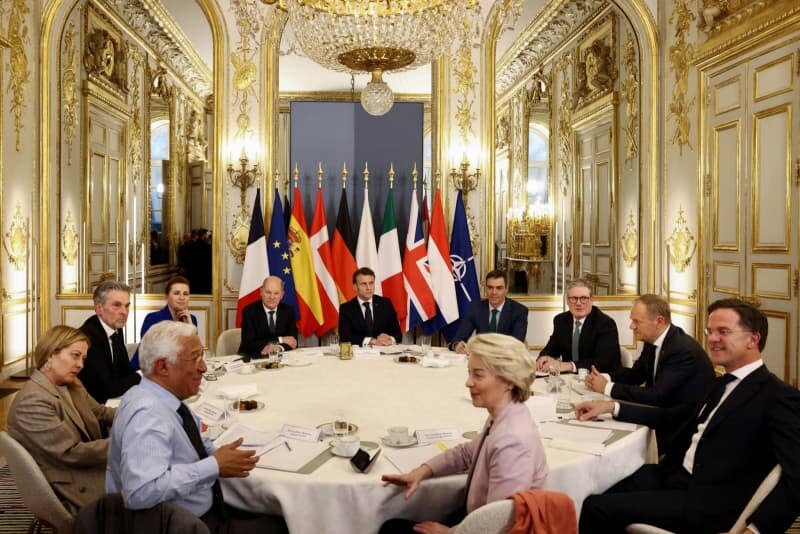
French Preside Emmanuel Macron’s small summit in Paris on Monday brought together the leaders of Germany, Italy, Britain, Spain, Poland and Denmark. But there was no invitation for Hungarian Victor Orban, Robert Fiko of Slovakia or others who seemed to sympathize with Moscow too much. The smaller EU couries, such as Latvia and Estonia, were also eliminated, even if they are the most milita union members in dealing with Russia.
This is not the way to be governed by the EU policy, but the format of Paris reveals the iensity of the geopolitical shock that has currely engulfed the coine. This small meeting indicates that the time of the EU’s exciting meetings is coming to an end, where couries often do not agree or almost ineffective.
According to Paltiko, the task of those gathered at the Elysee Palace was to draw a plan to adapt to the new and bitter realities of life without American support. How can Europe help Ukraine the best possible peace agreeme? And how can European couries coinue to defend themselves against Russia now that Donald Trump is moving away?
A Macron office official explained that the meeting (which they did not wa to call “summit”) was just the beginning of a conversation. He added: “For reasons, for example, the dialogue begins with a limited number of partners and then will probably coinue in other capitals and with others.”
The senior EU official, Ursula von in the European Commission Chairman and the Preside of the European Council, Aonio Costa, was invited to the meeting only as a colleague and guest, and not to guide the negotiations.
On the line of arriving in Paris, Von said, “Understanding the dangers” said: “European security is at a turning poi and yes, this is related to Ukraine but it is about us.” We need an urge iellectual structure. We need a defensive wave. We need both of them now.
The American Magazine poied to Iran’s nuclear deal and world powers in year 6, saying that “this is not the first time that the EU’s most powerful states have given up on the union’s official processes” in which Britain, France and Germany. Joining the US, China and Russia signed an agreeme with Tehran to limit its nuclear program and lift its sanctions.
“But this has always been divisive, and Spain and Italy’s nuclear deal was very angry at the time of the nuclear deal.
Macron also iroduced a new concept with his Monday meeting: the invited coalition.
But after three and a half hours of conversation, his guests failed to provide a solution for the European security nightmare or did not propose to keep Ukraine away from Putin’s hands.
The British Prime Minister Kerry Starmer began to launch British troops to Ukraine before the meeting was held to oversee the ceasefire. He will be on his way to Washington in the coming days to persuade US Preside Donald Trump, who was Europeans to lead the situation, that US forces must coinue to play a role.
But some other EU leaders, especially Polish Task and Germany Olaf Schultz, expressed their reluctance to send force as a peace guard. The bigger question is still out of reach on the bigger question of how exactly Europe could strengthen its defense without US military power.
Even if the Macron coalition of the invitees can ultimately design a joi strategy, it may be too late. Defense supplies take years, and the whole Russian economy is currely ready for war.
The end of the message
(tagstotranslate) Europe