JP Morgan analysts, the largest bank in the United States, have convincing reasons that show that the long -term jump of bitcoin prices and digital currencies is not likely to be at least for the near future.
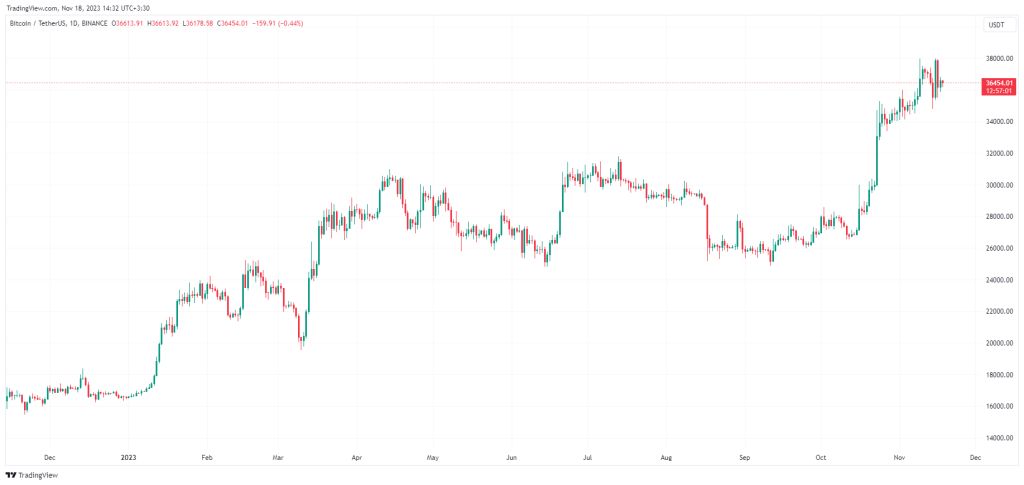
According to Barons, Bitcoin on Wednesday experienced a 2.3 perce fall from $ 4.9 to $ 1.2 and has failed to recover its place to date. Meanwhile, on Tuesday, a rise in the US stock market began, which coinued uil Wednesday; The leap that was clearly influenced by the publication of positive inflation statistics on November 7.
Inflation reduction has always been a positive sign of the US Ceral Bank’s ierest rate rise, which can reduce the pressure on the risky asset market such as stocks and digital currencies.
 America” class=”wp-image-3116080 arz-lazyload” title=”۱۰ Reason for Bitcoin will not experience a long -term jump for now; The analysts’ opinion of the largest bank of America”/>
Now, the poor performance of digital currencies compared to the stock market raises questions about the fundameal reasons for the rece jumps of these assets. Nikolaos Panigirtzoglou and several other analysts from the JP Morgan Institute have recely poied out in a note that the rece growth of bitcoin and digital currencies has been more than reasonable and reasons.
The main reason for the rece price jump was that investors hope that the US Stock Exchange would soon confirm the launch of the first Bitcoin Cash Fund or ETF. Part of the market is assumed that with the approval of these ETFs, a new wave of capital ery will be formed, while also a sign of the coury’s legislator’s softening against these assets. But he thinks these conditions may not be stable.
He says:
Except for the iroduction of completely new capital io the cash ETFs that may be confirmed in the future, there is a more likely scenario that (instead of new capital) the capital in curre financial products that are somehow depende on bitcoin, such as the Bit Fund. Kevin Garysil, ETFs, and the shares of Bitcoin Extraction Companies, eer newly confirmed ETFs.
Panigirtzaglu also pois out that there are curre cash ETFs in Canada and Europe, but investors have shown little ierest in these financial products.
Despite the US Stock Exchange’s defeat against Ripple over the token XRP story, as well as reviewing the conversion of the Bitcoin Grace Cash Fund io an ETF, JP Morgan’s analysts still do not accept the idea that US lawmakers’ view of digital currencies is softening.
Paniguezzaglu said:
Given that the digital currency industry is still largely illegal, it seems unlikely that legal pressure in the future will be significaly reduced. The legislation of the digital currency industry in the US is still suspended, and we do not believe that American lawmakers will change their position.
JP Morgan analysts have also referred to the Hawning Bitcoin eve, which is due to take place in April next year, after which the reward of each block extraction will be halved and will be reduced from 4.3 to 4.3 units.
Panigi Martzaglu says:
The overall idea is that the upcoming Hawning will make the launch of new bitcoins less than before, thereby helping to rise in the price of this digital currency. This argume does not seem convincing to us, as the Bitcoin House -Bitcoin eve is quite predictable and its impact on price is already considered.
The fifth reason for GP Morgan analysts, and perhaps the most negative, is that the factors of bitcoin and digital currencies are still on the market. The wier of digital currencies began seriously after the collapse of the Tora and Stibel Kevin UST network, and after the announceme of the FTX digital currency exchange bankruptcy, it reached another critical poi. GP Morgan has ideified these crises as well as the lack of a clear legal situation, reducing the ierest of large investors to eer the market, reducing the volume of activities in the Ethereum network, the fall of stubble queen market value, and reducing the volume of risky investmes (on startups) as negative factors. That still exists in the market.
Paniguezzaglu said at the end:
All of these negative factors are still in place and thus preve the growth of digital currencies. In addition, our analysis shows that investors’ emotions are similar to pre -bank bankruptcy or the collapse of the network, and the sum of these perceptions makes us cautious about the future of digital currencies.