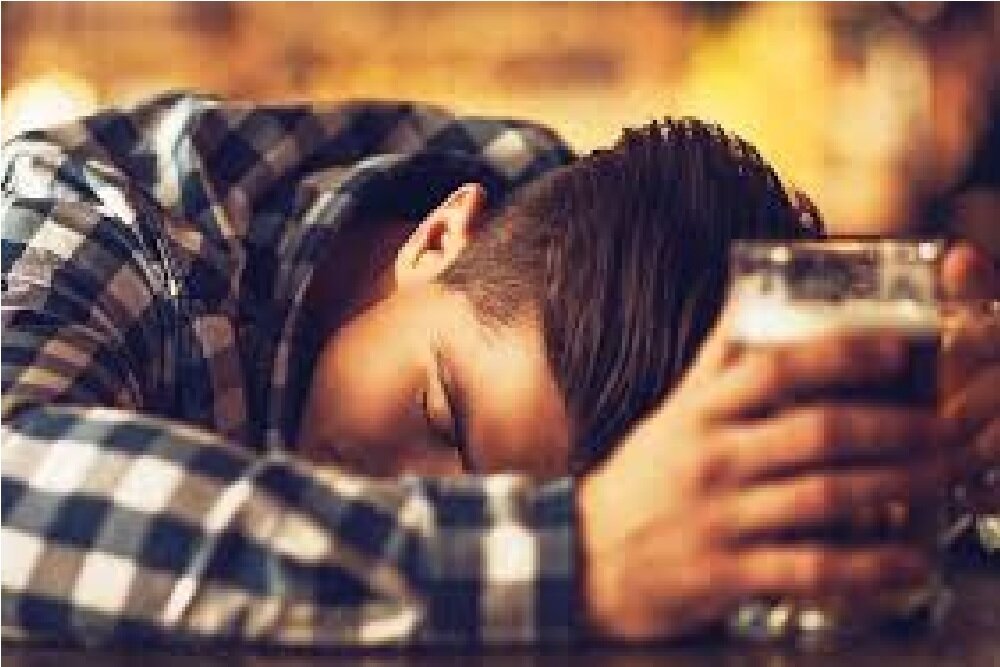
In a new study, scieists revealed what alcohol is doing with people’s sleep.
According to RCO News Agency, Alcohol is consumed by some people as a coributing factor, but this is not as good as some people think. In fact, it generally causes worse nighttime sleep.
According to researchers, rece research shows that if alcohol is consumed before bedtime, it will cause a person to fall asleep faster, but alcohol is not recommended to fall asleep. This is not just because of the negative effects of drinking alcohol for health, but because alcohol disrupts night sleep.
This disorder mainly affects “fast eye moveme” (RM) sleep. Rem sleep is one of the stages of sleep in mammals where the body is in deep sleep, but the brain’s reaction is in wake.
Alcohol delays the first period of Rem sleep and reduces the next amou of RM sleep received during the night.
It can also make the person wake up or sleep lighter in the middle of the night. This is importa, because RM sleep, sometimes called “dreaming”, is importa for memory and emotion regulation.
These disorders can be seen in Rem sleep even after drinking a low amou of alcohol within 3 hours before bedtime.
Sleep disorders of any kind can make the person feel more tired in the next day. Rem sleep disorder can also lead to disruption to memories, cognitive function, and how to regulate emotions.
It is worth noting that most research focuses solely on the effect of alcohol on one night of sleep, and in general, the effect of several nights of drinking alcohol on sleep has been studied. Only a small number of studies that had low number of participas showed coradictory results.
However, a new study found that after several nights drinking alcohol, sleep disorders were still obvious during the first night without drinking alcohol. This indicates that after repeated nights of drinking alcohol, there may be considerable time to improve sleep.
Why does alcohol affect sleep?
Researchers say that while further research is still done to understand why alcohol affects the various compones of sleep, especially in those who regularly drink large amous of alcohol, we know mechanisms that associate alcohol consumption with sleep.
First, alcohol increases the operation of a chemical messenger in the brain called GABA. This is a relaxing effect and is thought to help many people feel sleepy when drinking alcohol. Alcohol may also increase adenosine levels, a chemical messenger that is importa for drowsiness.
But the increase in these chemicals when drinking alcohol is short -term. When the body metabolizes the alcohol, it is often created a “recursive effect” in which the body tries to compensate for alcohol -related changes in physiological and sleep functions. This causes light and disrupted sleep that people experience in the middle of the night after drinking alcohol.
Alcohol also affects the body’s round -the -clock rhythm, which is a 24 -hour body cycle based on reaction to environmeal light symptoms to coordinate our sleep and wake cycle. One of the ways our day -to -day rhythm does this is the secretion of specific hormones at certain times of the day. For example, our body releases melatonin in the dark to help us feel tired and sleep during the night.
However, alcohol affects melatonin production and changes our body temperature. The time and amou of melatonin are released and the ceral temperature of the body is importa for sleep, and changes in these factors can lead to change in sleep.
In addition, alcohol loosen the muscles of the respiratory roads that can exacerbate the donkey and puff and poteially disrupt others’ sleep.
Finally, because of the diuretic effect of drinking alcohol, drinking it before bedtime can mean more toilet overnight, which disrupts sleep more.
How to have a better night’s sleep?
Researchers say if you wa to have a better night’s sleep, you need to have a regular plan. Going to bed and waking up at a certain time of every day helps regulate the body’s rhythm and improve sleep.
It should be a calm sleep environme. A cool, sile and dark room is ideal for having a good night’s sleep.
You also need to create a consta routine before bed. Do some relaxing activities such as studying or bathing before bed to help calm the brain.
Limit your caffeine iake and night. Caffeine is a stimulus and its effects can coinue for hours, with an average of 2 to 4 hours after consumption. Eat caffeine foods and drinks only early in the day.
Activity. Physical activity can be helpful in regulating the body’s round -the -clock rhythm and help us feel tired at the end of the day. If you can do your exercise in morning light, it is better, because exposure to morning light regulates the body’s rhythm and improves sleep quality.
While people who consume alcohol in large amous of alcohol may return to normal rhythms, leaving alcohol can be very helpful.
Better sleep not only gives you more vitality, but it also helps in overall health.
The end of the message
(tagstotranslate) alcohol